Augustine’s High Fever and Sickbed Reflections
Good Morning, MidnightAugustine’s high fever turns a period of physical collapse into an unwelcome reckoning. While Iris keeps watch and brings him water and food, his delirium carries him from memories of youthful success into scenes of family pain and his own failures of attention. He survives the illness, but emerges more conscious of regret—and newly attentive to the girl who has remained beside him.
Onset and isolation
Before the fever takes hold, Augustine tries to push away emotions he cannot name. In the control tower, he eats a granola bar and picks up the field guide he had given Iris. Its cracked spine and open pages lead him to the account of the Arctic wolf’s forty-two teeth. He reads that detail repeatedly while refusing to look at the photograph of the wolf’s pups. The small act of looking away sits alongside the larger fact he cannot escape: Iris is still outside, unmoving, after the encounter with the wolf.
As evening falls, Augustine gives up trying to distract himself with the astrophysics journal. He has exhausted the books and magazines in the tower, and his familiar mental exercise—imagining Earth from space, then widening his view to the solar system and the Milky Way—no longer brings relief. Instead, he sees his own aged reflection and the memory of the dead wolf beside the image of Iris reaching toward it. He cannot tell whether what he feels is remorse or cowardice. When he realizes he has a fever, he considers the first-aid kit but doubts that its contents, or his own limited medical knowledge, would help. He returns to bed imagining it may be his deathbed, and falls asleep worried about what will happen to Iris if he does not wake.
Delirium and returning memories
The fever lasts through an indistinct stretch of days and nights. Augustine wakes in darkness, struggles to sit up, and sinks back into sleep. At other times he sees Iris above him with water or a blue camping mug of chicken broth, but he is too weak to take what she offers or to make himself understood. Her presence is a steady fact within an illness that has made time difficult to measure.
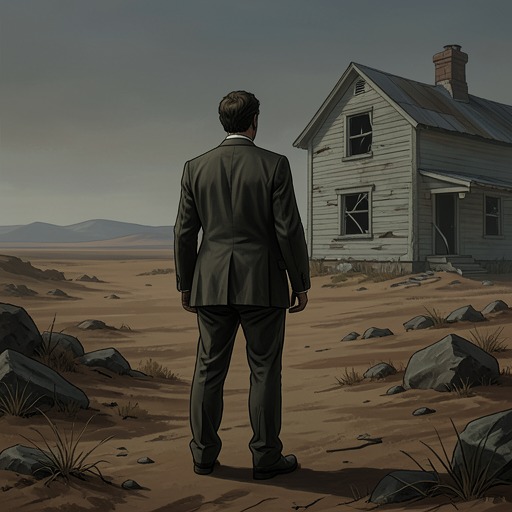
His dreams first restore the version of himself that he remembers from young adulthood: physically capable, traveling through varied landscapes, observing the night sky, and moving among telescopes and observatories. He recalls professional acclaim, invitations from universities and observatories, published work, and the praise that followed him into his late thirties. Yet the sequence does not remain a celebration of achievement. As the fever shifts, these scenes give way to adolescence and family history: his mother being taken to a mental hospital, his father’s volatile presence, visits to his mother when she was heavily medicated, and Augustine’s later anger at his father’s grave.
The memories also widen beyond his family. Augustine sees the consequences of his own ambition in the people around him: women he had harmed and colleagues and workers he had neglected or slighted. For the first time, he recognizes the hurt and resentment his conduct caused and names his response as shame. The illness forces together memories he might otherwise keep separate: professional success, personal ambition, family suffering, and the costs of his inattention.
The reckoning
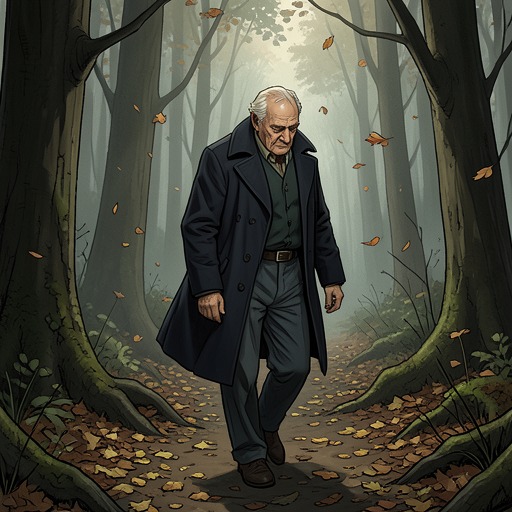
The painful memories persist with an immediacy the more beautiful recollections cannot hold. Augustine remembers guilt and regret as feelings he had previously mistaken for physical ailments. His mother’s periods of withdrawal and renewed activity return alongside memories of his father’s anger. He is not simply reviewing events; in delirium, he is confined within their repeated return, unable to redirect himself toward the expansive cosmic perspective that once served as a refuge.
That contrast makes the fever a crisis of attention as much as of health. Augustine’s usual effort to enlarge his perspective until private concerns recede fails. The memories instead bring particular people and consequences into focus. His recognition does not undo what he has done, and the episode offers no easy resolution to his past. It does establish that he can now perceive harm as harm, rather than treating the emotions associated with it as an inconvenience or an unexplained physical discomfort.
Recovery and changed attention
After an uncertain interval, the fever passes. Augustine wakes weak but conscious and hungry, then turns to find Iris sitting on the windowsill, watching the tundra. Her smile is unfamiliar to him; he realizes he has never seen her smile before. She brings him food, including jerky and green beans, and later prepares a hot drink. Her care has continued while he was unable to respond, although she remains quiet and cautious around him.
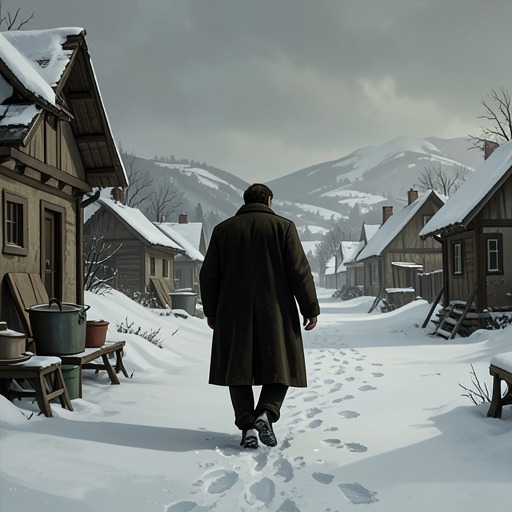
Recovery proceeds by degrees. Augustine tests his weakened muscles on the control-tower stairs, working until he can travel between the first and third floors without collapsing. He then begins going outside each day. The snow and ice tire him, but he gradually regains endurance, walking from the tower through the abandoned outbuildings and into the surrounding mountains. The simple fact of being alive brings him joy, while the regret stirred by his fever remains with him; neither feeling quickly disappears.
Iris often accompanies him, sometimes running ahead and sometimes trailing behind. As the daylight lengthens, Augustine walks farther while keeping the emerald pompom on her hat in view. He notices that she seems more physically present and more talkative than before, when she had remained elusive at the edge of his attention. His repeated effort to keep her in sight gives the recovery a relational dimension: the man who feared leaving her alone begins to orient his daily walks around her presence. The fever ends, but its aftermath is visible in the attention Augustine now gives both his own past and the child beside him.