Houston
Good Morning, MidnightHouston is where the Aether crew trained together before launch, turning a group of specialists into a working team, and where the novel locates some of the ordinary lives they later leave behind. Its significance is not confined to preparation: Houston returns in memories of family and in the loss of contact with loved ones, making the city a measure of what distance in space has taken from the crew.
Training and the Formation of the Crew
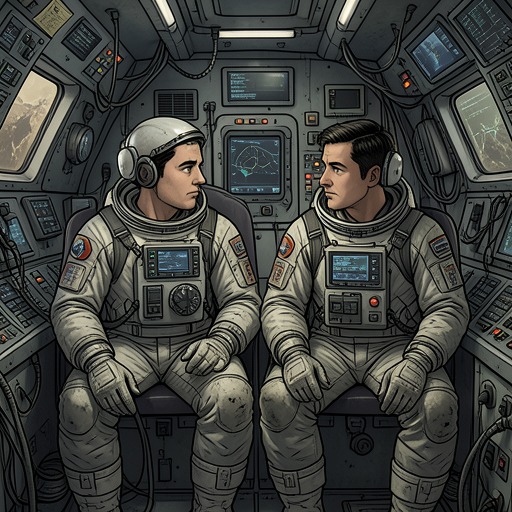
The astronauts trained in Houston for almost two years before launch. The city’s training facility appears not as a backdrop to a single ceremony but as the setting for repeated work: in the Neutral Buoyancy Lab, the crew practiced extravehicular repairs on a mock-up of Aether while taking turns in the pool. That routine gave the crew a shared practical history before their mission put them beyond ordinary contact with Earth.
Gordon Harper joined the group late. He had arrived at the training facility a week after the others, following a separate orientation in Florida that had prepared him for command. By then, the others had already established a bond. When Harper entered the Neutral Buoyancy Lab, Sully and Devi were underwater; after they surfaced, he was with the rest of the group, smiling at Tal’s jokes, asking Ivanov about an astrogeology article, and greeting his old friend Thebes. Sully watched while the others helped remove her from the pool and her suit. She was curious and somewhat apprehensive, but judged Harper to be listening more than speaking and easing the group into conversation. Houston is therefore also where the crew’s relationships begin to take recognizable shape, including Sully’s first favorable impression of the commander who would later lead them.
A Crew Learning to Belong Together
The weeks immediately before launch show the training group becoming more openly convivial. After a long Friday of simulations for landings on Jupiter’s moons, the crew went out for drinks at a local bar. Thebes worked through the jukebox selection with a fistful of quarters, while Devi drank cranberry juice through a straw and considered the machine. At the bar, Tal, Ivanov, and Harper lined up tequila shots, proposing four apiece, one for each Galilean moon.
Sully arrived late and paused at the doorway to take in the scene. Harper called her over and ordered her a shot for Callisto; she drank it and declined the lime. Tal urged the group onward. The episode joins the technical demands of training to a small social ritual: the moons they were preparing to visit become the subject of a joke and a shared toast. Houston’s local bar offers a brief, ordinary counterpart to the unprecedented journey ahead, while the crew’s ease with one another shows how far their camaraderie has developed.
Family Life Seen from a Distance
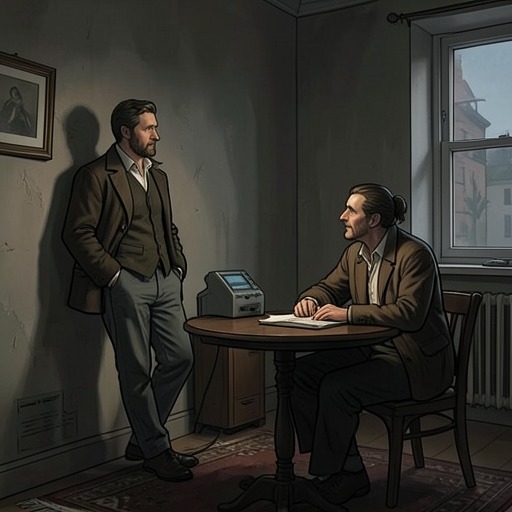
Houston also holds lives beyond the training group. About a year before launch, Sully recognized Ivanov and his family at an outdoor café in the city. She was across the street, putting change into a parking meter, and considered crossing to greet him but stayed where she was. The family caught her attention as a close, animated gathering: five heads of white-blond hair, children laughing with food in their mouths, and Ivanov leaning over to cut up dinner for his youngest daughter. When the waiter set down a ramekin, the children thanked him together.
Sully watched Ivanov’s wife talk with a salad fork in hand and wondered whether she herself had ever seemed so joyful and present with her family. She eventually felt that she was intruding on a private moment and went instead to a small greengrocer. There, the warm weight and delicate fuzz of peaches brought back the weight of her own daughter’s head at birth. Houston thus contains an image of family life that Sully observes but does not enter, and that encounter draws her thoughts from the Ivanovs’ domestic happiness to her own experience of motherhood. The city’s remembered details are intimate and tangible, set against the distance that the mission will impose.
Houston and the Communications Blackout
After the launch, Houston remains part of the crew’s emotional geography through Tal’s family. As Aether travels back toward Earth and the silence from Mission Control continues, Tal loses the periodic uplinks from his young family in Houston. His mood worsens: he becomes despondent and irritable, and turns to video games, throwing controllers and other plastic equipment across Little Earth during outbursts. After one particularly violent episode, he spends the rest of the day trying to repair a shattered steering wheel, assembling pieces that will not hold together until Thebes asks him to return to work on the control deck.
The contrast with the earlier training scenes is sharp. In Houston, the crew shared simulations and social rituals while the families and everyday lives of Earth remained close enough to observe. In space, the city comes to stand for a connection that Tal can no longer reach. The missing uplinks do not merely interrupt routine: their absence becomes part of his isolation and visible distress.
Narrative Significance
Houston connects several different timescales in the novel. It is the place of prolonged preparation, where trust and habits of cooperation develop; the setting for a final round of celebrations before launch; and a remembered city of families, meals, and errands. Later, its name is carried into space through Tal’s unanswered family links. The narrative’s shifts between those scenes make Houston less a continuous physical setting than a point of return in the crew’s thoughts: a place associated both with the relationships that helped form them and with the earthly attachments made painfully distant by their mission.