Polar bear
Good Morning, MidnightThe Polar bear recurs in Augustine’s Arctic experience as both a living animal and a focus for his thoughts about survival, loneliness, and human attachment. First glimpsed crossing a mountain ridge, it later reappears at a distance during a walk with Iris. Augustine’s changing response to it—from imagining escape into its instinctive existence to feeling a kinship across the landscape—marks a shift in how he sees his own life and the child beside him.
Appearance and Setting
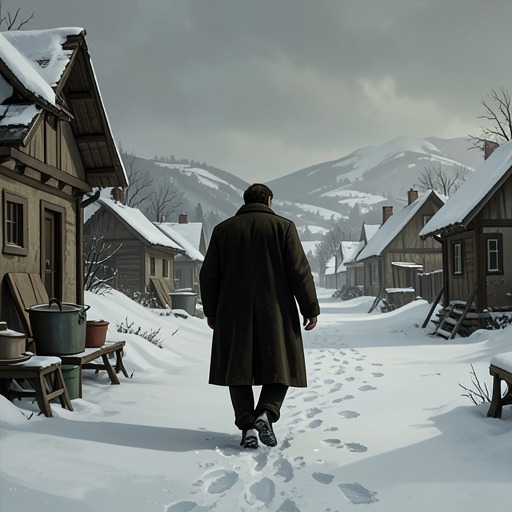
During the return of daylight after polar night, Augustine sees a Polar bear crossing a ridge toward the sea to hunt. Its movement belongs to the Arctic landscape and its ordinary demands: finding food and traversing a cold, remote region. The sight is sharply distinct from Augustine’s memories of winter in Michigan, where snow and ice give way to spring. In the Arctic, he sees a harder environment, with ice shelves that do not melt and ground that does not thaw.
The bear soon passes out of view, but its brief appearance gives Augustine a concrete presence to imagine. He pictures life organized around appetite, rest, and seasonal desire, rather than reflection. That imagined simplicity is not a report of the bear’s inner experience; it is Augustine’s interpretation of an animal observed at a distance. The distinction matters throughout the motif: the bear has its own movement and purpose, but the narrative offers it largely through the human consciousness watching it.
Augustine’s Projection
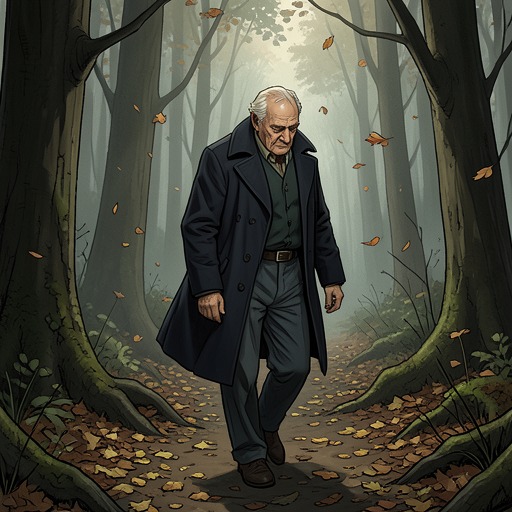
Augustine imagines inhabiting the bear’s powerful body and leaving behind the burdens that define his own life. In that imagined existence, instinct replaces deliberation, and survival has a clear, immediate purpose. He envies the animal not because he knows its thoughts, but because he imagines it free from guilt, hope, and the complicated demands of human feeling. The fantasy briefly approaches amusement, a rare easing of his habitual severity.
That longing reflects Augustine’s established distance from human attachment. He has directed his deepest adoration toward the universe, turning to cosmic awe when lesser emotions arise. His history with the woman who became the mother of Sully and with their child shows the consequences of that distance: he left when she refused his request to end the pregnancy, later sent gifts to the child, and eventually stopped trying to reach them. Set beside that past, the bear’s imagined life offers a stark alternative to care and responsibility. Yet the fantasy is not an uncomplicated ideal. A life reduced to need and instinct may escape reflection, but it also excludes the love and connection that Augustine has chosen not to pursue.
The Later Encounter
After recovering from a fever, Augustine walks farther as the daylight lengthens, with Iris often running ahead or lagging behind. He keeps her green pompom hat in sight, attentive to her in a way that contrasts with her earlier elusiveness. On one walk he continues north, away from the hangar and the wolf’s grave, despite his fatigue and Iris’s slowing pace. He feels compelled to see something ahead without knowing what it is.
At sunset he recognizes a large animal against the northern sky as the same bear he saw on the first day of sunlight. He cannot distinguish identifying features; he is sure of its identity because of his own quickened heartbeat. From far across the snow and rock, he notices its aging yellow coat and the marks on its muzzle. The distance remains real, even as his perception makes the encounter feel intimate. He imagines himself close to the animal, but the scene does not show him approaching it or touching it.
The bear raises its snout, turns its head, and looks in Augustine’s direction. Across the intervening landscape, Augustine feels kinship, alongside envy, longing, and a sense of doom. He recognizes that the creature’s repeated journeys, hunting, and rest make up the life available to it, and he feels sadness for its solitude. Then he identifies a more unsettling response: discontent not only for the bear, but for himself. Having survived his fever, he has to face the question of what that survival is for.
Iris, Ambiguity, and Significance
As Augustine watches the bear, Iris is playing on a small slope, unaware of what has caught his attention. Her smile and the vividness of her presence interrupt the encounter’s pull toward solitude. When Augustine looks back to the mountains, the bear has disappeared. He calls Iris to return, and on the way home she stays close, checking his progress and finally taking his mittened hand as they climb toward the observatory. The animal’s disappearance and the child’s deliberate gesture place two kinds of relation in immediate contrast: the distant kinship Augustine imagines with the bear, and the physical care Iris offers him.
The book’s discussion questions explicitly leave open whether the recurring bear is real. The scenes support neither a definitive confirmation nor a definitive denial: Augustine sees an animal behaving within the landscape, but the later encounter is filtered through his intense perception and his recognition depends on an inward response rather than distinct features. This uncertainty allows the bear to remain more than a simple emblem. It is presented as an animal moving toward its own needs, while Augustine’s encounters with it expose his own desire for a life without reflection and his growing awareness that such a life would not answer his discontent. Its recurrence links the returning Arctic daylight to Augustine’s changing attention—from the self-contained fantasy of escape toward Iris, who is beside him and reaches for his hand.