Soyuz Return Lottery and Crew Split
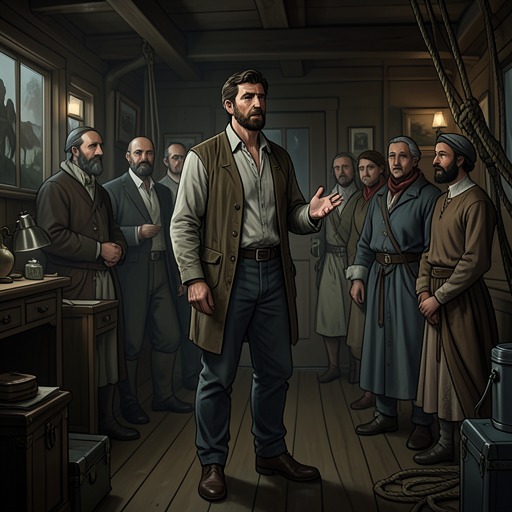
Good Morning, MidnightThe Soyuz Return Lottery and Crew Split is the moment when the Aether crew turns the question of returning to Earth into a decision about who will leave and who will remain. A drawing of straws initially offers an impersonal way to allocate the uncertain places, but the result does not settle the matter: Thebes and Ivanov later choose to stay aboard, making the crew’s division a decision of attachment and judgment as well as chance.
Background and Stakes
By the time the crew discusses reentry, Earth fills the view from the cupola, yet looks less like a known home than a mystery. The crew is safe inside the centrifuge, a familiar small world, while the planet below has changed beyond their knowledge during their absence. Over vacuum-sealed oatmeal and hot coffee, they must decide how to approach a return without knowing what they will find or even whether they will survive the descent.
Harper proposes a random selection, suggesting a lottery or drawing straws because he sees no other way to divide the places. The crew agrees. His proposal acknowledges two uncertainties at once: descent itself may fail, and survival would not necessarily leave the returning crew without another route back to orbit. Harper raises the possibility that they might be able to launch another Soyuz. It remains only a possibility, not a promise, so neither staying nor descending can be treated as a safe choice.
The Drawing
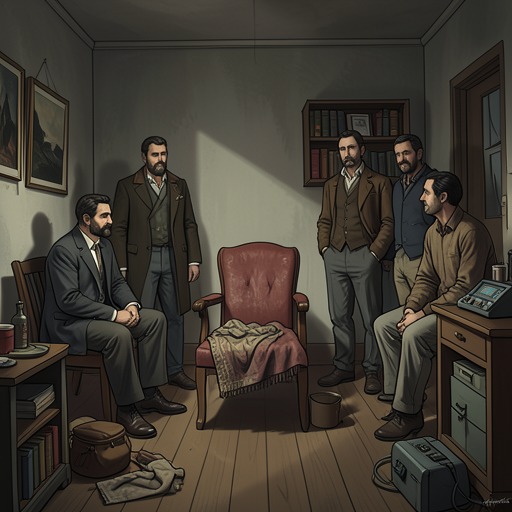
The crew makes the decision tangible with five straws from the kitchen. Harper gathers them, and Thebes uses his utility knife to shorten two. The distinction is stark: a short straw means a life sentence in space; a long one means an uncertain descent. The improvised objects reduce a consequential division of futures to a visible, random choice, without making the danger behind either outcome disappear.
Tal reaches first. He takes a full-length straw, lets out the breath he has been holding, and lays it before him. Thebes draws next and also gets a long straw, though his expression is difficult to read. Ivanov then draws short. The others gasp and tense as they wait for his reaction. After a stunned pause, he smiles and says he is relieved. Thebes rests a broad hand on Ivanov’s shoulder, a quiet gesture of support that follows the draw without turning Ivanov’s response into a celebration.
Harper offers the two remaining straws to Sully, and she draws short. With five straws in all and two shortened, the draw assigns the three long straws to Tal, Thebes, and Harper, leaving Ivanov and Sully with the short ones. Yet the result is not the final crew arrangement. The lottery can allocate the initial outcomes; it cannot prevent someone from deciding that the outcome they drew is no longer the one they will take.
The Decision to Stay
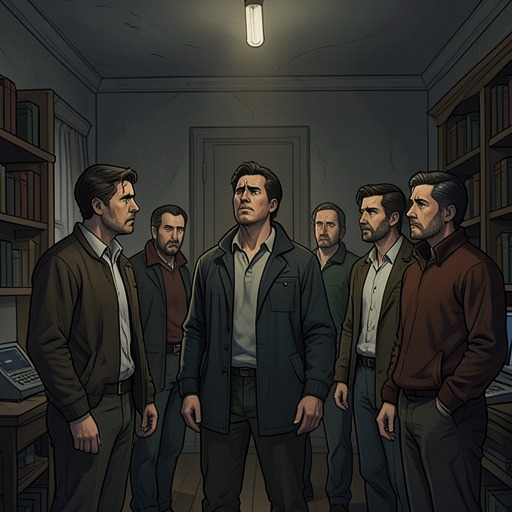
The reentry sequence is scheduled for two days after the drawing. When Sully finds the others assembled at the table, Thebes tells her that he is staying aboard Aether. Their silence and Harper’s nod make clear that the others already know. Sully asks whether this means she is expected to go instead and raises Ivanov’s name, registering how Thebes’s decision changes the meaning of the earlier draw.
Ivanov then says that he, too, has decided to stay. This reverses the expectation created by his short straw: although he had wanted to return to his family more than the others, he no longer believes that the world below can offer the home he remembers. He says that everything has changed, that his family is not waiting for him, and that Thebes and he are the oldest and tired. His explanation replaces a hopeful but uncertain return with a sober recognition that the past cannot be recovered by going back to Earth.
Thebes gives no comparable explanation in this exchange. His choice nevertheless has an immediate effect: Sully is left to understand that she will go, while the two older crew members remain. The new division is not presented as another lottery. Ivanov states his decision, Thebes has already made his, and their choices reshape the practical consequences of the drawing. The crew’s eventual split—three descending and two remaining—emerges through those decisions rather than from chance alone.
Preparing for Reentry
The decisions lead straight back to work. Harper assigns Thebes to check the Soyuz pod’s seal and asks Ivanov to help Tal, who is occupied with plotting the course. The crew plans a landing simulation before the end of the day and another the next morning, while Harper intends to inspect the Soyuz survival gear. Sully is asked to try the communications systems one last time. The checklist gives the departing crew concrete tasks, but it also marks the newly divided responsibilities of people who had shared the same two-year journey.
Tal must calculate the pod’s trajectory, its angle of atmospheric entry, and the coordinates of the intended landing without help from a ground team. The crew aims for the Great Plains of Texas, where they expect temperate weather and open space, and where they hope to find some answer from Houston. These are reasons for choosing a landing area, not assurances that anyone will be there or that communication will succeed. The plans therefore preserve the same uncertainty that made the lottery necessary.
After the meeting, Sully stays in the cupola, watching clouds and continents pass below. She wonders whether staying in orbit might be best and whether she still belongs on the surface; her thoughts turn to Lucy, Jack, and Jean. The contemplation underscores what the crew split costs her without changing the practical choice now before them. Reentry is no longer simply a shared destination. It is a departure taken by three people while two remain in the small world they know, facing an Earth whose condition none of them can yet confirm.