When We Get Home
Good Morning, Midnight“When We Get Home” is a phrase Harper uses while imagining life after the mission, but its importance lies in how Sully receives it. His invitation gives her a momentary picture of somewhere—and someone—to return to; its later echo in her thoughts reveals how uncertain that comfort is. The phrase holds both the crew’s ordinary hope of coming back and the emotional distance between that hope and what they face aboard Aether.
The invitation and its echo
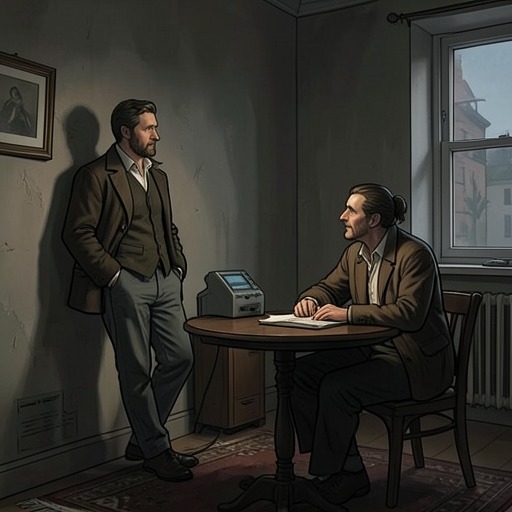
Harper tells Sully he is retiring after this mission, says he has land arranged, and asks her to visit him and Bess when they get home. The invitation is casual, part of his joking exchange with her, but the future it assumes briefly changes the atmosphere. In the ship’s stagnant, recycled air, Sully registers the words as something to play along with: a homecoming imagined as if it were already waiting for them.
The phrase returns later that night, after Sully and Harper hold hands instead of simply exchanging a customary handshake. Sully breaks the moment off and retreats to her bunk. As she listens to Harper move through the centrifuge and settle into his own bunk, she thinks again of getting home. The repetition is not another spoken promise; it is the private afterlife of the earlier invitation, now attached to the intimacy neither of them has yet named.
A borrowed picture of home
Sully has no settled home to picture for herself. She has put her belongings in storage and given up her apartment for the two-year trip, so Harper’s invitation lets her imagine a small house, a porch, a long driveway, open land, his truck, and Bess waiting at the door. In that imagined scene, the home becomes hers too. The fantasy does not establish a plan or a shared commitment: Sully has never seen Harper’s house. Its force comes from the contrast between the specificity of the picture and the uncertain future it rests on.
That contrast makes the phrase more than shorthand for reaching Earth again. Harper speaks as though home is a destination and a visit can be arranged; Sully’s response shows how much the word can also mean having somewhere to belong. The scene keeps the hope modest—she only agrees that she might visit—while allowing her imagination to turn the invitation into a temporary home of her own.
Hope against loss
The phrase’s promise sits beside a story increasingly marked by absence. Devi describes a recurring dream of her family gathered around food in her mother’s kitchen in Kolkata; each time, the scene fades into the knowledge that her family is gone and she is alone. Her dream is distinct from Sully’s imagined visit, but it sharpens the difference between a home recalled and one projected into the future: both offer closeness, while neither can secure what comes next.
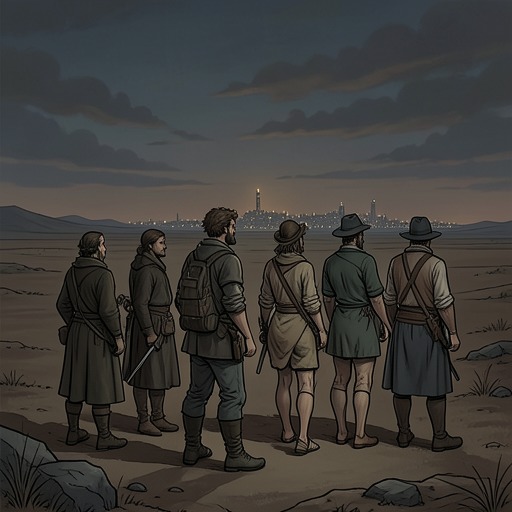
After Devi dies during a spacewalk, Sully’s attention is drawn back to the loss and to the crew’s work. She initially withdraws from the others, then returns to the task of bringing the new communications system online with Thebes. Once it is calibrated, she stays to listen. She cannot know whether anyone will answer, but she feels less alone and believes the crew has done its best. Against that uncertainty, Harper’s earlier words remain a small, personal image of return—not evidence that a return or a particular home is guaranteed, but a measure of what Sully needs to imagine while the outcome remains unknown.
Narrative significance
The phrase’s emotional movement is created by its recurrence in Sully’s attention: first as Harper’s spoken invitation, then as the thought she carries into the privacy of her bunk. That shift from dialogue to inward echo turns an easy piece of future-tense banter into a fragile form of comfort. The later events do not fulfill the invitation within this evidence; instead, the phrase’s warmth stands in tension with grief, isolation, and the crew’s uncertain search for contact. Its significance lies in that gap between imagining a homecoming and knowing what, if anything, will still be waiting.