Tom Lockridge
Good Morning, Midnight (Reginald Hill Edition)Tom Lockridge is a local doctor whose private and professional connections place him close to several uncertainties surrounding Palinurus Maciver Senior’s death. He is at once a former doctor to the dead man, a police medical examiner at the scene, and the lover of the widow, Sue-Lynn Maciver. His conduct brings the inquiry into contact with an uncomfortable question: how reliably can a medical witness serve an investigation when a relationship central to the case has been kept from the police?
Identity and professional position
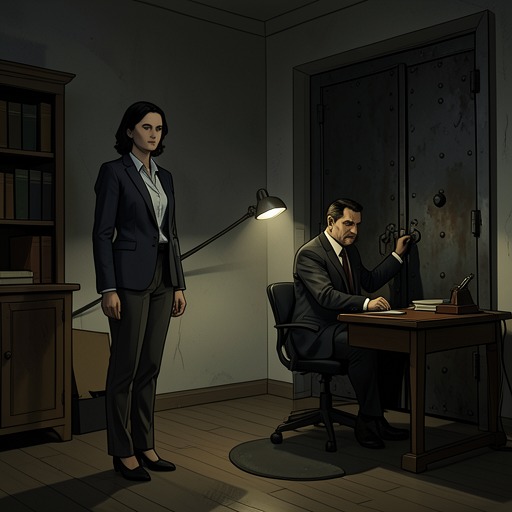
Lockridge belongs to a small group of local doctors registered as police medical examiners. When Peter Pascoe and Andrew Dalziel reach the room where the body has been found, Lockridge is there in a white coverall, looking down at the slumped figure. The head injuries are so extensive that Pascoe cannot confirm the body’s identity from where he stands. Lockridge gives the initial medical confirmation that the man is dead and estimates that death occurred two to four hours earlier. His preliminary opinion is that the fatal gunshot wounds were probably self-inflicted; this is an early assessment, not a resolution of the larger questions about the death.
Lockridge also recognizes the possible significance of his prior medical relationship with the deceased. When asked how he knows the dead man is Palinurus Maciver Senior, he first explains that he had assumed it from the disappearance, then says he is sure because he used to be the man’s doctor. Asked for a distinguishing mark that could avoid showing the family a close view of the damaged face, he identifies a distinctive naevus at the base of Palinurus Maciver Senior’s spine. His knowledge is useful to identification, but it also makes his relationship to the case something the investigators need to understand.
Relationship with Sue-Lynn Maciver
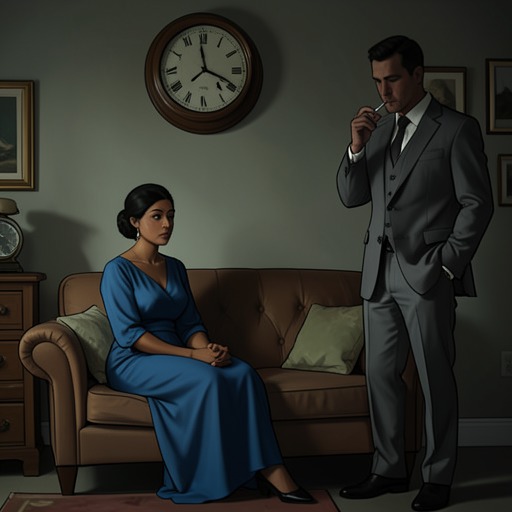
Lockridge is having an affair with Sue-Lynn Maciver while still acting as her doctor. Their relationship is already established when the narrative introduces them: she treats the cost of their first sexual encounter as a private joke, while he replies lightly. The ease between them does not remove the professional conflict. Lockridge is uneasy about being reminded that he remains her physician, and he recognizes that the medical profession disapproves of doctors having sexual relationships with patients. Sue-Lynn, by contrast, sees his continued position as her doctor as a convenient cover for visits to his surgery and to her home.
Palinurus Maciver Senior had removed Lockridge from his own medical list before his death. Lockridge initially wondered whether this meant that Palinurus Maciver Senior had discovered the affair. He later tells Edgar Wield that the change made him wonder, especially because Palinurus Maciver Senior remained friendly with him socially. Lockridge had no definite answer: after the death, he began to reconsider whether the decision to change doctors had carried a personal meaning he had missed at the time.
The affair is not disclosed when Lockridge first takes part in the death inquiry. Outside the house, Peter Pascoe sees Sue-Lynn leave a parked car as it pulls away and recognizes Lockridge’s profile inside. Later, when Pascoe meets Lockridge at the hospital, Lockridge is walking with Vic Chakravarty and appears displeased to be interrupted. Asked about the death, he first invokes doctor–patient confidentiality. Pascoe challenges the consistency of that position, pointing out that Lockridge had said Palinurus Maciver Senior was no longer his patient. Lockridge retreats to the distinction between his former professional connection and his work as the attending police doctor, and says he included his observations in his report.
Evidence and investigation
Lockridge explains to Pascoe that Palinurus Maciver Senior had chosen to take his private medical business elsewhere. Because he had not seen him often in a professional capacity, Lockridge says he had regarded the change as unremarkable; the two continued to encounter one another socially, and he thought Palinurus Maciver Senior might have preferred to keep the social and medical relationships separate. Pascoe considers the report useful, but remains alert to the contrast between Lockridge’s stated distance from his former patient and his undisclosed intimacy with the widow.
Lockridge’s manner contributes to that unease. During their hospital conversation, he offers the suggestion that the deceased’s condition indicated severe mental disturbance. After Pascoe leaves, Lockridge remains standing in the corridor; Pascoe reads his appearance as unsettled, though this is an impression rather than proof of wrongdoing. The scene keeps his medical assessment and personal state distinct while allowing them to cast a shadow over one another.
The police later address the concealment directly. Andrew Dalziel instructs Peter Pascoe to have Lockridge suspended from the medical examiner list for failing to disclose his intimate connection with a key witness in a case on which he had advised. Edgar Wield carries out the confrontation at Lockridge’s surgery on a Saturday morning. Lockridge objects that he had told the senior officer Sue-Lynn was his patient; Wield’s point is that this did not disclose that she was also his lover. Pressed first in a harsh tone and then offered a less confrontational way through the conversation, Lockridge gives a detailed account of the affair. Wield regards it as comprehensive and accurate, but its accuracy does not undo the failure to reveal the relationship at the time it mattered.
The will and Lockridge’s interests
Lockridge’s account to Wield links the affair to a further, practical stake in the case. He says that his own marriage to Mary had long been failing and that he expected the separation to leave him financially constrained. He believed Sue-Lynn would have been substantially better provided for under the circumstances he expected before Palinurus Maciver Junior changed his will. Lockridge describes himself and Sue-Lynn as not mercenary, but acknowledges that he could not see a future for them without overturning the will. His personal hopes therefore depend, at least in his own account, on a legal dispute over the dead man’s estate.
That interest helps explain why Lockridge has sought information from Vic Chakravarty. Lockridge believes the consultant may know something about Palinurus Maciver Senior’s health that could support the claim that he was mentally impaired when he altered the will. He interprets Chakravarty’s insistence on patient confidentiality as a sign that there may be relevant information, and asks Wield to press the consultant. The inference remains Lockridge’s suspicion, not an established medical finding. Wield recognizes that Lockridge is asking him to use police influence for a purpose tied to Lockridge’s own prospects, and questions whether he has a proper reason to intervene.
Narrative role
Lockridge’s importance lies less in a single decisive revelation than in the collisions among his roles. His medical expertise helps establish the identity and probable cause of death; his past care of Palinurus Maciver Senior offers context but also raises questions about what he knew. His affair with Sue-Lynn makes him a potentially important witness, while his failure to disclose it undermines the openness expected of a police medical examiner. His interest in the will further complicates his position, since the outcome he hopes for is connected to his own future with Sue-Lynn.
The story does not make Lockridge’s suspicions about Palinurus Maciver Senior’s health conclusive, nor does his account settle the circumstances of the death. Instead, his overlapping loyalties show how information in the inquiry is shaped by relationships and interests: a clinical observation may be relevant, but the person offering or pursuing it is not detached from its consequences. Lockridge remains a doctor whose report matters, a lover whose connection was concealed, and an advocate for a line of inquiry that could benefit him personally.