Aether Crew Psychological Crisis
Good Morning, MidnightThe psychological crisis among Aether’s crew is the gradual unmaking of a team under prolonged uncertainty: silence from Earth severs the astronauts from familiar routines and from one another, until ordinary work seems unable to justify itself. Their responses differ—anger, compulsive distraction, withdrawal, and nostalgia—but the underlying strain is shared. The novel presents recovery not as a clean return to the earlier harmony, but as an effort to keep working, care for one another, and remain receptive to contact even after loss has made the danger intimate.
Isolation and the Unraveling of Routine
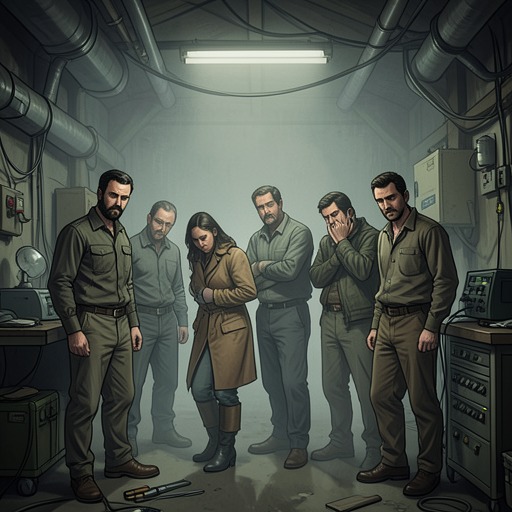
After the crew’s survey of Callisto and Ganymede and the ship’s slingshot around Jupiter, Aether settles into its long return journey. Mission Control’s uplinks cease, including the family communications that had helped sustain the crew. The silence is not merely an absence of news: it breaks the structure that had organized life aboard ship. The astronauts stop keeping regular schedules for sleep, meals, and relaxation, and begin acting as separate people rather than a unit. What had been a close community during the moon survey exposes a volatile core once its shared routines fall away.
The loss of purpose deepens as the months stretch ahead. The crew cannot know what awaits them on Earth, still ten months away, or whether the people they left behind have survived. Medication, exercise, and research begin to seem pointless if they will never return to Earth’s gravity or share their findings. Sully notices the change in herself as well as in the others: she types, writes, moves, and thinks more slowly. Initial curiosity about what has happened gives way to a surrender shaped by the lack of evidence; there is no data to study except the silence itself. Each bunk becomes a private bubble of memory, while conversation narrows to what the present demands.
Different Forms of Withdrawal
Ivanov becomes reclusive and temperamental, spending long stretches shut away in his lab. Tal, once absorbed by the precise challenges of landing modules and navigating the Jupiter maneuver, turns to video games after the silence from Mission Control and the loss of family uplinks wear him down. His frustration spills into the equipment: controllers and other gaming devices are thrown across Little Earth, and after one outburst he spends the rest of the day trying to repair a shattered steering wheel. He returns to the console the next day. The games offer concentration and a brief release, but they do not restore his connection to the others.
Devi’s distress takes a quieter form. The youngest crew member and its most brilliant engineer becomes disengaged both from machines and from people. She misses obvious problems in repairs, fails to notice troubling sounds, and passes over malfunctioning components. Her attention seems to drift away from the ship she once helped maintain. Sully recognizes that the change is part of a broader unraveling, not an isolated lapse, while Thebes identifies the seriousness of Devi’s decline and speaks with Sully about it.
Care Amid the Silence
Thebes responds by making care practical and sustained. He works alongside Devi, taking on additional work, and tells her stories about being recruited into the South African space program when it was still new. Sully spends off-hours with Devi, trying to support regular exercise, meals, and sleep, and asking about her family and childhood. Neither can close the widening distance between the crew and Earth, but their efforts keep open a human connection that the silence threatens to erase.
One night, Devi joins Sully behind her privacy curtain. The two lie side by side in the dark, close enough for Sully to feel Devi’s suppressed sob, but Sully cannot promise that everything will be all right. Devi describes a recurring dream of her mother’s kitchen in Kolkata: her brothers eating rice and dal, her parents watching over them, and a family meal that seems to last for hours. The dream always turns painful when she realizes that her family is gone and she is alone. When Sully wakes to find Devi weeping, she remembers Lucy’s childhood nightmares but cannot summon the words she once might have used to comfort her daughter. She moves closer, and she weeps too. The scene makes the crisis more than a failure of discipline: the crew’s private histories are present in the ship, even when they cannot make the future less uncertain.
Thebes continues to attend to the other astronauts as well. He coaxes Tal away from the console to harvest vegetables in the greenhouse corridor, visits Ivanov in the lab, asks attentive questions, and sets aside leftovers for him. He also talks quietly with Harper, who afterward seems less burdened. Thebes understands the crisis better than the others, but his patience cannot save six people from the conditions surrounding them. He can make the days a little easier; he cannot make the silence stop.
Loss, Work, and a Changed Connection
Devi’s death during a spacewalk intensifies the crisis for Sully. In its immediate aftermath she repeatedly imagines different endings in which she could have brought Devi back, but these imagined alternatives offer no relief. She follows Harper’s instruction to finish installing the bolts and return to the airlock, then withdraws behind the curtain in her compartment. The crew visits her, but she can manage only one answer: tomorrow. She needs to get beyond the day on which she held the radio dish while Devi died beside her. The others’ concern reaches her as distant voices and knocks, while the memory of the spacewalk remains impossible to escape.
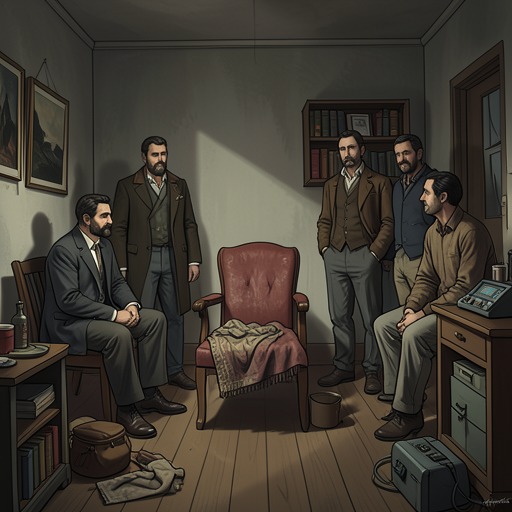
When Sully returns to work on the new communications system, Thebes works beside her without pressing her to discuss the loss. She is grateful for the silence and for the task’s narrow demands; she fears that an expression of sympathy might send her back into hiding. Yet she begins to recognize that the tragedy belongs to all of them. The others watched Devi drift away through the helmet cameras, and the same image is lodged in their minds too. At lunch, the surviving crew gathers around a saved dish of shepherd’s pie. Ivanov is crying, and Sully realizes she is crying as well. They eat together in silence and then take one another’s hands. This small act does not resolve their grief, but it breaks the isolation in which Sully has been holding it.
After Thebes and Sully calibrate the new communications system, its reception is as good as it can be. Sully stays to listen. She does not claim that the system has already connected them to anyone; rather, the work leaves her less alone because she and the crew have done what they can to make a reply possible. If no one answers, their efforts will not have been wasted through neglect. The later image of Ivanov playing a game beside Tal, while Harper and Thebes play cards with nuts and bolts, marks a modest return of shared activity. The crew has not recovered its old certainty, and the unanswered signal remains a fact of their situation. But listening, working, remembering Devi, and sitting together become ways of resisting the separation that had made each astronaut seem like an entity unto themselves.