Derek refused Indy due to a nightmare
Grumpy Billionaire CEO's Nanny: An Age Gap Forced Proximity RomanceDerek Joyce’s nightmare-driven rejection of Indy is the decisive rupture between desire and grief in their developing relationship. After an unexpectedly intimate night, Derek is confronted by a vivid dream of Cassidy, whose accusation transforms his longing for Indy into guilt. Unable to separate the memory of his dead wife from the possibility of a new life, he tells Indy that their night was a mistake. The rejection wounds Indy, exposes the depth of Derek’s unresolved survivor’s guilt, and becomes the crisis that eventually forces him toward honesty, treatment, and a renewed commitment to her.
Causes and Background
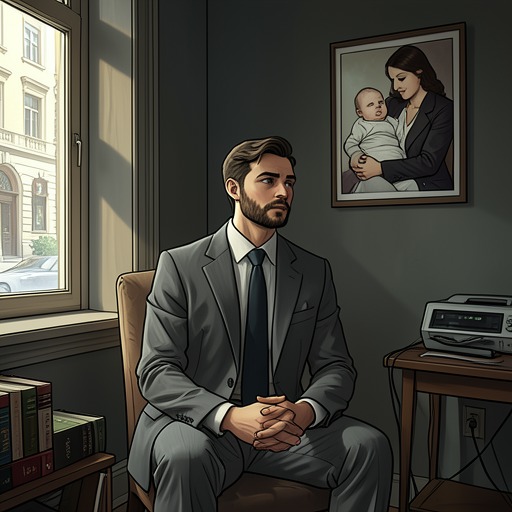
Derek’s reaction grows out of Cassidy’s death during the birth of their daughter, Isabella. He remembers Cassidy as the light of his life and still returns to photographs of her: one taken when she held the newborn Isabella despite her uncontrolled bleeding, and another showing her pregnant beside the wooden letters of Isabella’s name in the nursery. The images preserve both love and catastrophe. Cassidy had been able to hold their child, but her sadness suggested that she understood she was leaving Isabella behind. Derek treasures those moments while also being unable to accept the cruel ending that followed.
The photographs function as a daily ritual of remembrance. Derek studies Cassidy’s image each night so he will not forget her face, even though he believes forgetting is impossible. His grief is therefore not absence alone; it is an active presence carried into the household, his fatherhood, and his understanding of intimacy. He has spent twelve years fearing that happiness would betray Cassidy, while loneliness has continued beneath the life he shares with Isabella.
Indy intensifies the conflict because Derek’s attraction to her is not merely hypothetical. He remembers kissing her on the ship and recognizes that their later kiss felt even more intense. He also wonders whether her arrival for the nanny position, months after their first encounter, might somehow be connected to Cassidy’s memory or permission. That possibility comforts and unsettles him at once. He wants the family life he has lost, yet interprets wanting it again as a moral failure.
The Nightmare and the Reversal
After Derek and Indy sleep together, the narrative shifts into a nightmare that repeats the hospital setting associated with Cassidy’s death. In earlier nightmares, Cassidy has blamed Derek for her death; this time, however, she attacks him for bringing Indy into the house and bed, asking whether he no longer loves her. Her hands close around his throat, turning psychological guilt into an experience of physical suffocation. Derek tries to free himself, gives up, and wakes with sweat pouring from him and his throat hurting as if the assault had really occurred.
The dream changes the value of the preceding night. What had offered Derek intimacy, companionship, and the possibility of renewed happiness becomes, in his frightened interpretation, evidence that he has betrayed Cassidy. He finds Indy no longer beside him and sees her asleep on the couch, briefly considering sending her back to the guest house. Instead of returning to rest, he drinks water and remains unable to sleep while the sound of the waves continues outside. The sea cannot quiet the nightmare, and the date’s success only sharpens his regret because the night has gone better than he expected.
Derek explicitly understands the rejection as a failure of self-control. He believes he should have let Indy return to the guest house, but he could not resist the attraction between them. His guilt is not caused by anything Indy has done; it comes from his conviction that moving toward her means moving away from Cassidy. The nightmare makes that conviction feel like judgment, while the insomnia keeps the judgment active after the dream has ended.
Calling the Night a Mistake
The next morning, Derek’s emotional retreat becomes an outward action. When Indy tries to discuss what happened, he pushes away and says, “It was a mistake.” The sentence reduces a night of mutual closeness to an error and denies the meaning Indy had attached to it. She had wanted to tell him that the night was amazing and that she had valued learning more about him, but his answer makes clear that they are not emotionally aligned in that moment.
Indy responds with anger and self-protection rather than pleading. When Derek calls after her using her formal name, she points out the distance in that choice and refuses to wait. She tells him to contact her when he needs her at the house for Isabella, then returns to the guest house where Amina immediately recognizes that the night has gone badly. Indy’s frustration is compounded by her inability to concentrate on her book: Derek and his words occupy her thoughts, and she concludes that he was right about the bleakness of her life. His rejection therefore damages not only their romance but also Indy’s already fragile sense of worth.
Derek later recounts the sequence to his brother Jacob: Cassidy appeared in the nightmare, he expelled Indy the next morning, and he called their night a mistake. Jacob challenges the logic of treating grief as a permanent prohibition. He points out that Cassidy has been gone for twelve years and tells Derek that he is the one preventing himself from being with someone. Isabella’s happiness also becomes part of Jacob’s argument: Derek must consider what she wants for him rather than allowing his fear to govern the household. Derek admits that Jacob is right, marking the first clear recognition that the obstacle is internal.
Consequences and Repair
The rejection does not end Derek’s feelings for Indy; it reveals how strongly those feelings conflict with his trauma. Derek tells Indy that Cassidy had died from a birth complication: after the bleeding could not initially be controlled, Cassidy briefly held Isabella before she was gone. He explains that the latest nightmare frightened him more than the earlier ones. Indy is therefore given the history beneath his cruelty, but the disclosure does not erase the injury caused by his words.
Derek then makes a concrete promise rather than offering only regret. He says he will obtain help for his emotions about Cassidy and tells Indy that he genuinely wants their relationship to work. He has already spoken with Isabella, who is happy if he is happy, and he acknowledges that he may not find this possibility with anyone else. When Indy asks what will happen if the same pattern recurs, Derek promises to talk it through instead of pushing her away. He identifies the rejection itself as his mistake and commits to changing the way he responds to fear.
That commitment receives immediate narrative confirmation. Derek schedules an appointment after bringing Isabella home and tells Indy that he is trying because he does not want to lose her. Later, after finishing sandwiches and settling beside her, he falls asleep without Cassidy’s screams haunting him for the first time in a long while. The dream that follows is not an accusation but a future image: Indy holds their child, an older version of that child plays with Isabella, and Derek and Indy eventually sit in rocking chairs while great-grandchildren run through the yard.
Narrative Significance
The event marks the darkest point in Derek and Indy’s romance because it converts an apparent mutual breakthrough into separation. Its power comes from the collision of two forms of attachment: Derek’s continuing bond with Cassidy and his emerging investment in Indy. Cassidy is not portrayed as simply replaced. She survives in photographs, memories, nightmares, and Derek’s moral imagination, first controlling his capacity for happiness and later becoming someone he hopes will encourage the life he chooses.
Derek’s movement after the rejection is consequently more than romantic reconciliation. He begins to distinguish remembrance from self-punishment. Treatment, communication, Isabella’s support, and the willingness to imagine a shared future all help him move from being governed by Cassidy’s death toward living with its reality. Hope appears only when he can imagine Cassidy cheering him on rather than dragging him backward. The nightmare-driven rejection is thus both a destructive act and a necessary revelation: Derek cannot build a future with Indy until he recognizes that grief may remain part of his life without having to dictate its limits.