
The Afghan Years and Their Afterlife
Guantanamo DiaryThis flow traces Slahi’s early participation in the Afghan war against communism and how that youthful history was later recast as evidence of continuing allegiance.
increasing Bearing strength in each event
 decreasing
Bearing strength in each eventdecreasingScholarship to Germany

A Student Leaves Home
Family Expectations
Mohamedou Ould Slahi left Mauritania on a scholarship to study in Germany. He was the first in his family to attend university and carried the hope that he could help support a large household.
A New Life Abroad
He pursued electrical engineering and built a life in Germany, learning languages and forming friendships across communities. Study and work, rather than politics, became the ordinary structure of his young adulthood.
A Life Later Reinterpreted
The international moves that once reflected education and opportunity later appeared suspicious to investigators. His biography became a collection of locations to be treated as clues rather than as a life.
Training in Afghanistan
A Cause in Wartime
A Journey to Train
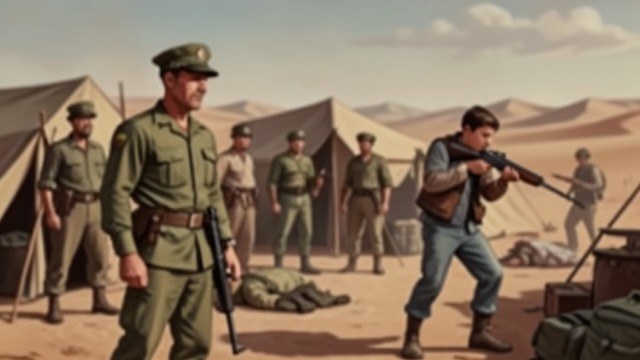
Slahi interrupted his studies to join the Afghan struggle against the communist-led government. He trained for several weeks at the al-Farouq camp near Khost.
The Historical Context
The conflict was then supported by Western governments, including the United States. Slahi later described the period as participation in a cause he understood to be resistance to communism.
An Oath That Endured
During training he swore allegiance to al-Qaeda, the camp’s operators. That early oath became an enduring fact in later legal arguments, even as Slahi maintained that his participation ended soon afterward.
The Fall of Kabul

A Cause Changes Shape
Return to Afghanistan
Slahi returned to Afghanistan as the communist government approached collapse and joined a unit commanded by Jalaluddin Haqqani. The city of Gardez fell soon after his arrival.
Intra-Muslim Conflict
The victorious factions began fighting one another over power. Slahi said he saw no reason to continue fighting Muslims in a contest over political leadership.
Departure
He returned to Germany, describing the decision as the end of his involvement. The distinction between a past wartime role and later membership became central to his account and his detention case.
Family Ties to Abu Hafs

Kinship Under Suspicion
An Established Relationship
Slahi remained in contact with Mahfouz Ould al-Walid, his cousin and former brother-in-law, also known as Abu Hafs. Their family connection preceded the later security scrutiny.
Occasional Assistance
Slahi said he helped transfer money to Abu Hafs’s family on two occasions and maintained intermittent contact. The gestures were presented in court as possible support, while Slahi argued that they did not show active membership.
A Relationship Revisited
Abu Hafs’s senior position in al-Qaeda made ordinary kinship ties politically consequential. The same association later became one of the government’s most persistent arguments for detention.
Past Membership in Court
The Meaning of an Old Oath
Government’s Theory
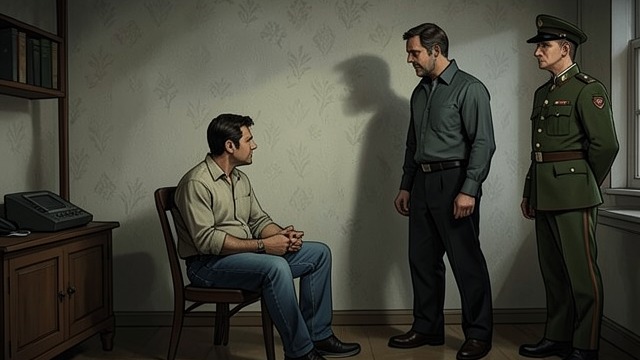
The government relied on Slahi’s oath, old contacts, and association with people who remained active in al-Qaeda to argue that he was still part of the organization when detained. The theory reached beyond any claim that he had fought against the United States.
Slahi’s Account
He maintained that the fall of the communist government ended his participation and that later contacts were sporadic. Judge Robertson considered whether those ties showed active membership or efforts to avoid becoming an enemy.
A Changed Legal Standard
The appellate court sent the case back under a broader standard for determining organizational membership. A youthful wartime history thus continued to shape his fate decades after it began.
1988
Early 1991
Early 1992
Mid-to-late 1990s
2009–2010
