
The Secret Detention Network
Guantanamo DiaryThis flow follows the machinery of secrecy that moved Slahi between governments, restricted access to him, and obscured his location from family and oversight.
increasing Bearing strength in each event
 decreasing
Bearing strength in each eventdecreasingLocal Arrests, Foreign Requests

Cooperation Without Charges
Repeated Interrogations
Senegalese and Mauritanian authorities detained Slahi at American request and questioned him about suspected links to the Millennium Plot. In each early episode, officials found no basis to keep him.
Unequal Leverage
Slahi’s account presents local authorities as facing pressure from a much more powerful foreign partner. Even release did not end the possibility that he could be summoned again.
A Pattern Takes Shape
The repeated requests turned a single investigation into a recurring cross-border process. The underlying suspicion remained uncertain, while the disruption to his life became increasingly concrete.
The Hidden Handover

Secrecy Replaces Process
A Citizen Taken Abroad
On Mauritanian Independence Day, Slahi was handed over for transport to Jordan, despite a constitutional principle against extraditing Mauritanian citizens. He was not given an ordinary judicial proceeding or a chance to say goodbye to his family.
A Trip to an Unknown Custody
The flight and transfer were arranged through intelligence cooperation, not a transparent public process. Slahi understood that his destination was Jordan only because officials disclosed it to him.
The Consequence
The transfer made secrecy a method of detention: family, diplomats, and public authorities could not readily locate him. The conflict now concerned not just allegations, but who had authority over his body and legal status.
The ICRC Cat-and-Mouse Game

Oversight Evaded
Concealed Location
In Jordan, officials moved Slahi periodically to a cellar to keep him from International Committee of the Red Cross visits. He discovered the practice through rules posted in the facility.
A Denied Request
When he asked to see the ICRC, his interrogator denied that it was present and said he was protecting him. Slahi recognized that the visits were being deliberately obstructed.
Isolation as Policy
The concealment prevented outside scrutiny during months of interrogation. It also prolonged his uncertainty about whether his family knew where he was or whether he would ever return home.
A Second Rendition
Transfer Into U.S. Custody
From Jordan to Bagram
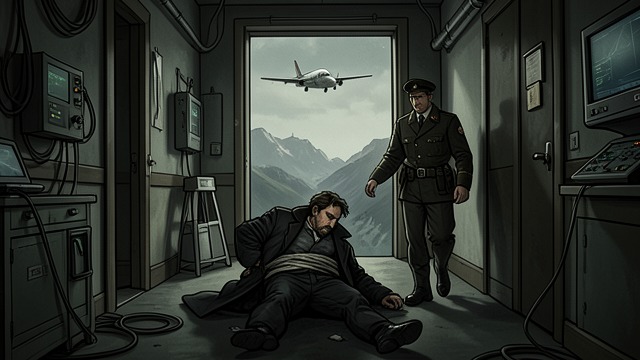
After months in Jordan, Slahi was retrieved by a CIA aircraft and taken to Bagram. The transfer involved stripping, restraints, sensory obstruction, and prolonged physical discomfort.
Bagram Interrogation
He was questioned about prominent Afghan figures and told that he would be sent to Guantánamo. He believed the United States might eventually recognize that he was not the person it sought.
Guantánamo Arrival
A military transport carried him with other detainees to Cuba. The transfers placed him inside a U.S.-run detention system while leaving the earlier secret custody largely beyond public view.
A Hidden Cell in Guantánamo

Isolation Behind the Camp
Covert Relocation
After months of escalating interrogation, Slahi was beaten and placed on a staged boat transfer designed to make him believe he had left the island. He was taken to a sealed, isolated hut at Camp Echo.
Restricted Access
For an extended period, even the ICRC could not visit him. The concealment echoed his earlier experience in Jordan, while the U.S. military controlled both the cell and the flow of information about him.
A Partial Return to Visibility
The ICRC eventually gained access in September 2004, after a prolonged dispute. Slahi remained cautious about disclosing abuse, fearing retaliation and doubting that disclosure would change his conditions.
2000–September 2001
November 28, 2001
December 2001–July 2002
July–August 2002
August 2003–September 2004
