Sciatica
Guantanamo DiarySciatica is a recurring medical condition in Mohamedou Ould Slahi’s account of detention at Guantánamo Bay detention camp, where back pain intersected with interrogation schedules, restrictions on medication, and rules governing whether he could sit or stand. He reported that the harsh conditions had already brought on a sciatic nerve attack, and later described prescribed medication for sciatic nerve pain. The condition therefore appears in the narrative both as a health problem and as a constraint that detention personnel knew about but did not consistently accommodate.
Symptoms and treatment
Slahi told interrogators that the conditions to which he was being exposed were affecting his health and that he had already experienced a sciatic nerve attack. He also warned that further harsh treatment would not make him more cooperative. His account establishes the pain as present during the interrogation period, rather than as a condition introduced only in retrospect, and connects it to the circumstances in which he was held.
He described having two prescriptions: medication for sciatic nerve back pain and Ensure to address weight loss since his arrest. The distinction matters in his account. These were not presented as optional comforts, but as measures he considered necessary to manage pain and maintain his health. He said he usually received the medication between four and five in the afternoon, a timing that made the daily schedule of interrogation consequential to treatment.
Interrogation and daily conditions
Slahi reported that interrogators arranged sessions to overlap with the time he was due to take his medication. As a result, he missed doses while in interrogation. He questioned the logic of a system in which his back was being aggravated while the medication intended to address the pain was withheld through scheduling. His account makes the timing itself part of the condition: the obstacle was not only the existence of sciatica, but the way the routine of detention interfered with access to treatment.
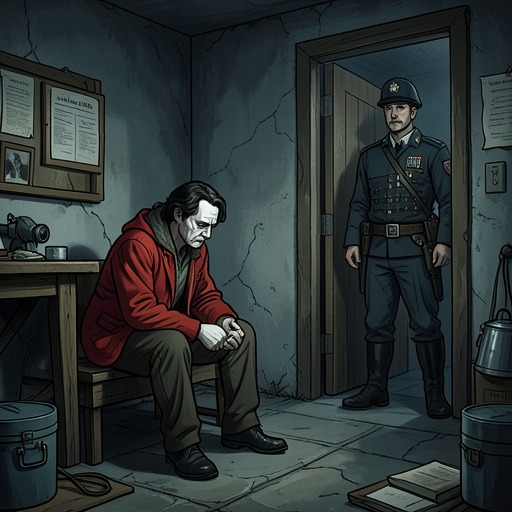
The rules about sitting and standing added another practical burden. During one afternoon shift, an interrogator told detention staff not to provide a chair. Slahi was left to sit on the dirty floor, but guards made him stand while he waited for the interrogator to arrive. The interrogator then decided whether he could sit or had to remain standing during her shift; afterward, another guard kept him standing for the remainder of the day. The sequence shows how control over an ordinary posture was divided among staff and extended beyond a single interview.
Slahi also described a guard who, despite knowing about his sciatic nerve condition, made him stand for hours during the night and repeatedly ordered him to clean his cell and shower. These details locate the condition within repeated routines rather than one isolated medical episode. The account does not suggest that every guard responded identically, but it does show that awareness of the pain did not reliably prevent practices that made standing compulsory.
Medical attention and its limits
At a clinic visit, a medical professional acknowledged that Slahi had a serious case of sciatic nerve pain. Slahi told him that he could no longer endure the conditions and explained that he was being prevented from taking both his pain medication and Ensure. The account gives the appointment a specific but limited outcome: the clinician said he could make a recommendation, while the decision rested with others. Slahi left with some hope, but reported that his situation worsened afterward.
He later told interrogators that a doctor had also found high blood pressure, which he contrasted with his previous low blood pressure. The interrogators replied that they had spoken with the doctor and that he was all right. Slahi understood this exchange as a sign that the existing routine would continue. High blood pressure is a separate reported medical development, not another symptom of sciatica; its place in the account is to show that a medical consultation did not, in his experience, bring a change in the treatment schedule or conditions.
Evidence and narrative significance
Slahi’s description of sciatica is a first-person account of symptoms, medication, and the practical effects of detention. Separately, records examined by an investigator for the prosecution team included detailed memoranda from interrogators. The Senate Armed Services Committee inquiry into detainee treatment and a 2008 review by the U.S. Department of Justice summarized records of the special interrogation and documented its methods. Those sources corroborate the broader context of an organized interrogation program; the cited account does not establish that they independently confirmed Slahi’s diagnosis or every detail of missed medication.
That distinction gives the condition a precise place in the narrative. Sciatica is neither reduced to a diagnosis alone nor treated as proof of claims the available records do not specifically verify. Instead, the memoir follows its consequences through pain, prescribed treatment, missed doses, clinic access, and rules about standing. The condition makes the daily arrangements of detention legible: a medication hour could be displaced by an interrogation, a chair could be withheld, and a medical recommendation could fail to alter what happened next. Its significance lies in that continuing mismatch between a recognized health need and the limited control Slahi had over the conditions of care.