Torture and coercive interrogation
Guantanamo DiaryTorture and coercive interrogation in Guantánamo are depicted as a system designed to make detainees speak and to prolong pressure when ordinary questioning produced little information. Mohamedou Ould Slahi describes a secret task force, a succession of methods, and an escalation from sleep disruption and isolation to physical coercion. His account is not presented alone: investigative files and government reviews described in the book support important parts of his chronology, even as redactions and the limits of the available record require care about what can be known.
A system built around extracting information
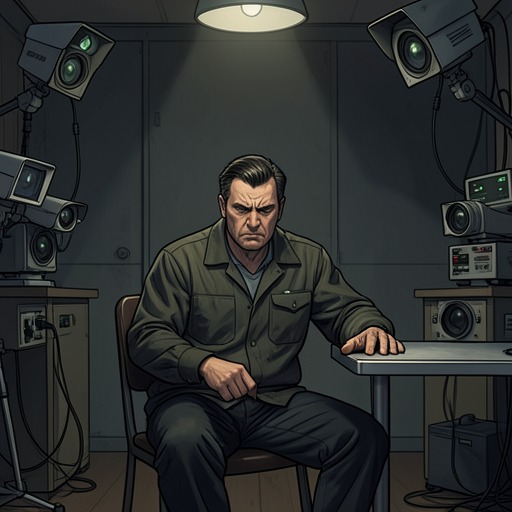
Slahi places coercive interrogation within a larger institutional setting. He recalls that detainees generally expected questioning to lead to charges and a court decision, but says that the process instead continued as interrogators sought further information. In his account, reports that produced no new intelligence did not end questioning. The organization responded by creating a smaller, highly secret task force within a larger body, bringing together personnel from the U.S. Army, the U.S. Marines, the U.S. Navy, and civilian agencies. Its assigned purpose was to coerce information from detainees.
That structure matters to the meaning of the abuse in the memoir. The methods are not described as isolated encounters without an institutional context: Slahi connects them to a unit organized specifically around eliciting information and operating under secrecy. He also presents a contradiction between the detainees’ expectation that cooperation would bring a legal resolution and the continuing demand for more answers. The interrogation process, as he describes it, could expand rather than conclude as information accumulated.
Sustained pressure and escalation
Slahi says one interrogator kept him awake for about two months. The account describes a combination of environmental controls and imposed activity intended to prevent sleep, including changes to room temperature, repeated writing tasks, and extended periods of standing. He also recounts being subjected to humiliating treatment. The measures were directed not simply at obtaining an answer in a particular session but at wearing down his resistance over time; he says they failed to secure the cooperation the interrogators wanted.
His description places these methods among other detainees’ experiences. He heard doors and chains as people were moved, and describes detainees being kept in dark rooms with disturbing images and repeated loud music. He also reports that Islamic practices, including prayer and recitation, were forbidden. The account therefore links pressure on the body and senses with restrictions on religious practice, while showing that the interrogator’s work extended across multiple detainees rather than being confined to Slahi alone.
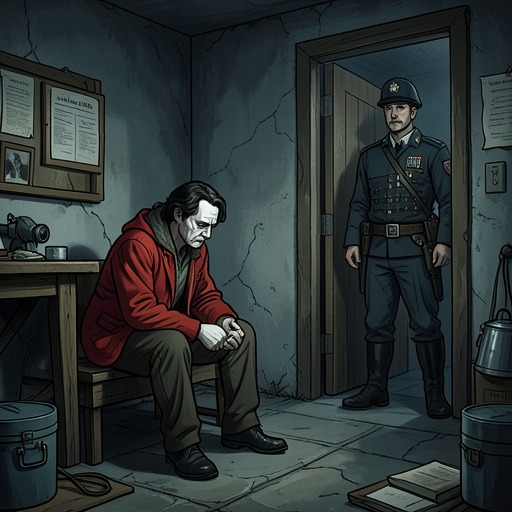
When the special team concluded, in Slahi’s account, that he would not cooperate as desired, the treatment escalated. He describes being removed from an interrogation room, subjected to physical coercion by interrogators, and then handed to an Arabic-speaking team that continued the abuse. After several hours, he was returned to his cell. He later learned that an interrogator had wanted to visit him in a friendly capacity; Slahi showed no interest, and the visit was canceled. He remained in the same cell, though he eventually no longer had to pretend that he did not know where he was.
Records and corroboration
The account is connected to records obtained by an investigator working with Stuart Couch, the military prosecutor assigned to Slahi’s case in 2003. The investigator gained access to interrogators’ files, including daily memoranda that recorded both what was said and how information was obtained. Those underlying records remained classified, but the Senate Armed Services Committee and the U.S. Department of Justice summarized them in investigations published in 2008. According to the introductory account, their descriptions of the special interrogation plan broadly matched Slahi’s narrative and persuaded Couch that Slahi had been tortured.
The records included a fabricated State Department letter presented to Slahi in August 2003. It falsely suggested that his mother had been detained and might be transferred to Guantánamo, using his relationship with her as leverage. Another documented episode concerned an October 2003 exchange between an interrogator and a military psychiatrist after Slahi reported hearing voices. The exchange connected the report to the lack of daylight and human interaction and discussed hallucinations as a possible consequence of sensory deprivation. Together, these episodes show how the interrogation used deception and isolation, while the files preserved evidence about the methods and their effects.
A further example appears in the Senate committee’s account of the plan to move Slahi to Camp Echo. The committee described a staged removal from his cell, a disorienting boat ride intended to make him think he had left the island, and an isolated hut adapted to limit outside stimuli. The plan included measures to block light and reduce visual contact with guards. A proposed helicopter transfer was not used; the Justice Department inspector general’s account says it was abandoned as too difficult to arrange. These details show the planned use of deception and sensory restriction, while distinguishing the original proposal from what the investigators reported was actually carried out.
Consequences and the demand for accountability
Slahi says doctors were not allowed to see him until around March 2004 and that he first received psychological assistance the following month. He reports taking medication for depression and sleep, receiving vitamins for a condition associated with lack of sunlight, and meeting with psychologists. Although those sessions helped, he says he was afraid to tell the clinicians the real reason for his condition because he feared retaliation. The account thus links the interrogation regime to lasting health needs and to the continuing constraints on what he felt safe to disclose.
In reflecting on torture, Slahi presents his testimony as a claim grounded in personal experience rather than a request for automatic belief. He says he tried to be fair to the U.S. government, other detainees, and himself, and calls for a public investigation that would allow him to present witnesses in a proper judicial process. He also distinguishes the conduct of particular personnel from a general judgment about Americans, while attributing the wider climate to confusion and vengeance after the September 11 attacks. The passage places interrogation within a secret government operation to detain, torture, or kill terrorism suspects, which Slahi argues lacked a legal basis.
Redaction, evidence, and the limits of reconstruction
The book’s documentary account is shaped by censorship as well as by the events it describes. Black bars obscure names and details, interrupt narrative continuity, and make it harder to see the contours of some characters. Editorial annotations attempt to clarify redactions through context in the manuscript and publicly available sources, including declassified documents, reporting, litigation, and government investigations. Their purpose is not to reconstruct the original classified text or claim access to it; proposed identifications remain speculation unless supported by public records or careful reading.
That distinction is central to how the account of torture can be assessed. Slahi’s first-person narrative, the interrogators’ records summarized in official investigations, and editorial inferences do not have identical evidentiary status. The documented overlap strengthens the account of particular practices, but the redactions prevent a complete reconstruction and the annotations acknowledge the possibility of error. The resulting tension is not incidental: secrecy both conceals the interrogation regime and leaves visible traces of the process by which its evidence is read, checked, and challenged.