before the main story
Gulliver's Early Life and Voyages
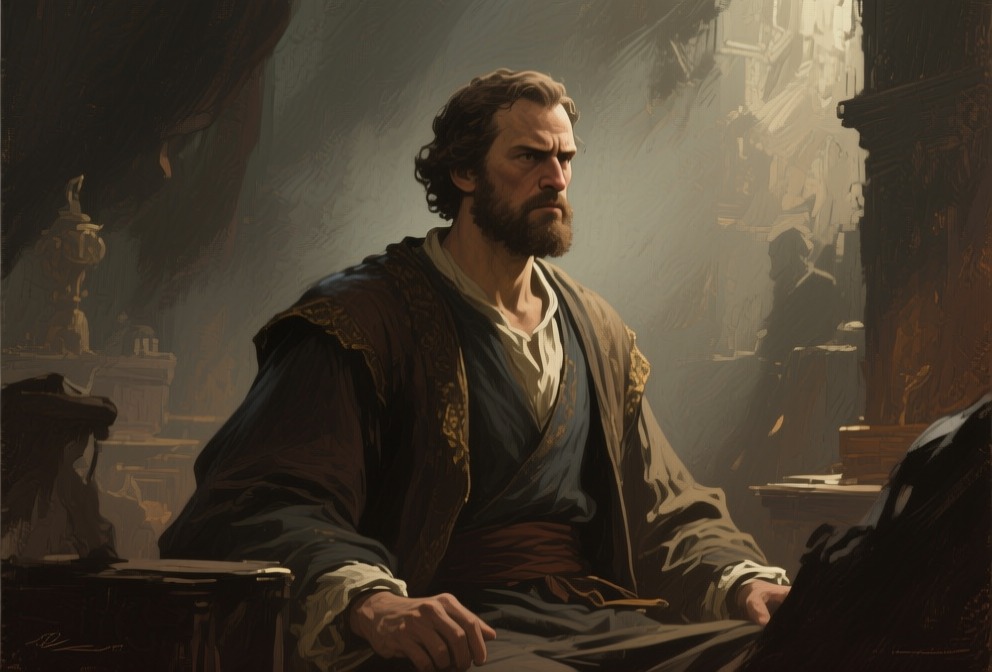
Lemuel Gulliver, the third of five sons of a small Nottinghamshire estate owner, is sent to Emmanuel College in Cambridge at age fourteen. After three years of study, he is apprenticed to Mr. James Bates, a London surgeon, for four years, during which he also learns navigation and mathematics, anticipating a life of travel. Upon leaving Bates, he studies physic at Leyden for two years and seven months, knowing it will be useful on long voyages. Returning from Leyden, he serves as surgeon on the Swallow under Captain Abraham Pannell for three and a half years, making voyages to the Levant and other parts. He then settles in London, marries Mary Burton, and receives a portion of four hundred pounds. After his master Bates dies and his practice fails, he returns to sea, serving as surgeon on two ships for six years, voyaging to the East and West Indies. The last of these voyages proves unfortunate, and he grows weary of the sea, intending to stay home with his wife and family. He moves from the Old Jewry to Fetter Lane and then to Wapping, hoping to get business among sailors, but it does not turn to account. After three years of expectation that things would mend, he accepts an advantageous offer from Captain William Prichard, master of the Antelope, who is making a voyage to the South Sea. They set sail from Bristol on May 4, 1699.
5 November 1699
Shipwreck of the Antelope
On the fifth of November, 1699, the Antelope is driven by a violent storm onto a rock northwest of Van Diemen's Land. The ship splits immediately. Six of the crew, including Gulliver, escape in a boat, but after rowing about three leagues, the boat is overset by a sudden flurry from the north. Gulliver's companions are all lost. He swims as fortune directs him, pushed forward by wind and tide, and eventually finds himself within his depth. He walks nearly a mile to the shore, arriving about eight o'clock in the evening. Exhausted, he drinks about half a pint of brandy and lies down on the short, soft grass, sleeping soundly for about nine hours. This shipwreck is the pivotal event that strands Gulliver in the unknown land of Lilliput, setting the entire adventure in motion.
early morning after the shipwreck
Gulliver Captured by Lilliputians
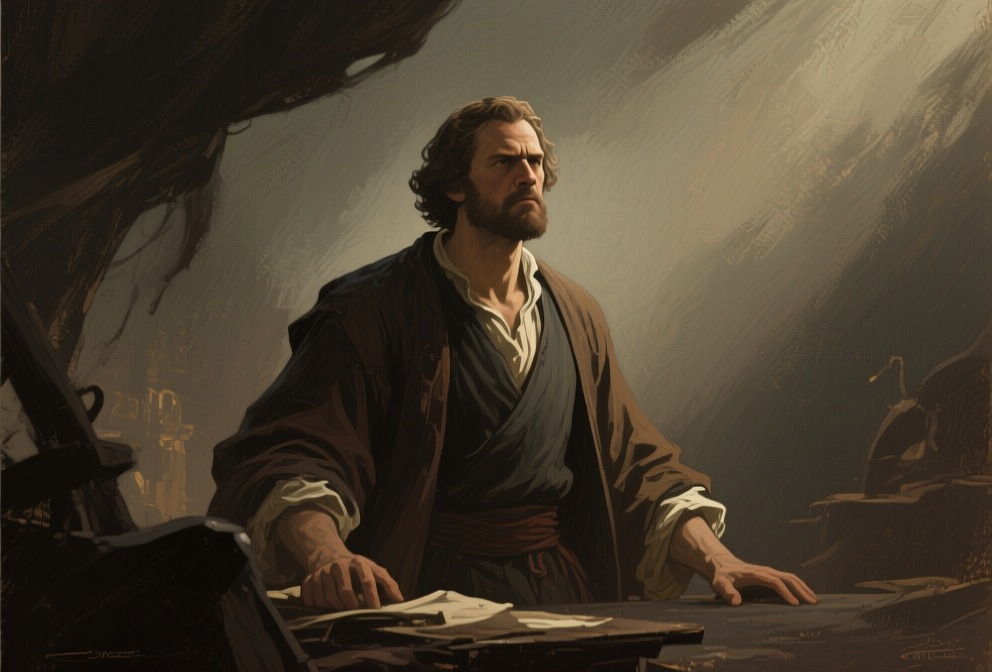
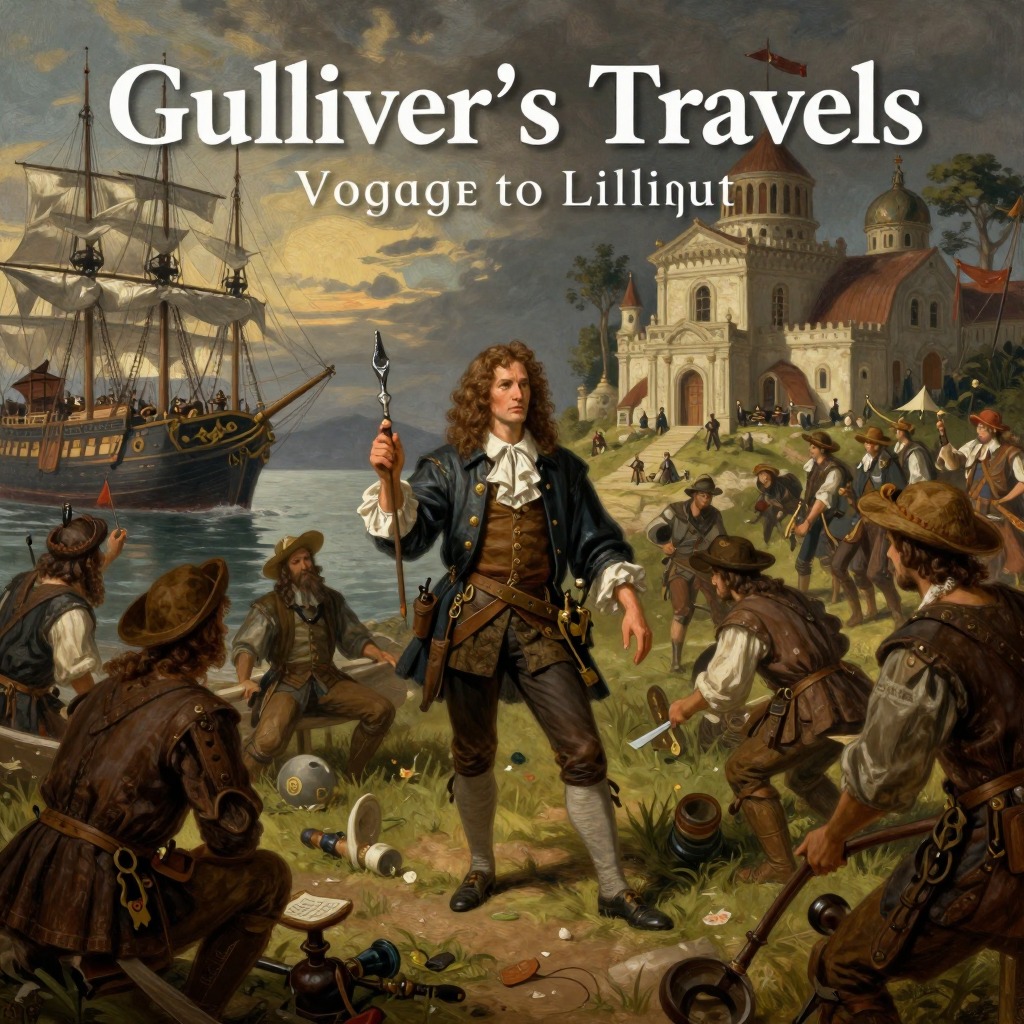
When Gulliver awakens at daylight, he finds himself unable to stir: his arms and legs are strongly fastened to the ground with numerous slender ligatures, and his long, thick hair is tied down. He feels something alive moving on his left leg, and bending his eyes downward, he perceives a human creature not six inches high, with a bow and arrow in his hands and a quiver at his back. At least forty more of the same kind follow. Gulliver roars so loud that they all run back in fright, but they soon return. One of them cries out "Hekinah degul!" in a shrill but distinct voice. Gulliver struggles to get loose, breaking the strings that fasten his left arm, but the creatures discharge a volley of arrows into his hand, pricking him like needles. He decides to lie still, planning to free himself at night. However, a person of quality mounts a stage erected near his right ear and makes a long speech, which Gulliver does not understand. Gulliver, almost famished with hunger, makes signs for food. The hurgo (a great lord) understands and commands that ladders be applied to his sides, and above a hundred inhabitants mount and walk towards his mouth, laden with baskets of meat. Gulliver eats heartily, and they also provide him with drink. After this, a person of high rank from the emperor presents his credentials and indicates that Gulliver must be conveyed to the capital city. Gulliver makes signs for liberty, but the official shakes his head, showing that he must be carried as a prisoner. Gulliver, feeling the smart of the arrows and seeing the number of enemies increase, gives tokens that they may do with him what they please. The hurgo and his train withdraw with civility. Soon after, Gulliver feels great numbers of people on his left side relaxing the cords, and he is able to turn upon his right. They daub his face and hands with a pleasant-smelling ointment that removes the smart of the arrows. He then falls into a deep sleep, caused by a sleepy potion mingled in the wine by the emperor's physicians.
the day after the shipwreck
Gulliver Transported to the Capital
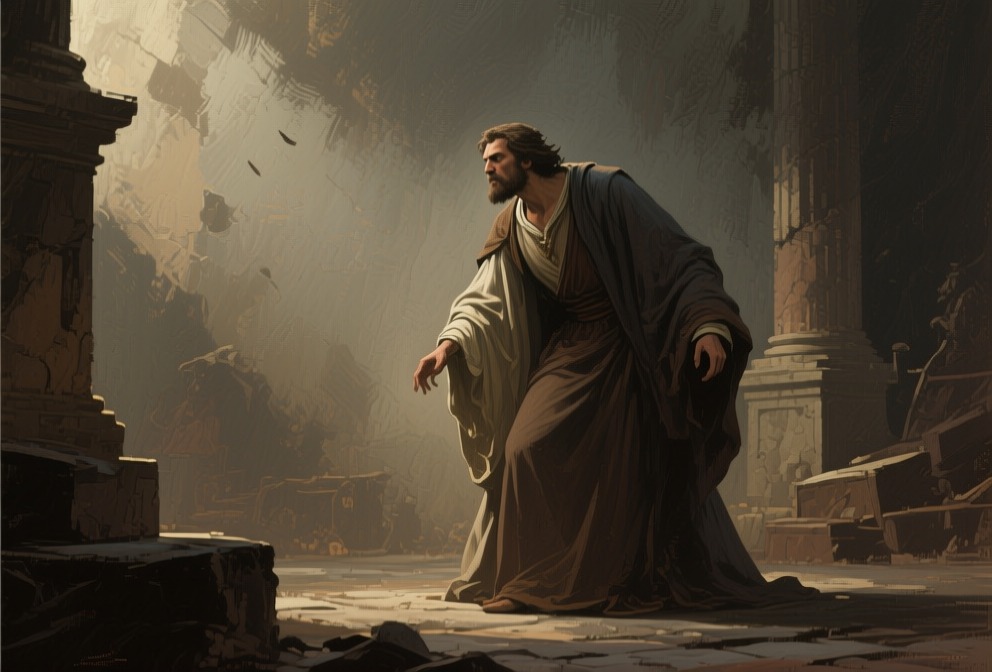
While Gulliver sleeps, the emperor's council decides to tie him as described and prepare a machine to carry him to the capital city. Five hundred carpenters and engineers are set to work to prepare the greatest engine they have: a frame of wood raised three inches from the ground, about seven feet long and four wide, moving upon twenty-two wheels. Eighty poles, each one foot high, are erected, and strong cords are fastened by hooks to many bandages girt round Gulliver's neck, hands, body, and legs. Nine hundred of the strongest men draw up these cords by many pulleys, and in less than three hours, Gulliver is raised and slung into the engine and tied fast. Fifteen hundred of the emperor's largest horses, each about four and a half inches high, are employed to draw him towards the metropolis. About four hours into the journey, Gulliver awakens because a young officer in the guards puts the sharp end of his half-pike up into his left nostril, making him sneeze violently. They make a long march the remaining part of the day and rest at night with five hundred guards on each side. The next morning at sunrise, they continue and arrive within two hundred yards of the city gates about noon. The emperor and all his court come out to meet him, but the great officers will not allow the emperor to mount on Gulliver's body. At the place where the carriage stops, there stands an ancient temple, the largest in the kingdom, which had been polluted by an unnatural murder and is now used for common purposes. It is determined that Gulliver shall lodge here. The king's smith conveys four score and eleven chains, like those that hang to a lady's watch, which are locked to Gulliver's left leg with six-and-thirty padlocks. Over against the temple, at twenty feet distance, there is a turret at least five feet high, where the emperor ascends with many principal lords to view Gulliver. It is reckoned that above a hundred thousand inhabitants come out of the town to see him, and in spite of his guards, at least ten thousand mount his body by the help of ladders. A proclamation is soon issued to forbid this upon pain of death. When the workmen find it impossible for Gulliver to break loose, they cut all the strings that bound him, and he rises up with a melancholy disposition. The chains that hold his left leg are about two yards long, giving him the liberty of walking backwards and forwards in a semi-circle and allowing him to creep into the temple and lie at full length.
after Gulliver's arrival at the temple
The Emperor Visits Gulliver
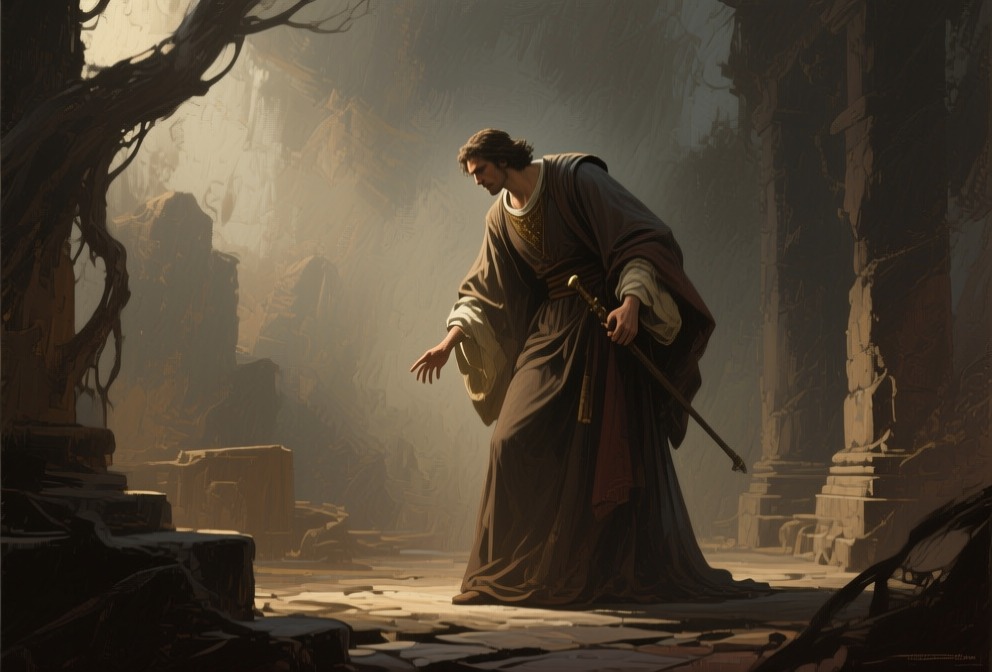
When Gulliver finds himself on his feet, he looks about and sees a most entertaining prospect: the country appears like a continued garden, with enclosed fields forty feet square resembling beds of flowers, intermingled with woods of half a stang, and the tallest trees about seven feet high. The emperor, who has already descended from the tower, advances on horseback towards Gulliver. The horse, unused to such a sight, rears up on his hind feet, but the emperor, an excellent horseman, keeps his seat until his attendants run in and hold the bridle, allowing him to dismount. He surveys Gulliver with great admiration but keeps without the length of his chain. He orders his cooks and butlers to give Gulliver victuals and drink, which they push forward in vehicles upon wheels. Gulliver empties twenty vehicles filled with meat, each affording him two or three good mouthfuls. The empress and young princes of the blood, attended by many ladies, sit at some distance in their chairs, but after the accident to the emperor's horse, they alight and come near his person. Gulliver describes the emperor: he is taller by almost the breadth of his nail than any of his court, with strong and masculine features, an Austrian lip and arched nose, olive complexion, erect countenance, and well-proportioned body and limbs. He is twenty-eight years and three-quarters old, having reigned about seven years in great felicity. His dress is plain and simple, but he wears a light helmet of gold adorned with jewels and a plume on the crest. He holds his sword drawn in his hand, almost three inches long, with a gold hilt and scabbard enriched with diamonds. His voice is shrill but very clear and articulate. The ladies and courtiers are magnificently clad. The emperor speaks often to Gulliver, but neither understands the other. Several priests and lawyers are commanded to address Gulliver, and he speaks to them in as many languages as he has a smattering of—High and Low Dutch, Latin, French, Spanish, Italian, and Lingua Franca—but all to no purpose. After about two hours, the court retires, and Gulliver is left with a strong guard. Some of the rabble shoot arrows at him, one narrowly missing his left eye. The colonel orders six ringleaders to be seized and delivered bound into Gulliver's hands. Gulliver takes them all on his right hand, puts five into his coat-pocket, and makes a countenance as if he would eat the sixth alive. The poor man squalls terribly, but Gulliver, looking mildly, cuts the strings and sets him gently on the ground, and he runs away. He treats the rest in the same manner, and both the soldiers and people are highly delighted at this mark of his clemency.
about a fortnight after arrival
Gulliver's Bed and Domestics
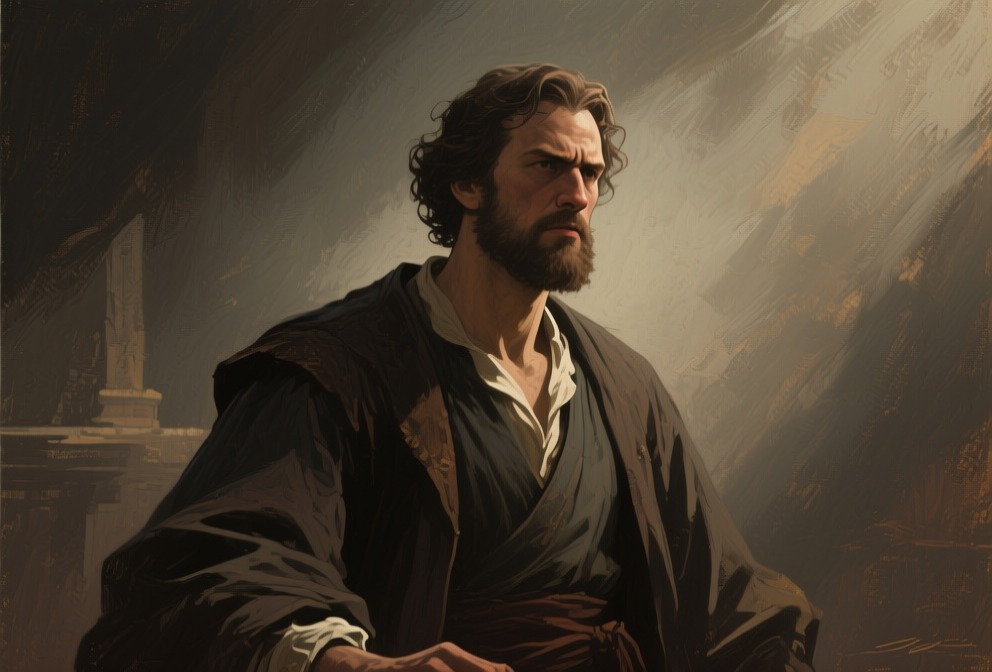
Towards night, Gulliver gets with some difficulty into his house, where he lies on the ground for about a fortnight. The emperor gives orders to have a bed prepared for him: six hundred beds of the common measure are brought in carriages and worked up in his house, with a hundred and fifty beds sewn together to make up the breadth and length, and these are four double, but they keep him but very indifferently from the hardness of the smooth stone floor. They also provide him with sheets, blankets, and coverlets. As the news of his arrival spreads, prodigious numbers of rich, idle, and curious people come to see him, so that the villages are almost emptied. The emperor provides against this inconvenience by several proclamations and orders of state, directing that those who have already beheld him should return home and not presume to come within fifty yards of his house without license from court, whereby the secretaries of state get considerable fees. The emperor holds frequent councils to debate what course should be taken with Gulliver. Some apprehend his breaking loose; others fear his diet will be very expensive and might cause a famine. Sometimes they determine to starve him or shoot him in the face and hands with poisoned arrows, but they consider that the stench of so large a carcass might produce a plague. In the midst of these consultations, several officers of the army give an account of Gulliver's behavior to the six criminals, which makes so favorable an impression that an imperial commission is issued out, obliging all the villages nine hundred yards round the city to deliver in every morning six beeves, forty sheep, and other victuals for his sustenance, with a proportionable quantity of bread and wine and other liquors. An establishment is also made of six hundred persons to be his domestics, with board-wages allowed for their maintenance and tents built on each side of his door. It is likewise ordered that three hundred tailors should make him a suit of clothes after the fashion of the country, that six of his majesty's greatest scholars should be employed to instruct him in their language, and that the emperor's horses and those of the nobility and troops of guards should be frequently exercised in his sight to accustom themselves to him.
about three weeks after arrival
Gulliver Learns the Language
All the orders for Gulliver's accommodation are duly put in execution, and in about three weeks he makes a great progress in learning the Lilliputian language. During this time, the emperor frequently honors him with his visits and is pleased to assist his masters in teaching him. They begin to converse together in some sort. The first words Gulliver learns are to express his desire that the emperor would please give him his liberty, which he every day repeats on his knees. The emperor's answer, as Gulliver can apprehend it, is that this must be a work of time, not to be thought on without the advice of his council, and that first he must "lumos kelmin pesso desmar lon emposo," that is, swear a peace with him and his kingdom. However, the emperor assures him that he shall be used with all kindness and advises him to acquire, by his patience and discreet behavior, the good opinion of himself and his subjects. The emperor also desires that Gulliver would not take it ill if he gives orders to certain proper officers to search him, for probably he might carry about him several weapons which must needs be dangerous things. Gulliver says his majesty shall be satisfied, for he is ready to strip himself and turn up his pockets before him. The emperor replies that by the laws of the kingdom, Gulliver must be searched by two of his officers, and that he knows this cannot be done without Gulliver's consent and assistance. He has so good an opinion of Gulliver's generosity and justice as to trust their persons in his hands, and whatever they take from him shall be returned when he leaves the country or paid for at the rate which he shall set upon them.
after Gulliver learns the language
Search of Gulliver's Pockets
Gulliver takes up the two officers in his hands and puts them first into his coat-pockets, then into every other pocket about him, except his two fobs and another secret pocket which he has no mind should be searched, wherein he has some little necessaries that are of no consequence to any but himself. In one of his fobs there is a silver watch, and in the other a small quantity of gold in a purse. The officers, having pen, ink, and paper about them, make an exact inventory of everything they see. They find in his right coat-pocket a great piece of coarse cloth; in the left pocket, a huge silver chest with a cover of the same metal, which they cannot lift, and when opened, one of them steps into it and finds himself up to the mid-leg in a sort of dust that sets them both sneezing. In his right waistcoat pocket, they find a prodigious number of white thin substances folded one over another, about the bigness of three men, tied with a strong cable and marked with black figures, which they humbly conceive to be writings. In the left, there is a sort of engine with twenty long poles, resembling palisadoes, which they conjecture the man-mountain uses to comb his head. In the large pocket on the right side of his middle cover (his breeches), they see a hollow pillar of iron about the length of a man, fastened to a strong piece of timber, with huge pieces of iron sticking out cut into strange figures. In the left pocket, another engine of the same kind. In the smaller pocket on the right side, several round flat pieces of white and red metal of different bulk, some of the white so large and heavy that they can hardly lift them. In the left pocket, two black pillars irregularly shaped, one of which contains a prodigious plate of steel, which Gulliver tells them he uses to shave his beard and cut his meat. Out of the right fob hangs a great silver chain with a wonderful kind of engine at the bottom, which makes an incessant noise like a water-mill; Gulliver calls it his oracle and says it points out the time for every action of his life. From the left fob, he takes out a net almost large enough for a fisherman, contrived to open and shut like a purse, containing several massy pieces of yellow metal. They also observe a girdle about his waist, from which on the left side hangs a sword of the length of five men, and on the right a bag or pouch divided into two cells, one containing several globes or balls of a most ponderous metal about the bigness of their heads, and the other a heap of certain black grains.
after the inventory is read
Gulliver Surrenders His Weapons
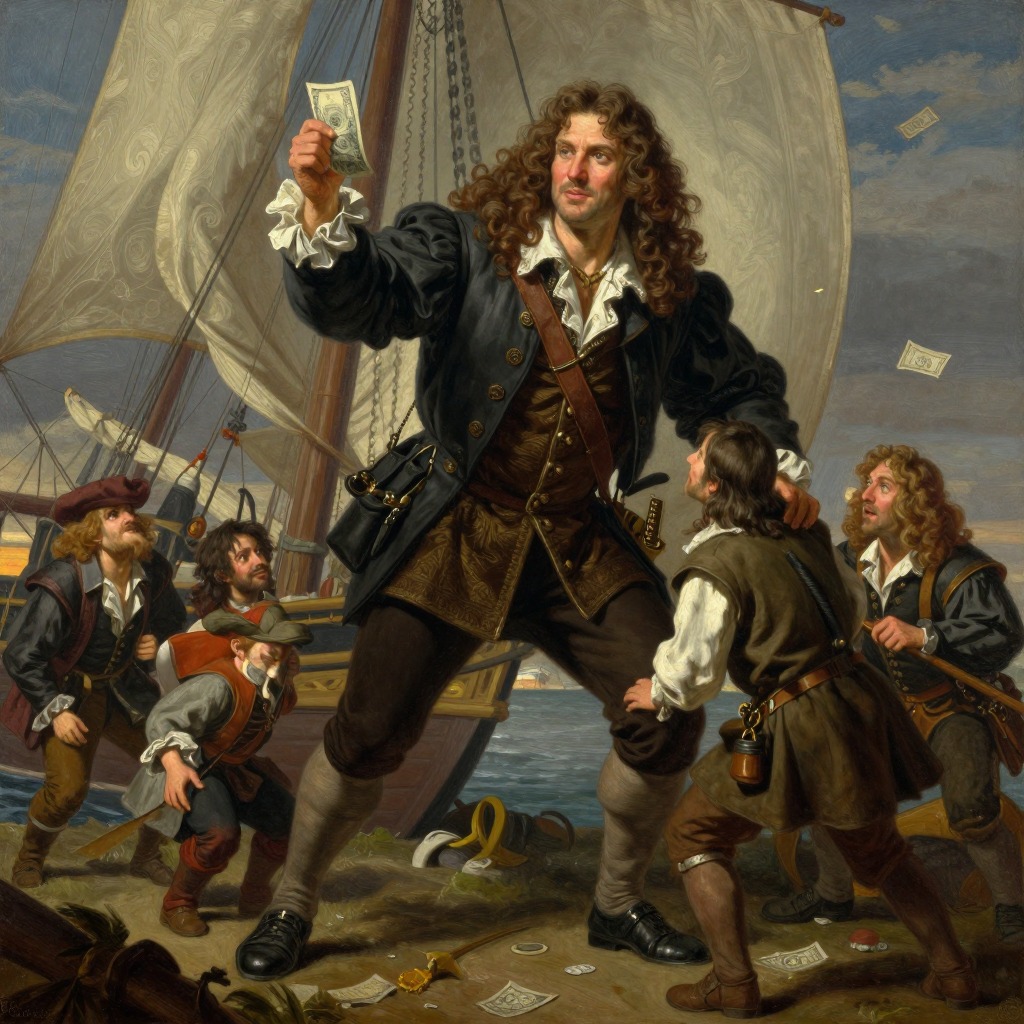
When the inventory is read over to the emperor, he directs Gulliver, although in very gentle terms, to deliver up the several particulars. He first calls for Gulliver's scimitar, which Gulliver takes out, scabbard and all. The emperor orders three thousand of his choicest troops to surround Gulliver at a distance with their bows and arrows just ready to discharge, but Gulliver does not observe it, for his eyes are wholly fixed upon his majesty. The emperor then desires Gulliver to draw his scimitar, which, although it has got some rust by the sea-water, is in most parts exceedingly bright. Gulliver does so, and immediately all the troops give a shout between terror and surprise, for the sun shines clear and the reflection dazzles their eyes as he waves the scimitar to and fro. The emperor, a most magnanimous prince, is less daunted than could be expected; he orders Gulliver to return it into the scabbard and cast it on the ground as gently as he can, about six feet from the end of his chain. The next thing he demands is one of the hollow iron pillars, by which he means Gulliver's pocket-pistols. Gulliver draws it out and, at his desire, expresses the use of it; charging it only with powder, which by the closeness of his pouch happened to escape wetting in the sea, he first cautions the emperor not to be afraid and then lets it off in the air. The astonishment is much greater than at the sight of the scimitar; hundreds fall down as if struck dead, and even the emperor, although he stands his ground, cannot recover himself for some time. Gulliver delivers up both his pistols in the same manner, and then his pouch of powder and bullets, begging that the former might be kept from fire, for it would kindle with the smallest spark and blow up his imperial palace into the air. He likewise delivers up his watch, which the emperor is very curious to see and commands two of his tallest yeomen of the guards to bear it on a pole upon their shoulders. The emperor is amazed at the continual noise it makes and the motion of the minute-hand, which he can easily discern. He asks the opinions of his learned men about it, which are various and remote. Gulliver then gives up his silver and copper money, his purse with nine large pieces of gold and some smaller ones, his knife and razor, his comb and silver snuffbox, his handkerchief and journal-book. His scimitar, pistols, and pouch are conveyed in carriages to his majesty's stores, but the rest of his goods are returned to him. Gulliver has one private pocket which escapes their search, wherein there is a pair of spectacles, a pocket perspective, and some other little conveniences, which he does not think himself bound in honor to discover.
after the search, before liberty
Gulliver Diverts the Court
Gulliver's gentleness and good behavior have gained so far on the emperor and his court, and indeed upon the army and people in general, that he begins to conceive hopes of getting his liberty in a short time. He takes all possible methods to cultivate this favorable disposition. The natives come by degrees to be less apprehensive of any danger from him. He would sometimes lie down and let five or six of them dance on his hand, and at last the boys and girls would venture to come and play at hide and seek in his hair. He has now made a good progress in understanding and speaking their language. The emperor has a mind one day to entertain him with one of the country shows, wherein they exceed all nations he has known, both for dexterity and magnificence. Gulliver is diverted with none so much as that of the rope-dancers, performed upon a slender white thread extended about two feet and twelve inches from the ground. This diversion is only practised by those persons who are candidates for great employments and high favor at court. They are trained in this art from their youth, and when a great office is vacant, five or six of those candidates petition the emperor to entertain his majesty and the court with a dance on the rope, and whoever jumps the highest without falling succeeds in the office. Very often the chief ministers themselves are commanded to show their skill. Flimnap, the treasurer, is allowed to cut a caper on the straight rope at least an inch higher than any lord in the whole empire. Gulliver's friend Reldresal, principal secretary for private affairs, is, in his opinion, the second after the treasurer. These diversions are often attended with fatal accidents, whereof great numbers are on record. Gulliver himself has seen two or three candidates break a limb. There is likewise another diversion, which is only shown before the emperor and empress and first minister upon particular occasions. The emperor lays on the table three fine silken threads of six inches long—one purple, the other yellow, and the third white—proposed as prizes for those persons whom the emperor hath a mind to distinguish by a peculiar mark of his favor. The candidates undergo a trial of dexterity: they sometimes leap over a stick held by the emperor, sometimes creep under it, backwards and forwards several times, according as the stick is advanced or depressed. Whoever performs his part with most agility and holds out the longest is rewarded with the blue-colored silk; the yellow is given to the next, and the green to the third, which they all wear girt twice about the middle.
a few days before liberty
Gulliver's Handkerchief Parade
Gulliver has the good fortune to divert the emperor one day after a very extraordinary manner. He desires that several sticks of two feet high and the thickness of an ordinary cane be brought to him. The next morning, six woodmen arrive with as many carriages drawn by eight horses each. Gulliver takes nine of these sticks and fixes them firmly in the ground in a quadrangular figure, two feet and a half square. He takes four other sticks and ties them parallel at each corner, about two feet from the ground. Then he fastens his handkerchief to the nine sticks that stand erect and extends it on all sides till it is as tight as the top of a drum, with the four parallel sticks rising about five inches higher than the handkerchief, serving as ledges on each side. When he has finished his work, he desires the emperor to let a troop of his best horse, twenty-four in number, come and exercise upon this plain. The emperor approves of the proposal, and Gulliver takes them up one by one in his hands, ready mounted and armed, with the proper officers to exercise them. As soon as they get into order, they divide into two parties, perform mock skirmishes, discharge blunt arrows, draw their swords, flee and pursue, attack and retire, discovering the best military discipline Gulliver ever beheld. The parallel sticks secure them and their horses from falling over the stage. The emperor is so much delighted that he orders this entertainment to be repeated several days, and once is pleased to be lifted up and give the word of command, and with great difficulty persuades even the empress herself to let him hold her in her close chair within two yards of the stage, from whence she is able to take a full view of the whole performance. It is Gulliver's good fortune that no ill accident happens in these entertainments, only once a fiery horse belonging to one of the captains, pawing with his hoof, strikes a hole in his handkerchief, and his foot slipping, he overthrows his rider and himself. Gulliver immediately relieves them both, covering the hole with one hand and setting down the troop with the other. The horse that fell is strained in the left shoulder, but the rider gets no hurt, and Gulliver repairs his handkerchief as well as he can, though he will not trust to its strength any more in such dangerous enterprises.
two or three days before liberty
Recovery of Gulliver's Hat
About two or three days before Gulliver is set at liberty, as he is entertaining the court with feats of this kind, there arrives an express to inform his majesty that some of his subjects riding near the place where Gulliver was first taken up have seen a great black substance lying on the ground, very oddly shaped, extending its edges round as wide as his majesty's bed-chamber and rising up in the middle as high as a man. They conceive it might be something belonging to the man-mountain, and if his majesty pleases, they will undertake to bring it with only five horses. Gulliver presently knows what they mean and is glad at heart to receive this intelligence. It seems, upon his first reaching the shore after the shipwreck, his hat, which he had fastened with a string to his head while rowing and had stuck on all the time he was swimming, fell off after he came to land, the string breaking by some accident. He entreats his imperial majesty to give orders it might be brought to him as soon as possible, describing to him the use and nature of it. The next day, the wagoners arrive with it, but not in a very good condition; they have bored two holes in the brim within an inch and a half of the edge and fastened two hooks in the holes, which are tied by a long cord to the harness, and thus his hat is dragged along for above half an English mile. However, the ground in that country being extremely smooth and level, it receives less damage than he expected.
two days after the hat recovery
Gulliver Stands as a Colossus
Two days after the adventure of the hat, the emperor, having ordered that part of the army which quarters in and about his metropolis to be in readiness, takes a fancy of diverting himself in a very singular manner. He desires Gulliver would stand like a colossus, with his legs as far asunder as he conveniently could. He then commands his general (who is an old, experienced leader and a great patron of Gulliver) to draw up the troops in close order and march under him: the foot by twenty-four abreast and the horse by sixteen, with drums beating, colors flying, and pikes advanced. This body consists of three thousand foot and a thousand horse. Gulliver has sent so many memorials and petitions for his liberty that his majesty at length mentions the matter, first in the cabinet and then in full council, where it is opposed by none except Skyrris Bolgolam, who is pleased, without any provocation, to be Gulliver's mortal enemy. But it is carried against him by the whole board and confirmed by the emperor. That minister is galbet, or admiral of the realm, very much in his master's confidence and a person well versed in affairs, but of a morose and sour complexion. However, he is at length persuaded to comply, but prevails that the articles and conditions upon which Gulliver shall be set free, and to which he must swear, should be drawn up by himself.
after the council decision
Gulliver Swears the Articles of Release
The articles are brought to Gulliver by Skyrris Bolgolam in person, attended by two under-secretaries and several persons of distinction. After they are read, Gulliver is demanded to swear to the performance of them, first in the manner of his own country and afterwards in the method prescribed by their laws, which is to hold his right foot in his left hand and to place the middle finger of his right hand on the crown of his head and his thumb on the tip of his right ear. The articles include: that the man-mountain shall not depart from their dominions without license under the great seal; that he shall not presume to come into the metropolis without express order, at which time the inhabitants shall have two hours' warning to keep within doors; that he shall confine his walks to the principal high roads and not offer to walk or lie down in a meadow or field of corn; that he shall take the utmost care not to trample upon the bodies of any of their loving subjects, their horses or carriages, nor take any of their subjects into his hands without their own consent; that if an express requires extraordinary despatch, the man-mountain shall be obliged to carry in his pocket the messenger and horse a six-days' journey once in every moon and return the said messenger back safe to the imperial presence; that he shall be their ally against their enemies in the island of Blefuscu and do his utmost to destroy their fleet, which is now preparing to invade them; that he shall at his times of leisure be aiding and assisting to their workmen in helping to raise certain great stones towards covering the wall of the principal park and other royal buildings; that he shall, in two moons' time, deliver in an exact survey of the circumference of their dominions by a computation of his own paces round the coast; and lastly, that upon his solemn oath to observe all the above articles, he shall have a daily allowance of meat and drink sufficient for the support of 1724 of their subjects, with free access to the royal person and other marks of favor. Gulliver swears and subscribes to the articles with great cheerfulness and content, although some of them are not so honorable as he could have wished, which proceeds wholly from the malice of Skyrris Bolgolam, the high admiral. Whereupon his chains are immediately unlocked, and he is at full liberty. The emperor himself in person does him the honor to be by at the whole ceremony. Gulliver makes his acknowledgments by prostrating himself at his majesty's feet, but the emperor commands him to rise and, after many gracious expressions, adds that he hopes Gulliver shall prove a useful servant and well deserve all the favors he has already conferred upon him or might do for the future.
after obtaining liberty
Gulliver Visits Mildendo
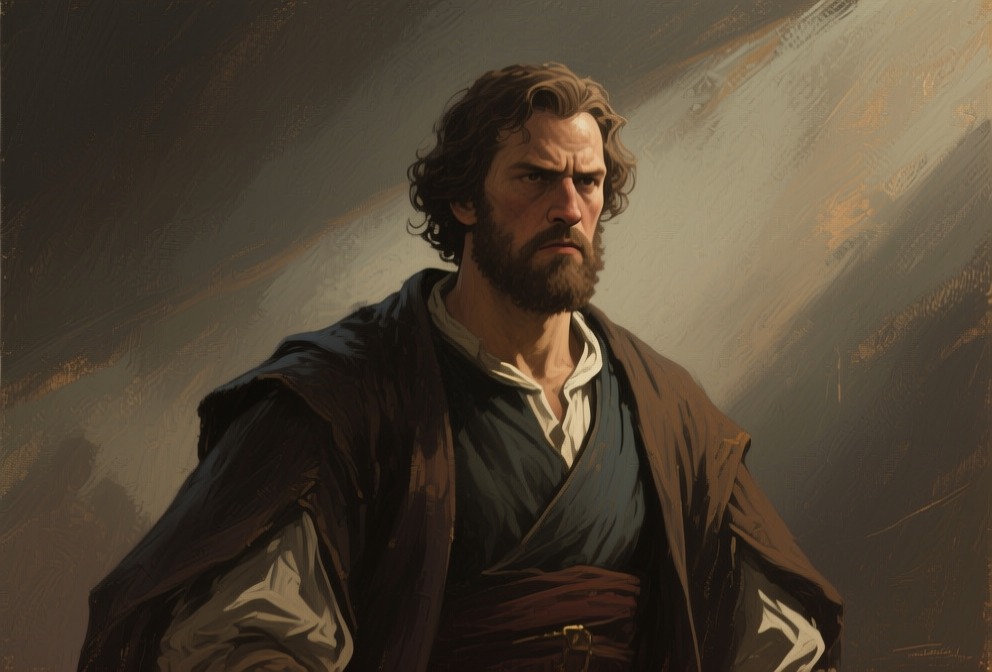
The first request Gulliver makes after he has obtained his liberty is that he might have license to see Mildendo, the metropolis, which the emperor easily grants him, but with a special charge to do no hurt either to the inhabitants or their houses. The people have notice by proclamation of his design to visit the town. The wall which encompasses it is two feet and a half high and at least eleven inches broad, so that a coach and horses may be driven very safely round it, and it is flanked with strong towers at ten feet distance. Gulliver steps over the great western gate and passes very gently and sideling through the two principal streets, only in his short waistcoat for fear of damaging the roofs and eaves of the houses with the skirts of his coat. He walks with the utmost circumspection to avoid treading on any stragglers who might remain in the streets, although the orders are very strict that all people should keep in their houses at their own peril. The garret-windows and tops of houses are so crowded with spectators that he thinks in all his travels he has not seen a more populous place. The city is an exact square, each side of the wall being five hundred feet long. The two great streets which run across and divide it into four quarters are five feet wide. The lanes and alleys, which he cannot enter but only views them as he passes, are from twelve to eighteen inches. The town is capable of holding five hundred thousand souls; the houses are from three to five stories; the shops and markets well provided. The emperor's palace is in the centre of the city, where the two great streets meet. It is enclosed by a wall of two feet high and twenty feet distant from the buildings. Gulliver has his majesty's permission to step over this wall, and the space being so wide between that and the palace, he can easily view it on every side. The outward court is a square of forty feet and includes two other courts; in the inmost are the royal apartments, which he is very desirous to see but finds it extremely difficult, for the great gates from one square into another are but eighteen inches high and seven inches wide. The emperor has a great desire that Gulliver should see the magnificence of his palace, but this he is not able to do till three days after, which he spends in cutting down with his knife some of the largest trees in the royal park, about a hundred yards distance from the city. Of these trees he makes two stools, each about three feet high and strong enough to bear his weight. The people having received notice a second time, he goes again through the city to the palace with his two stools in his hands. When he comes to the side of the outer court, he stands upon one stool and takes the other in his hand; this he lifts over the roof and gently sets it down on the space between the first and second court, which is eight feet wide. He then steps over the building very conveniently from one stool to the other and draws up the first after him with a hooked stick. By this contrivance he gets into the inmost court and, lying down upon his side, applies his face to the windows of the middle stories, which are left open on purpose, and discovers the most splendid apartments that can be imagined. There he sees the empress and the young princes in their several lodgings with their chief attendants about them. Her imperial majesty is pleased to smile very graciously upon him and gives him out of the window her hand to kiss.
about a fortnight after liberty
Reldresal's Account of Lilliput's Troubles
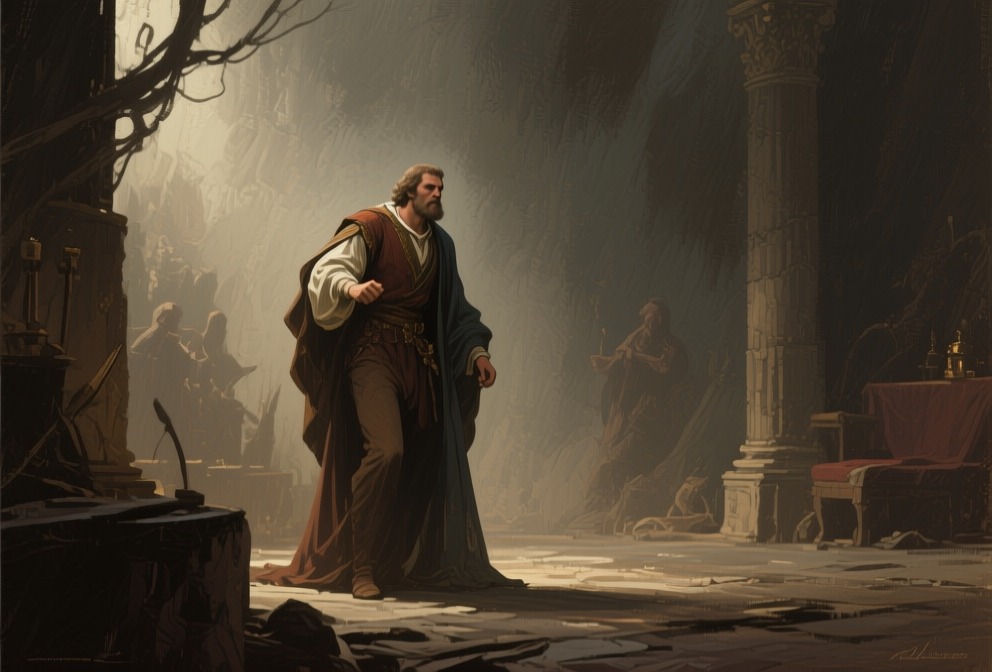
One morning, about a fortnight after Gulliver has obtained his liberty, Reldresal, principal secretary for private affairs, comes to his house attended only by one servant. He orders his coach to wait at a distance and desires Gulliver to give him an hour's audience. Gulliver readily consents on account of his quality and personal merits, as well as of the many good offices he has done him during his solicitations at court. Gulliver offers to lie down that he might the more conveniently reach his ear, but Reldresal chooses rather to let Gulliver hold him in his hand during their conversation. He begins with compliments on Gulliver's liberty and says he might pretend to some merit in it, but adds that if it had not been for the present situation of things at court, perhaps Gulliver might not have obtained it so soon. He explains that they labor under two mighty evils: a violent faction at home and the danger of an invasion by a most potent enemy from abroad. As to the first, for above seventy moons past, there have been two struggling parties in the empire under the names of Tramecksan and Slamecksan, from the high and low heels of their shoes, by which they distinguish themselves. The high heels are most agreeable to their ancient constitution, but his majesty hath determined to make use only of low heels in the administration of the government. The animosities between these two parties run so high that they will neither eat nor drink nor talk with each other. The Tramecksan, or high heels, exceed them in number, but the power is wholly on their side. They apprehend his imperial highness, the heir to the crown, to have some tendency towards the high heels, at least they can plainly discover that one of his heels is higher than the other, which gives him a hobble in his gait. In the midst of these intestine disquiets, they are threatened with an invasion from the island of Blefuscu, which is the other great empire of the universe, almost as large and powerful as this of his majesty. The two mighty powers have been engaged in a most obstinate war for six-and-thirty moons past. It began upon the following occasion: the primitive way of breaking eggs before eating them was upon the larger end, but his present majesty's grandfather, while he was a boy, going to eat an egg and breaking it according to the ancient practice, happened to cut one of his fingers. Whereupon the emperor, his father, published an edict commanding all his subjects, upon great penalties, to break the smaller end of their eggs. The people so highly resented this law that there have been six rebellions raised on that account, wherein one emperor lost his life and another his crown. These civil commotions were constantly fomented by the monarchs of Blefuscu, and when they were quelled, the exiles always fled for refuge to that empire. It is computed that eleven thousand persons have at several times suffered death rather than submit to break their eggs at the smaller end. Many hundred large volumes have been published upon this controversy, but the books of the Big-endians have been long forbidden, and the whole party rendered incapable by law of holding employments. The Big-endian exiles have found so much credit in the emperor of Blefuscu's court and so much private assistance and encouragement from their party at home that a bloody war hath been carried on for six-and-thirty moons, with various success, during which time they have lost forty capital ships and a much greater number of smaller vessels, together with thirty thousand of their best seamen and soldiers. The enemy has now equipped a numerous fleet and is just preparing to make a descent upon them. His imperial majesty, placing great confidence in Gulliver's valor and strength, hath commanded Reldresal to lay this account of his affairs before him.
after Reldresal's account
Gulliver Captures the Blefuscu Fleet
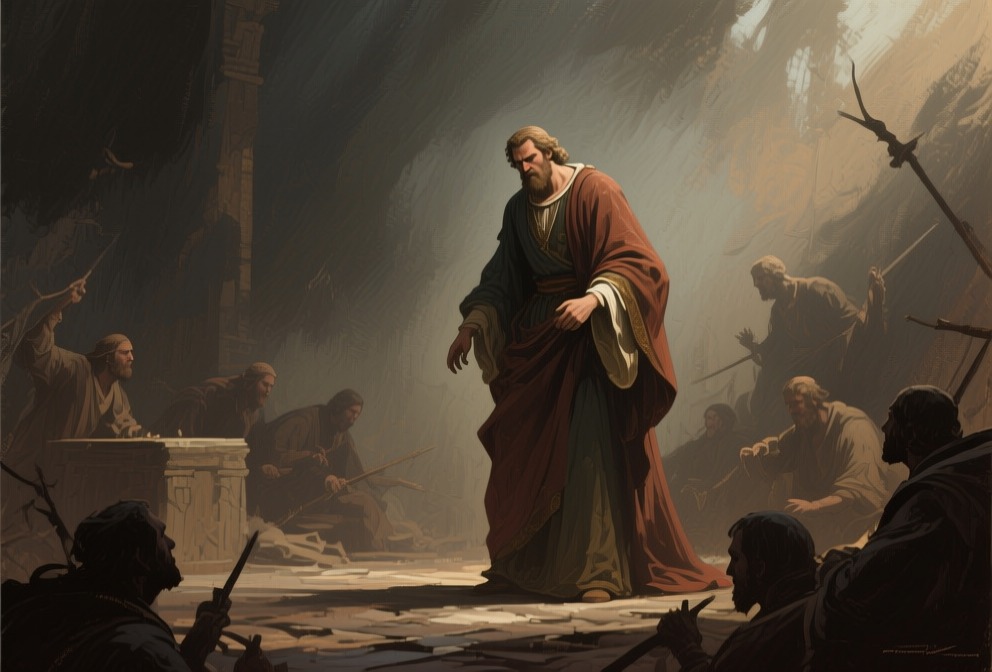
Gulliver communicates to his majesty a project he has formed of seizing the enemy's whole fleet, which lies at anchor in the harbor of Blefuscu, ready to sail with the first fair wind. He consults the most experienced seamen upon the depth of the channel, which they have often plumbed, and they tell him that in the middle, at high water, it is seventy glumgluffs deep (about six feet of European measure), and the rest of it fifty glumgluffs at most. He walks towards the northeast coast over against Blefuscu, where, lying down behind a hillock, he takes out his small perspective glass and views the enemy's fleet at anchor, consisting of about fifty men-of-war and a great number of transports. He then comes back to his house and gives orders for a great quantity of the strongest cable and bars of iron. The cable is about as thick as packthread, and the bars of the length and size of a knitting needle. He trebles the cable to make it stronger and twists three of the iron bars together, bending the extremities into a hook. Having thus fixed fifty hooks to as many cables, he goes back to the northeast coast and, putting off his coat, shoes, and stockings, walks into the sea in his leathern jerkin about half an hour before high-water. He wades with what haste he can and swims in the middle about thirty yards till he feels ground; he arrives at the fleet in less than half an hour. The enemy are so frightened when they see him that they leap out of their ships and swim to shore, where there cannot be fewer than thirty thousand souls. He then takes his tackling and, fastening a hook to the hole at the prow of each, ties all the cords together at the end. While he is thus employed, the enemy discharge several thousand arrows, many of which stick in his hands and face, giving him much disturbance in his work. His greatest apprehension is for his eyes, which he would have infallibly lost if he had not suddenly thought of an expedient: he takes out a pair of spectacles from a private pocket and fastens them as strongly as he can upon his nose, and thus armed, goes on boldly with his work in spite of the enemy's arrows. He has now fastened all the hooks and, taking the knot in his hand, begins to pull, but not a ship will stir, for they are all too fast held by their anchors. He therefore lets go the cord and, leaving the hooks fixed to the ships, resolutely cuts with his knife the cables that fastened the anchors, receiving above two hundred shots in his face and hands. Then he takes up the knotted end of the cables to which his hooks are tied and, with great ease, draws fifty of the enemy's largest men-of-war after him. The Blefuscudians, who had not the least imagination of what he intended, are at first confounded with astonishment, but when they perceive the whole fleet moving in order and see him pulling at the end, they set up such a scream of grief and despair as it is almost impossible to describe or conceive. When he has got out of danger, he stops awhile to pick out the arrows that stick in his hands and face and rubs on some of the same ointment that was given him at his first arrival. He then takes off his spectacles and, waiting about an hour till the tide is a little fallen, wades through the middle with his cargo and arrives safe at the royal port of Lilliput. The emperor and his whole court stand on the shore expecting the issue of this great adventure. They see the ships move forward in a large half-moon but cannot discern Gulliver, who is up to his breast in water. When he advances to the middle of the channel, they are yet more in pain because he is under water to his neck. The emperor concludes him to be drowned and that the enemy's fleet is approaching in a hostile manner, but he is soon eased of his fears, for the channel growing shallower every step he makes, he comes in a short time within hearing and, holding up the end of the cable by which the fleet is fastened, cries in a loud voice, "Long live the most puissant emperor of Lilliput!" This great prince receives him at his landing with all possible encomiums and creates him a nardac upon the spot, which is the highest title of honor among them.
after the capture of the fleet
Gulliver Refuses to Enslave Blefuscu
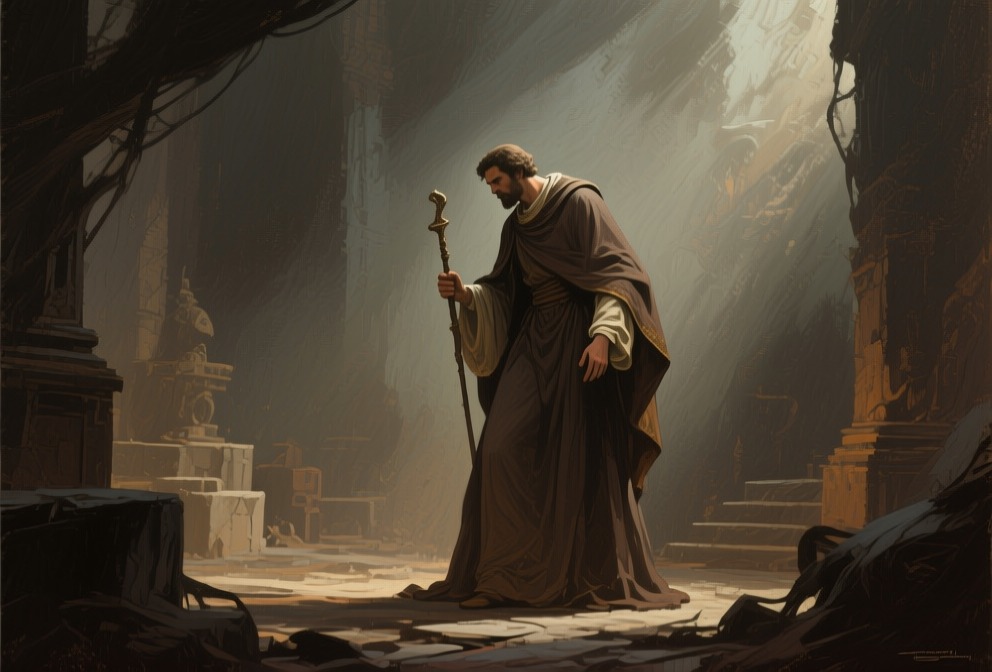
His majesty desires Gulliver to take some other opportunity of bringing all the rest of his enemy's ships into his ports. And so immeasurable is the ambition of princes that he seems to think of nothing less than reducing the whole empire of Blefuscu into a province and governing it by a viceroy, of destroying the Big-endian exiles, and compelling that people to break the smaller end of their eggs, by which he would remain the sole monarch of the whole world. But Gulliver endeavors to divert him from this design by many arguments drawn from the topics of policy as well as justice. He plainly protests that he will never be an instrument of bringing a free and brave people into slavery. When the matter is debated in council, the wisest part of the ministry are of his opinion. This open, bold declaration of his is so opposite to the schemes and politics of his imperial majesty that he can never forgive Gulliver; he mentions it in a very artful manner at council, where, Gulliver is told, some of the wisest appear, at least by their silence, to be of his opinion, but others, who are his secret enemies, cannot forbear some expressions which by a side-wind reflect on him. From this time begins an intrigue between his majesty and a junto of ministers maliciously bent against Gulliver, which breaks out in less than two months and had like to have ended in his utter destruction.
about three weeks after the fleet capture
Blefuscu Embassy and Gulliver's Visit
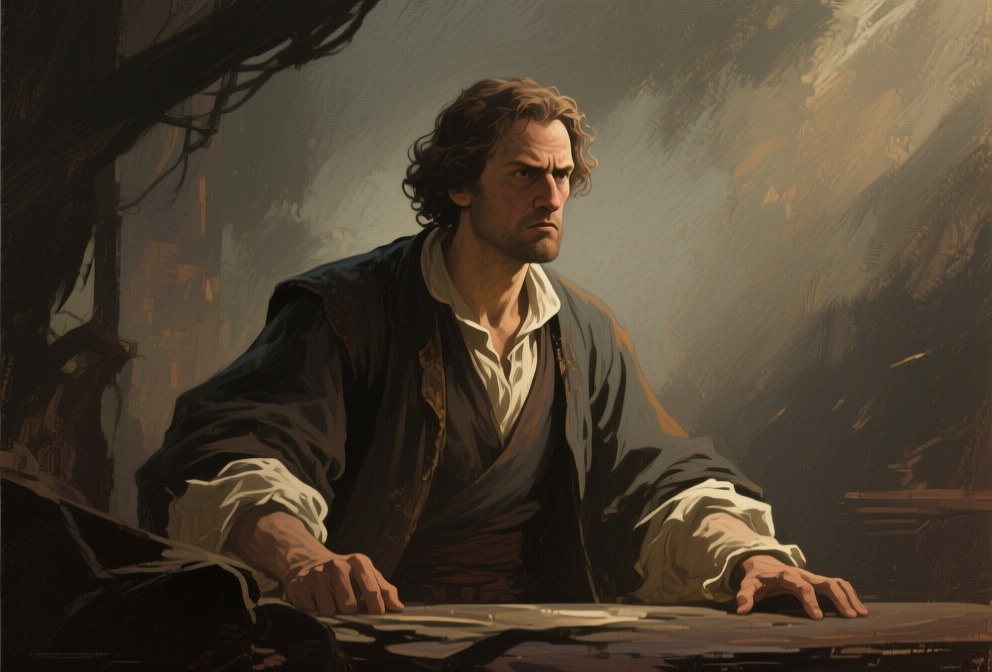
About three weeks after this exploit, there arrives a solemn embassy from Blefuscu with humble offers of peace, which is soon concluded upon conditions very advantageous to the emperor of Lilliput. There are six ambassadors with a train of about five hundred persons, and their entry is very magnificent. When their treaty is finished, wherein Gulliver does them several good offices by the credit he now has, or at least appears to have at court, their excellencies, who are privately told how much he has been their friend, make him a visit in form. They begin with many compliments upon his valor and generosity, invite him to that kingdom in the emperor their master's name, and desire him to show some proofs of his prodigious strength, of which they have heard so many wonders. Gulliver readily obliges them. When he has for some time entertained their excellencies to their infinite satisfaction and surprise, he desires they would do him the honor to present his most humble respects to the emperor their master, the renown of whose virtues has so justly filled the whole world with admiration, and whose royal person he resolves to attend before he returns to his own country. Accordingly, the next time he has the honor to see their emperor, he desires his general license to wait on the Blefuscudian monarch, which he is pleased to grant him, as Gulliver can plainly perceive, in a very cold manner, but cannot guess the reason till he has a whisper from a certain person that Flimnap and Bolgolam have represented his intercourse with those ambassadors as a mark of disaffection, from which his heart is wholly free. This is the first time he begins to conceive some imperfect idea of courts and ministers.
after the Blefuscu embassy
Gulliver Extinguishes the Palace Fire
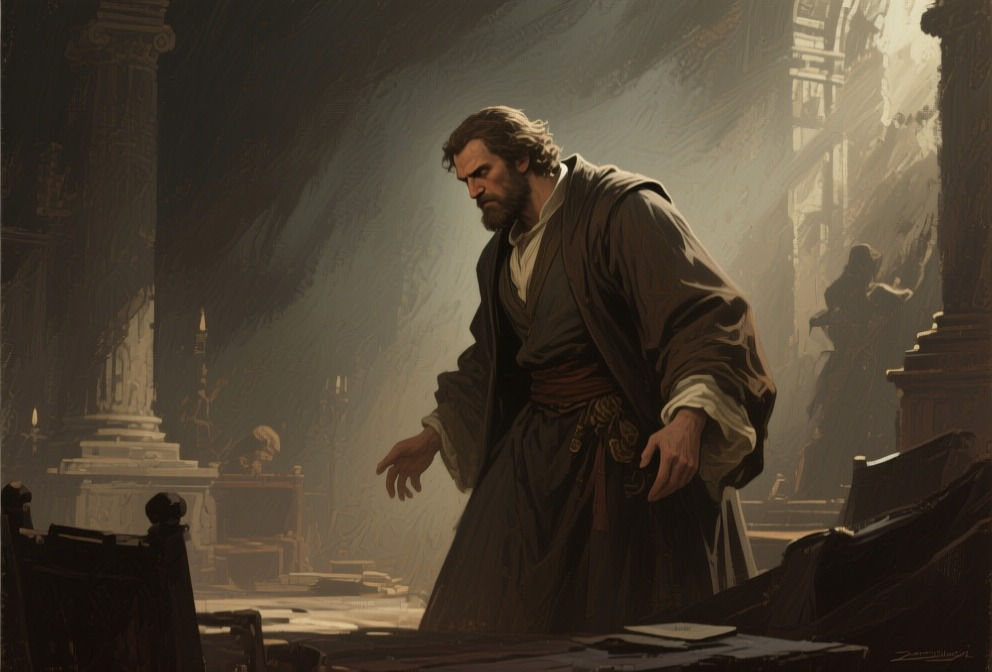
Gulliver is alarmed at midnight with the cries of many hundred people at his door, by which, being suddenly awaked, he is in some kind of terror. He hears the word "burglum" repeated incessantly. Several of the emperor's court, making their way through the crowd, entreat him to come immediately to the palace, where her imperial majesty's apartment is on fire by the carelessness of a maid of honor who fell asleep while she was reading a romance. Gulliver gets up in an instant, and orders being given to clear the way before him, and it being likewise a moonshine night, he makes a shift to get to the palace without trampling on any of the people. He finds they have already applied ladders to the walls of the apartment and are well provided with buckets, but the water is at some distance. These buckets are about the size of a large thimble, and the poor people supply him with them as fast as they can, but the flame is so violent that they do little good. Gulliver might easily have stifled it with his coat, which he unfortunately left behind him for haste, and came away only in his leathern jerkin. The case seems wholly desperate and deplorable, and this magnificent palace would have infallibly been burnt down to the ground if, by a presence of mind unusual to him, he had not suddenly thought of an expedient by which in three minutes the fire is wholly extinguished and the rest of that noble pile, which had cost so many ages in erecting, preserved from destruction. It is now daylight, and he returns to his house without waiting to congratulate with the emperor, because although he has done a very eminent piece of service, yet he cannot tell how his majesty might resent the manner by which he has performed it, for by the fundamental laws of the realm it is capital in any man, of what quality soever, to even touch the empress or the royal princesses without invitation. He is a little comforted by a message from his majesty that he would give orders to the grand justiciary for passing his pardon in form, which, however, he cannot obtain. And he is privately assured that the empress, conceiving the greatest abhorrence of him, and in the presence of her chief confidants, cannot forbear vowing revenge.
during Gulliver's residence in Lilliput
Description of Lilliputian Customs
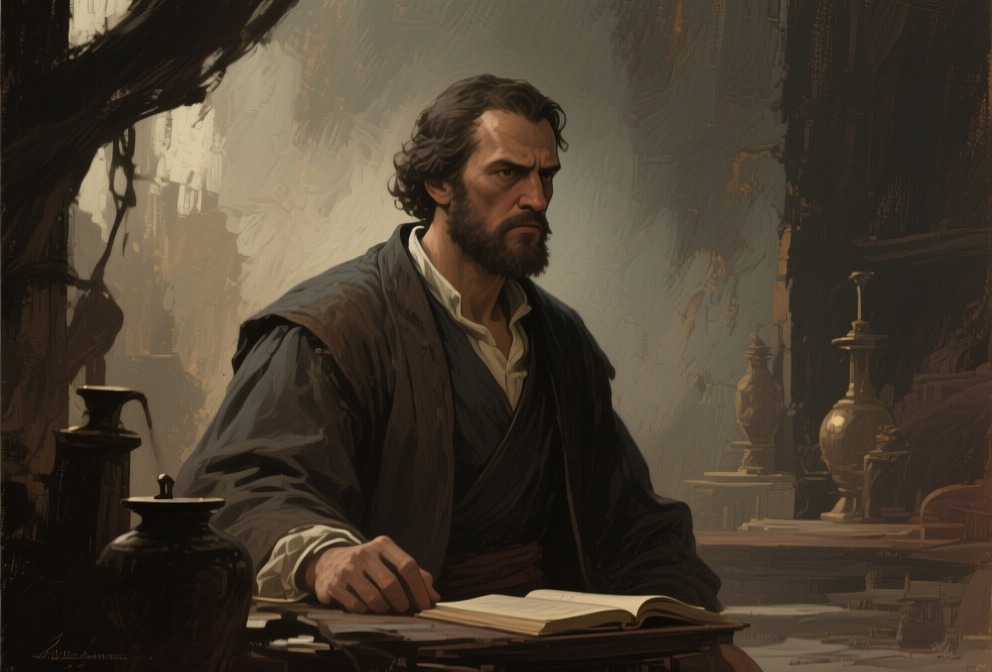
Gulliver describes the inhabitants of Lilliput, their learning, laws, and customs, and the manner of educating their children. The common size of the natives is somewhat under six inches high, and there is an exact proportion in all other animals, as well as plants and trees. Their tallest trees are about seven feet high. Their manner of writing is very peculiar, being aslant from one corner of the paper to the other, like ladies in England. They bury their dead with their heads directly downwards, because they hold an opinion that in eleven thousand moons they are all to rise again, in which period the earth (which they conceive to be flat) will turn upside down. There are some laws and customs very peculiar: all crimes against the state are punished with the utmost severity, but if the person accused makes his innocence plainly appear upon his trial, the accuser is immediately put to an ignominious death, and the innocent person is quadruply recompensed. They look upon fraud as a greater crime than theft and seldom fail to punish it with death. Whoever can bring sufficient proof that he hath strictly observed the laws of his country for seventy-three moons hath a claim to certain privileges and acquires the title of snillpall, or legal. In choosing persons for all employments, they have more regard to good morals than to great abilities. Ingratitude is among them a capital crime. Their notions relating to the duties of parents and children differ extremely from ours: parents are the last of all others to be trusted with the education of their own children, and therefore they have in every town public nurseries where all parents, except cottagers and laborers, are obliged to send their infants of both sexes to be reared and educated when they come to the age of twenty moons. The nurseries for males of noble or eminent birth are provided with grave and learned professors. The children are bred up in the principles of honor, justice, courage, modesty, clemency, religion, and love of their country. Their parents are suffered to see them only twice a year, the visit to last but an hour. In the female nurseries, the young girls of quality are educated much like the males. The cottagers and laborers keep their children at home, their business being only to till and cultivate the earth. Gulliver also gives an account of his domestic and manner of living in the country during a residence of nine months and thirteen days. He has made for himself a table and chair out of the largest trees in the royal park. Two hundred sempstresses are employed to make him shirts and linen. Three hundred tailors are employed to make him clothes. He has three hundred cooks to dress his victuals. One day his imperial majesty, being informed of his way of living, desires that himself and his royal consort, with the young princes of the blood of both sexes, might have the happiness of dining with him. They come accordingly, and Gulliver places them in chairs of state upon his table. Flimnap, the lord high treasurer, attends there likewise with his white staff, and Gulliver observes he often looks on him with a sour countenance. Gulliver has some private reasons to believe that this visit from his majesty gives Flimnap an opportunity of doing him ill offices to his master. That minister had always been his secret enemy, though he outwardly caressed him more than was usual to the moroseness of his nature. He represents to the emperor the low condition of his treasury, that he is forced to take up money at a great discount, that exchequer bills will not circulate under nine per cent below par, that Gulliver has cost his majesty above a million and a half of sprugs, and upon the whole, that it would be advisable in the emperor to take the first fair occasion of dismissing him.
two months after the fleet capture
The Conspiracy Against Gulliver
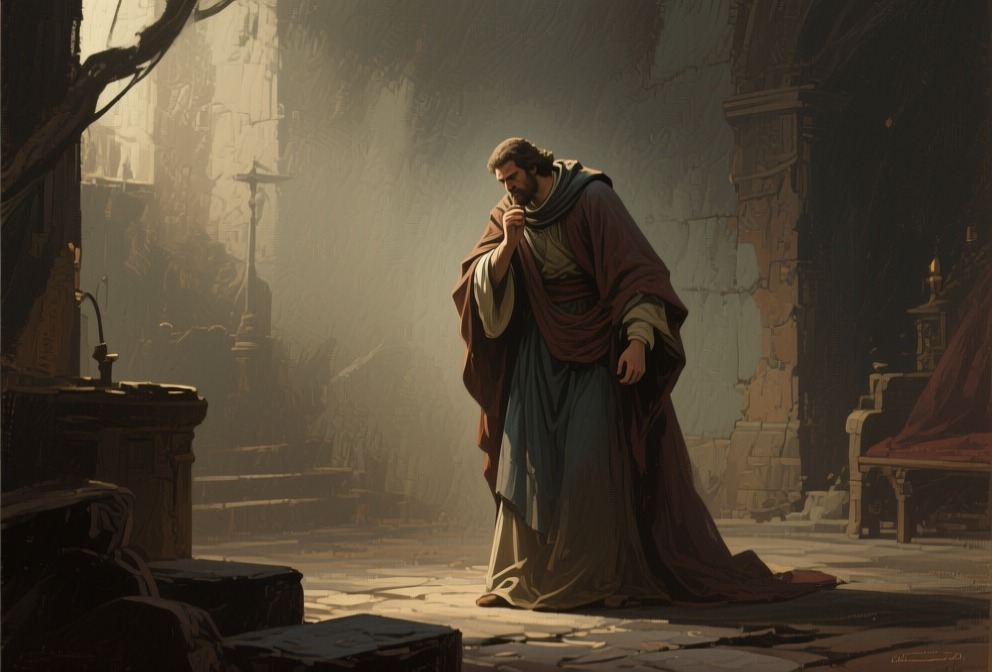
Before Gulliver proceeds to give an account of his leaving the kingdom, he informs the reader of a private intrigue which had been for two months forming against him. When he is just preparing to pay his attendance on the emperor of Blefuscu, a considerable person at court (to whom he had been very serviceable at a time when he lay under the highest displeasure of his imperial majesty) comes to his house very privately at night in a close chair and without sending his name, desires admittance. The chairmen are dismissed; Gulliver puts the chair, with his lordship in it, into his coat-pocket, and giving orders to a trusty servant to say he is indisposed and gone to sleep, he fastens the door of his house, places the chair on the table, and sits down by it. After the common salutations are over, observing his lordship's countenance full of concern and inquiring into the reason, he desires Gulliver would hear him with patience in a matter that highly concerns his honor and his life. His speech is to the following effect: that several committees of council have been lately called in the most private manner on his account, and it is but two days since his majesty came to a full resolution. He says that Skyrris Bolgolam (galbet or high-admiral) hath been Gulliver's mortal enemy almost ever since his arrival, and his hatred is increased since his great success against Blefuscu, by which his glory as admiral is much obscured. This lord, in conjunction with Flimnap the high treasurer, whose enmity against Gulliver is notorious, Limtoc the general, Lalcon the chamberlain, and Balmuff the grand justiciary, have prepared articles of impeachment against him for treason and other capital crimes. Out of gratitude for the favors Gulliver has done for him, he procured information of the whole proceedings and a copy of the articles. The articles include: that Gulliver, in open breach of the law, under color of extinguishing the fire kindled in the apartment of his majesty's most dear imperial consort, did maliciously and traitorously pull her by the arms and lift her high in the air in both his hands; that having brought the imperial fleet of Blefuscu into the royal port, and being afterwards commanded by his imperial majesty to seize all the other ships of the said empire and reduce that empire to a province, he, like a false traitor, did petition to be excused from the said service upon pretence of unwillingness to force the consciences or destroy the liberties and lives of an innocent people; that whereas certain ambassadors arrived from the court of Blefuscu to sue for peace, he did, like a false traitor, aid, abet, comfort, and divert the said ambassadors; and that he is now preparing to make a voyage to the court and empire of Blefuscu, for which he hath received only verbal license from his imperial majesty, and under color of the said license doth falsely and traitorously intend to take the said voyage. In the several debates upon this impeachment, it must be confessed that his majesty gave many marks of his great lenity, often urging the services Gulliver had done him and endeavoring to extenuate his crimes. The treasurer and admiral insisted that Gulliver should be put to the most painful and ignominious death by setting fire on his house at night, and the general was to attend with twenty thousand men armed with poisoned arrows to shoot him on the face and hands. Some of his servants were to have private orders to strew a poisonous juice on his shirts and sheets. But his majesty resolving, if possible, to spare his life, at last brought off the chamberlain. Upon this incident, Reldresal, principal secretary for private affairs, who always approved himself Gulliver's true friend, was commanded by the emperor to deliver his opinion. He allowed Gulliver's crimes to be great but that still there was room for mercy. He said that if his majesty, in consideration of Gulliver's services and pursuant to his own merciful disposition, would please to spare his life and only give orders to put out both his eyes, he humbly conceived that by this expedient justice might in some measure be satisfied. This proposal was received with the utmost disapprobation by the whole board. Bolgolam, the admiral, could not preserve his temper, but rising up in fury, said he wondered how the secretary durst presume to give his opinion for preserving the life of a traitor. The treasurer was of the same opinion. But his imperial majesty, fully determined against capital punishment, was graciously pleased to say that since the council thought the loss of his eyes too easy a censure, some other might be inflicted hereafter. The secretary, humbly desiring to be heard again, said that his excellency, who had the sole disposal of the emperor's revenue, might easily provide against that evil by gradually lessening Gulliver's establishment, by which for want of sufficient food he would grow weak and faint and lose his appetite and consume in a few months. Thus, by the great friendship of the secretary, the whole affair was compromised. It was strictly enjoined that the project of starving him by degrees should be kept a secret, but the sentence of putting out his eyes was entered on the books, none dissenting except Bolgolam, the admiral, who, being a creature of the empress, was perpetually instigated by her majesty to insist upon his death. In three days, the secretary will be directed to come to his house and read before him the articles of impeachment, and then to signify the great lenity and favor of his majesty and council, whereby he is only condemned to the loss of his eyes, and twenty of his majesty's surgeons will attend in order to see the operation well performed by discharging very sharp-pointed arrows into the balls of his eyes as he lies on the ground.
before the three days are up
Gulliver Escapes to Blefuscu
Gulliver remains alone under many doubts and perplexities of mind after the visit. He sometimes thinks of standing his trial, for although he cannot deny the facts alleged in the several articles, yet he hopes they would admit of some extenuation. But having in his life perused many state-trials, which he ever observed to terminate as the judges thought fit to direct, he durst not rely on so dangerous a decision in so critical a juncture and against such powerful enemies. Once he is strongly bent upon resistance, for while he had liberty, the whole strength of that empire could hardly subdue him, and he might easily with stones pelt the metropolis to pieces, but he soon rejects that project with horror, by remembering the oath he had made to the emperor, the favors he received from him, and the high title of nardac he conferred upon him. At last he fixes upon a resolution: having his imperial majesty's license to pay his attendance upon the emperor of Blefuscu, he takes this opportunity before the three days are elapsed to send a letter to his friend the secretary, signifying his resolution of setting out that morning for Blefuscu pursuant to the leave he had got, and without waiting for an answer, he goes to that side of the island where their fleet lies. He seizes a large man-of-war, ties a cable to the prow, and lifting up the anchors, he strips himself, puts his clothes (together with his coverlet, which he carries under his arm) into the vessel, and drawing it after him, between wading and swimming arrives at the royal port of Blefuscu, where the people have long expected him. They lend him two guides to direct him to the capital city, which is of the same name. He holds them in his hands until he comes within two hundred yards of the gate and desires them to signify his arrival to one of the secretaries and let him know he there waits his majesty's command. He has an answer in about an hour that his majesty, attended by the royal family and great officers of the court, is coming out to receive him. He advances a hundred yards. The emperor and his train alight from their horses, the empress and ladies from their coaches, and Gulliver does not perceive they are in any fright or concern. He lies on the ground to kiss his majesty's and the empress's hand. He tells his majesty that he is come according to his promise and with the license of the emperor, his master, to have the honor of seeing so mighty a monarch and to offer him any service in his power consistent with his duty to his own prince, not mentioning a word of his disgrace, because he has hitherto no regular information of it and might suppose himself wholly ignorant of any such design.
three days after arrival in Blefuscu
Gulliver Finds a Boat and Prepares to Leave
Three days after his arrival in Blefuscu, walking out of curiosity to the northeast coast of the island, Gulliver observes about half a league off in the sea somewhat that looks like a boat overturned. He pulls off his shoes and stockings and, wading two or three hundred yards, finds the object to approach nearer by force of the tide, and then plainly sees it to be a real boat, which he supposes might by some tempest have been driven from a ship. He returns immediately towards the city and desires his imperial majesty to lend him twenty of the tallest vessels he has left after the loss of his fleet and three thousand seamen under the command of his vice-admiral. This fleet sails round, while he goes back the shortest way to the coast where he first discovered the boat. He finds the tide has driven it still nearer. The seamen are all provided with cordage, which he had beforehand twisted to a sufficient strength. When the ships come up, he strips himself and wades till he comes within a hundred yards of the boat, after which he is forced to swim till he gets up to it. The seamen throw him the end of the cord, which he fastens to a hole in the forepart of the boat, and the other end to a man-of-war. But he finds all his labor to little purpose, for being out of his depth, he is not able to work. In this necessity, he is forced to swim behind and push the boat forwards as often as he can with one of his hands, and the tide favoring him, he advances so far that he can just hold up his chin and feel the ground. He rests two or three minutes and then gives the boat another shove, and so on till the sea is no higher than his arm-pits. The most laborious part being over, he takes out his other cables, which are stowed in one of the ships, and fastens them first to the boat and then to nine of the vessels which attend him. The wind being favorable, the seamen tow, and he shoves, till they arrive within forty yards of the shore. Waiting till the tide is out, he gets dry to the boat and, by the assistance of two thousand men with ropes and engines, makes a shift to turn it on its bottom and finds it is but little damaged. He then, by the help of certain paddles which cost him ten days making, gets his boat to the royal port of Blefuscu, where a mighty concourse of people appears upon his arrival, full of wonder at the sight of so prodigious a vessel. He tells the emperor that his good fortune has thrown this boat in his way to carry him to some place from whence he might return into his native country, and begs his majesty's orders for getting materials to fit it up, together with his license to depart, which, after some kind expostulation, he is pleased to grant.
about a month after finding the boat
Gulliver Departs from Blefuscu
Gulliver does very much wonder in all this time not to have heard of any express relating to him from their emperor to the court of Blefuscu. But he is afterwards given privately to understand that his imperial majesty, never imagining he had the least notice of his designs, believed he was only gone to Blefuscu in performance of his promise according to the license he had given him, which was well known at their court, and would return in a few days when the ceremony was ended. But he is at last in pain at Gulliver's long absence, and after consulting with the treasurer and the rest of that cabal, a person of quality is despatched with the copy of the articles against him. This envoy has instructions to represent to the monarch of Blefuscu the great lenity of his master, who was content to punish him no farther than the loss of his eyes; that he had fled from justice, and if he did not return in two hours, he should be deprived of his title of nardac and declared a traitor. The envoy further adds that in order to maintain the peace and amity between both empires, his master expects that his brother of Blefuscu would give orders to have him sent back to Lilliput, bound hand and foot, to be punished as a traitor. The emperor of Blefuscu, having taken three days to consult, returns an answer consisting of many civilities and excuses. He says that as for sending him bound, his brother knew it was impossible; that although Gulliver had deprived him of his fleet, yet he owed great obligations to him for many good offices he had done him in making the peace; that however, both their majesties would soon be made easy, for Gulliver had found a prodigious vessel on the shore able to carry him on the sea, which he had given orders to fit up with his own assistance and direction, and he hoped in a few weeks both empires would be freed from so insupportable an incumbrance. With this answer the envoy returns to Lilliput, and the monarch of Blefuscu relates to Gulliver all that has passed, offering him at the same time (but under the strictest confidence) his gracious protection if he would continue in his service. Although Gulliver believes him sincere, yet he resolves never more to put any confidence in princes or ministers where he could possibly avoid it, and therefore, with all due acknowledgments for his favorable intentions, he humbly begs to be excused. He tells him that since fortune, whether good or evil, has thrown a vessel in his way, he is resolved to venture himself in the ocean rather than be an occasion of difference between two such mighty monarchs. These considerations move him to hasten his departure somewhat sooner than he intended, to which the court, impatient to have him gone, very readily contributes. Five hundred workmen are employed to make two sails to his boat by quilting thirteen folds of their strongest linen together. He is at the pains of making ropes and cables by twisting ten, twenty, or thirty of the thickest and strongest of theirs. A great stone that he happens to find after a long search by the sea-shore serves him for an anchor. He has the tallow of three hundred cows for greasing his boat and other uses. He is at incredible pains in cutting down some of the largest timber-trees for oars and masts, wherein he is much assisted by his majesty's ship-carpenters. In about a month, when all is prepared, he sends to receive his majesty's commands and to take his leave. The emperor and royal family come out of the palace. Gulliver lies down on his face to kiss his hand, which he very graciously gives him; so does the empress and young princes of the blood. His majesty presents him with fifty purses of two hundred sprugs a-piece, together with his picture at full length, which Gulliver puts immediately into one of his gloves to keep it from being hurt. He stores the boat with the carcasses of a hundred oxen and three hundred sheep, with bread and drink proportionable, and as much meat ready dressed as four hundred cooks could provide. He takes with him six cows and two bulls alive, with as many ewes and lambs, intending to carry them into his own country and propagate the breed. He would gladly have taken a dozen of the natives, but this is a thing the emperor will by no means permit, and besides a diligent search into his pockets, his majesty engages his honor not to carry away any of his subjects, although with their own consent and desire. Having thus prepared all things as well as he is able, he sets sail on the twenty-fourth day of September, 1701, at six in the morning.
September 26, 1701
Gulliver Rescued by an English Ship
Gulliver sails from Blefuscu on September 24, 1701. He goes about four leagues to the northward, the wind being at southeast. At six in the evening, he descries a small island about half a league to the northwest. He advances forward and casts anchor on the lee side of the island, which seems to be uninhabited. He takes some refreshment and goes to his rest. He sleeps well, and as he conjectures, at least six hours, for he finds the day broke two hours after he awaked. It is a clear night. He eats his breakfast before the sun is up, and heaving anchor, the wind being favorable, he steers the same course that he had done the day before, wherein he is directed by his pocket-compass. His intention is to reach, if possible, one of those islands which he has reason to believe lie to the northeast of Van Diemen's Land. He discovers nothing all that day, but upon the next, about three o'clock in the afternoon, when he has by his computation made twenty-four leagues from Blefuscu, he descries a sail steering to the southeast. His course is due east. He hails her but can get no answer, yet he finds he gains upon her, for the wind slackens. He makes all the sail he can, and in half an hour she spies him, then hangs out her ancient and discharges a gun. It is not easy to express the joy he is in upon the unexpected hope of once more seeing his beloved country and the dear pledges he left in it. The ship slackens her sails, and he comes up with her between five and six in the evening, September twenty-sixth, but his heart leaps within him to see her English colors. He puts his cows and sheep into his coat-pockets and gets on board with all his little cargo of provisions. The vessel is an English merchantman returning from Japan by the North and South Seas; the captain, Mr. John Biddle, of Deptford, a very civil man and an excellent sailor. They are now in the latitude of 30 degrees south. There are about fifty men in the ship, and here Gulliver meets an old comrade of his, one Peter Williams, who gives him a good character to the captain. The captain treats him with kindness and desires he would let him know what place he came from last and whither he was bound, which Gulliver does in few words, but the captain thinks he is raving and that the dangers he has undergone have disturbed his head. Whereupon Gulliver takes his black cattle and sheep out of his pocket, which, after great astonishment, clearly convince him of his veracity. Gulliver then shows him the gold given him by the emperor of Blefuscu, together with his majesty's picture at full length and some other rarities of that country. He gives him two purses of two hundred sprugs each and promises, when they arrive in England, to make him a present of a cow and a sheep.
April 13, 1702
Gulliver Returns to England
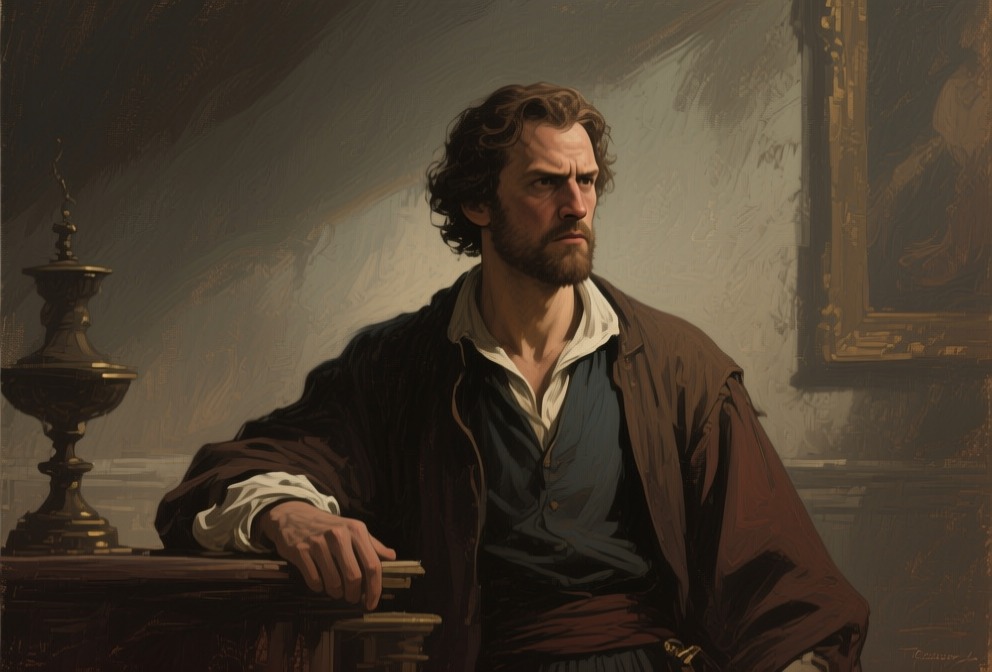
The voyage is very prosperous for the most part. They arrive in the Downs on the thirteenth of April, 1702. Gulliver has only one misfortune: the rats on board carry away one of his sheep; he finds her bones in a hole, picked clean from the flesh. He gets the rest of his cattle safe ashore and sets them a-grazing in a bowling-green at Greenwich, where the fineness of the grass makes them feed very heartily, though he had always feared the contrary. The short time he continues in England, he makes a considerable profit by showing his cattle to many persons of quality and others, and before he begins his second voyage, he sells them for six hundred pounds. Since his last return, he finds the breed is considerably increased, especially the sheep, which he hopes will prove much to the advantage of the woollen manufacture by the fineness of the fleeces. He stays but two months with his wife and family, for his insatiable desire of seeing foreign countries will suffer him to continue no longer. He leaves fifteen hundred pounds with his wife and fixes her in a good house at Redriff. His remaining stock he carries with him, part in money and part in goods, in hopes to improve his fortune. His eldest uncle, John, had left him an estate in land near Epping of about thirty pounds a year, and he had a long lease of the "Black Bull" in Fetter Lane, which yields him as much more, so that he is not in any danger of leaving his family upon the parish. His son Johnny is at the grammar-school, and his daughter Betty is then at her needlework. He takes leave of his wife and boy and girl with tears on both sides and goes on board the "Adventure," a merchant ship of three hundred tons bound for Surat, Captain John Nicholas, of Liverpool, commander.
June 20, 1702
Gulliver's Second Voyage Begins
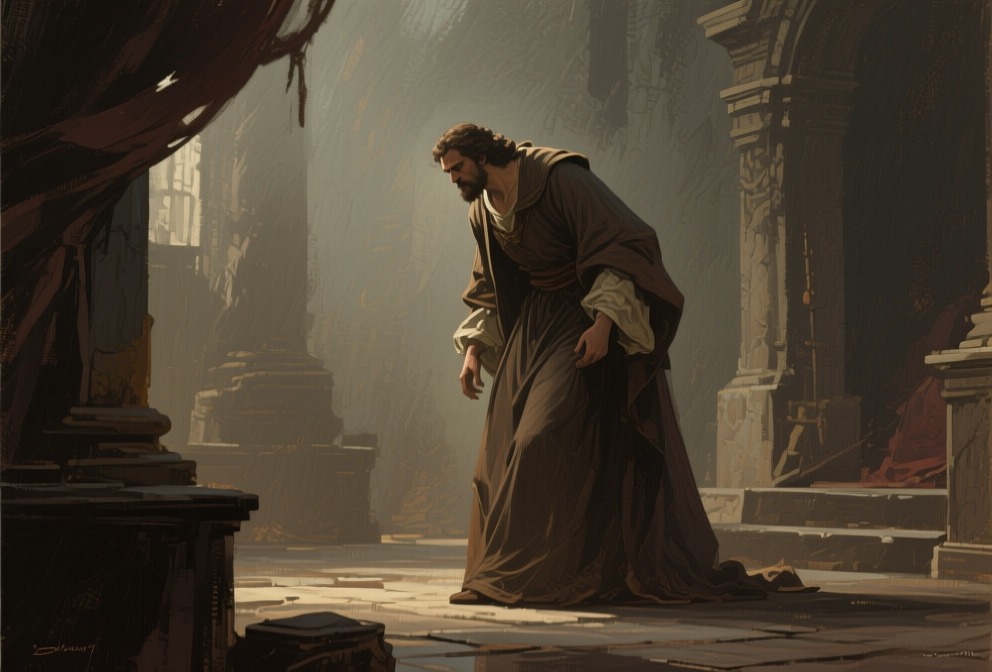
Having been condemned by nature and fortune to an active and restless life, in two months after his return Gulliver again leaves his native country and takes shipping in the Downs on the twentieth day of June, 1702, in the "Adventure," Captain John Nicholas, a Cornish man, commander, bound for Surat. They have a very prosperous gale till they arrive at the Cape of Good Hope, where they land for fresh water, but discovering a leak, they unship their goods and winter there, for the captain falling sick of an ague, they cannot leave the Cape till the end of March. They then set sail and have a good voyage till they pass the Straits of Madagascar, but having got northward of that island and to about five degrees south latitude, the winds, which in those seas are observed to blow a constant equal gale between the north and west from the beginning of December to the beginning of May, on the nineteenth of April begin to blow with much greater violence and more westerly than usual, continuing so for twenty days together, during which time they are driven a little to the east of the Molucca Islands and about three degrees northward of the line. The wind ceases and it is a perfect calm, but the captain, being a man well experienced in the navigation of those seas, bids them all prepare against a storm, which accordingly happens the day following, for the southern wind, called the southern monsoon, begins to set in, and soon it is a fierce storm. During this storm, which is followed by a strong wind west southwest, they are carried, by Gulliver's computation, about five hundred leagues to the east, so that the oldest sailor on board cannot tell in what part of the world they are. Their provisions hold out well, their ship is staunch, and their crew all in good health, but they lie in the utmost distress for water. They think it best to hold on the same course rather than turn more northerly, which might have brought them to the northwest parts of Great Tartary and into the Frozen Sea.
June 16, 1703
Gulliver Left Alone in Brobdingnag
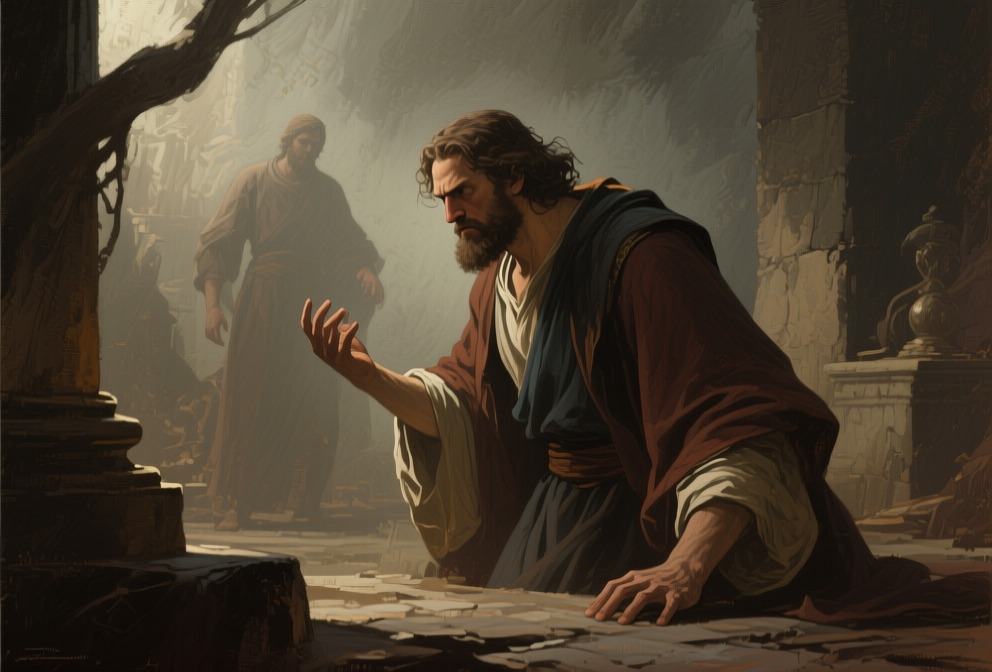
On the sixteenth day of June, 1703, a boy on the topmast discovers land. On the seventeenth, they come in full view of a great island or continent (for they know not which), on the south side whereof is a small neck of land jutting out into the sea and a creek too shallow to hold a ship of above one hundred tons. They cast anchor within a league of this creek, and their captain sends a dozen of his men well armed in the long-boat, with vessels for water, if any can be found. Gulliver desires his leave to go with them, that he might see the country and make what discoveries he could. When they come to land, they see no river or spring nor any sign of inhabitants. Their men therefore wander on the shore to find out some fresh water near the sea, and Gulliver walks alone about a mile on the other side, where he observes the country all barren and rocky. He now begins to be weary, and seeing nothing to entertain his curiosity, he returns gently down toward the creek, and the sea being full in his view, he sees his men already got into the boat and rowing for life to the ship. He is going to holla after them, although it had been to little purpose, when he observes a huge creature walking after them in the sea as fast as he can; he wades not much deeper than his knees and takes prodigious strides, but the men have the start of him about half a league, and the sea thereabouts being full of pointed rocks, the monster is not able to overtake the boat. Gulliver runs as fast as he can the way he first went and then climbs up a steep hill, which gives him some prospect of the country. He finds it fully cultivated, but that which first surprises him is the length of the grass, which, in those grounds that seem to be kept for hay, is about twenty feet high. He falls into a high road, for so he takes it to be, though it serves to the inhabitants only as a footpath through a field of barley. Here he walks on for some time, but can see little on either side, it being now near harvest and the corn rising at least forty feet. He is an hour walking to the end of this field, which is fenced in with a hedge of at least one hundred and twenty feet high, and the trees so lofty that he can make no computation of their altitude. There is a stile to pass from this field into the next, with four steps, each six feet high, and the upper stone above twenty. He is endeavoring to find some gap in the hedge when he discovers one of the inhabitants in the next field advancing towards the stile, of the same size with him whom he saw in the sea pursuing their boat. He appears as tall as an ordinary spire steeple and takes about ten yards at every stride. Gulliver is struck with the utmost fear and astonishment and runs to hide himself in the corn, from whence he sees him at the top of the stile, looking back into the next field on the right hand, and hears him call in a voice many degrees louder than a speaking trumpet. Whereupon seven monsters, like himself, come towards him with reaping-hooks in their hands, each hook about the largeness of six scythes. These people seem to be his servants or laborers, for upon some words he speaks, they go to reap the corn in the field where Gulliver lies. He keeps from them at as great a distance as he can but is forced to move with extreme difficulty, for the stalks of the corn are sometimes not above a foot distance, so that he can hardly squeeze his body betwixt them. He makes a shift to go forward till he comes to a part of the field where the corn has been laid by the rain and wind. Here it is impossible for him to advance a step, for the stalks are so interwoven that he cannot creep through, and the beards of the fallen ears so strong and pointed that they pierce through his clothes into his flesh. At the same time, he hears the reapers not above a hundred yards behind him. Being quite dispirited with toil and wholly overcome by grief and despair, he lies down between two ridges and heartily wishes he might there end his days. He bemoans his desolate widow and fatherless children and laments his own folly and wilfulness in attempting a second voyage against the advice of all his friends and relations. In this terrible agitation of mind, he cannot forbear thinking of Lilliput, whose inhabitants looked upon him as the greatest prodigy that ever appeared in the world, where he was able to draw an imperial fleet in his hand and perform those other actions which will be recorded forever in the chronicles of that empire. He reflects what a mortification it must prove to him to appear as inconsiderable in this nation as one single Lilliputian would be among them.
June 17, 1703
Gulliver Captured by the Farmer
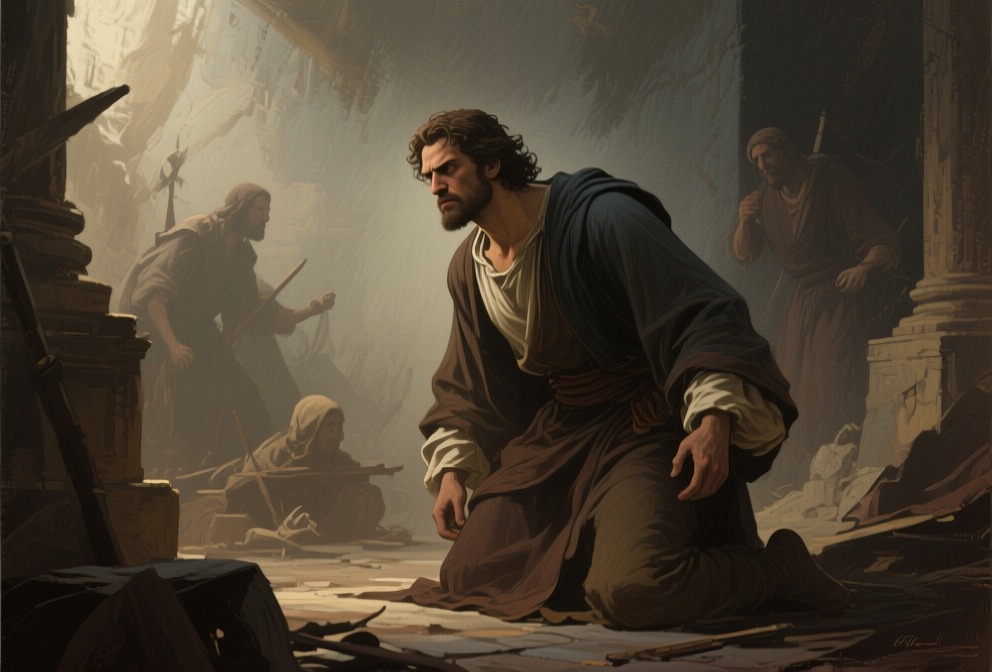
Scared and confounded as he is, Gulliver cannot forbear going on with these reflections when one of the reapers, approaching within ten yards of the ridge where he lies, makes him apprehend that with the next step he should be squashed to death under his foot or cut in two with his reaping-hook. Therefore, when he is again about to move, Gulliver screams as loud as fear can make him. Whereupon the huge creature trods short and, looking round about under him for some time, at last espies Gulliver as he lies on the ground. He considers awhile, with the caution of one who endeavors to lay hold on a small dangerous animal in such a manner that it shall not be able either to scratch or to bite him. At length he ventures to take Gulliver up between his forefinger and thumb and brings him within three yards of his eyes, that he might behold his shape more perfectly. Gulliver guesses his meaning, and his good fortune gives him so much presence of mind that he resolves not to struggle in the least as he holds him in the air, above sixty feet from the ground, although he grievously pinches his sides for fear he should slip through his fingers. All he ventures is to raise his eyes towards the sun and place his hands together in a supplicating posture and to speak some words in an humble melancholy tone, suitable to the condition he then is in. For he apprehends every moment that he would dash him against the ground, as we usually do any little hateful animal which we have a mind to destroy. But his good star would have it that he appears pleased with Gulliver's voice and gestures and begins to look upon him as a curiosity, much wondering to hear him pronounce articulate words, although he cannot understand them. In the meantime, Gulliver is not able to forbear groaning and shedding tears and turning his head towards his sides, letting him know as well as he could how cruelly he is hurt by the pressure of his thumb and finger. He seems to apprehend Gulliver's meaning, for lifting up the lappet of his coat, he puts him gently into it and immediately runs along with him to his master, who is a substantial farmer and the same person Gulliver had first seen in the field. The farmer, having received such an account of him as his servant could give him, takes a piece of a small straw about the size of a walking-staff and therewith lifts up the lappets of Gulliver's coat, which it seems he thinks to be some kind of covering that nature had given him. He blows Gulliver's hair aside to take a better view of his face. He calls his hinds about him and asks them whether they have ever seen in the fields any little creature that resembles him. He then places Gulliver softly on the ground upon all fours, but Gulliver gets immediately up and walks slowly backwards and forwards to let those people see that he has no intent to run away. They all sit down in a circle about him, the better to observe his motions. Gulliver pulls off his hat and makes a low bow towards the farmer. He falls on his knees and lifts up his hands and eyes and speaks several words as loud as he can. He takes a purse of gold out of his pocket and humbly presents it to him. The farmer receives it on the palm of his hand, then applies it close to his eye to see what it is, and afterwards turns it several times with the point of a pin (which he takes out of his sleeve), but can make nothing of it. Whereupon Gulliver makes a sign that he should place his hand on the ground. He then takes the purse and, opening it, pours all the gold into his palm. There are six Spanish pieces of four pistoles each, besides twenty or thirty smaller coins. He sees him wet the tip of his little finger upon his tongue and take up one of his largest pieces and then another, but he seems to be wholly ignorant what they are. He makes Gulliver a sign to put them again into the purse and the purse again into his pocket, which, after offering it to him several times, Gulliver thinks it best to do. The farmer by this time is convinced Gulliver must be a rational creature. He speaks often to him, but the sound of his voice pierces Gulliver's ears like that of a water-mill, yet his words are articulate enough. Gulliver answers as loud as he can in several languages, and he often lays his ear within two yards of him, but all in vain, for they are wholly unintelligible to each other. He then sends his servants to their work and, taking his handkerchief out of his pocket, he doubles and spreads it on his left hand, which he places flat on the ground with the palm upwards, making Gulliver a sign to step into it, as he can easily do, for it is not above a foot in thickness. Gulliver thinks it his part to obey and, for fear of falling, lays himself at full length upon the handkerchief, with the remainder of which he laps him up to the head for farther security, and in this manner carries him home to his house. There he calls his wife and shows him to her, but she screams and runs back, as women in England do at the sight of a toad or a spider. However, when she has awhile seen his behavior and how well he observes the signs her husband makes, she is soon reconciled and by degrees grows extremely tender of him.
noon on the day of capture
Gulliver's First Meal in Brobdingnag
It is about twelve at noon, and a servant brings in dinner. It is only one substantial dish of meat (fit for the plain condition of a husbandman) in a dish of about four-and-twenty feet diameter. The company are the farmer and his wife, three children, and an old grandmother. When they are sat down, the farmer places Gulliver at some distance from him on the table, which is thirty feet high from the floor. Gulliver is in a terrible fright and keeps as far as he can from the edge for fear of falling. The wife minces a bit of meat, then crumbles some bread on a trencher and places it before him. Gulliver makes her a low bow, takes out his knife and fork, and falls to eat, which gives them exceeding delight. The mistress sends her maid for a small dram cup, which holds about three gallons, and fills it with drink. Gulliver takes up the vessel with much difficulty in both hands and in a most respectful manner drinks to her ladyship's health, expressing the words as loud as he can in English, which makes the company laugh so heartily that he is almost deafened by the noise. This liquor tastes like a small cider and is not unpleasant. Then the master makes him a sign to come to his trencher-side, but as he walks on the table, being in great surprise all the time, he happens to stumble against a crust and falls flat on his face, but receives no hurt. He gets up immediately, and observing the good people to be in much concern, he takes his hat (which he held under his arm out of good manners) and, waving it over his head, makes three huzzas to show that he has got no mischief by his fall. But advancing forwards towards his master (as he shall henceforth call him), his youngest son, an arch boy of about ten years old, takes him up by the legs and holds him so high in the air that Gulliver trembles in every limb, but his father snatches him from him and at the same time gives him such a box in the left ear as would have felled an European troop of horse to the earth, ordering him to be taken from the table. But being afraid the boy might owe him a spite, and well remembering how mischievous all children among us naturally are to sparrows, rabbits, young kittens, and puppy dogs, Gulliver falls on his knees and, pointing to the boy, makes his master to understand as well as he can that he desires his son might be pardoned. The father complies, and the lad takes his seat again, whereupon Gulliver goes to him and kisses his hand, which his master takes and makes him stroke him gently with it. In the midst of dinner, his mistress's favorite cat leaps into her lap. Gulliver hears a noise behind him like that of a dozen stocking-weavers at work, and turning his head, he finds it proceeds from the purring of that animal, who seems to be three times larger than an ox. The fierceness of this creature's countenance altogether discomposes him, though he stands at the further end of the table, above fifty feet off, and although his mistress holds her fast for fear she might give a spring and seize him in her talons. But it happens there is no danger, for the cat takes not the least notice of him when his master places him within three yards of her. Gulliver walks with intrepidity five or six times before the very head of the cat and comes within half a yard of her, whereupon she draws herself back as if she were more afraid of him. He has less apprehension concerning the dogs, whereof three or four come into the room, one of which is a mastiff equal in bulk to four elephants, and a greyhound somewhat taller than the mastiff but not so large. When dinner is almost done, the nurse comes in with a child of a year old in her arms, who immediately spies Gulliver and begins a squall that you might have heard from London Bridge to Chelsea, after the usual oratory of infants, to get him for a plaything. The mother out of pure indulgence takes him up and puts him towards the child, who presently seizes him by the middle and gets his head in its mouth, where he roars so loud that the urchin is frighted and lets him drop, and he should infallibly have broken his neck if the mother had not held her apron under him.
after the first meal, during a nap
Gulliver Battles Giant Rats
When dinner is done, Gulliver's master goes out to his labors, and as Gulliver can discover by his voice and gestures, gives his wife a strict charge to take care of him. Gulliver is very much tired and disposed to sleep, which his mistress perceiving, she puts him on her own bed and covers him with a clean white handkerchief, but larger and coarser than the mainsail of a man-of-war. He sleeps about two hours and dreams he is at home with his wife and children, which aggravates his sorrows when he awakes and finds himself alone in a vast room, between two and three hundred feet wide and above two hundred high, lying in a bed twenty yards wide. His mistress is gone about her household affairs and has locked him in. The bed is eight yards from the floor. Presently two rats creep up the curtains and run smelling backwards and forwards on his bed. One of them comes almost up to his face, whereupon he rises in a fright and draws out his hanger to defend himself. The horrible animals have the boldness to attack him on both sides, and one of them holds his forefeet at his collar, but Gulliver kills him before he can do him any mischief. He falls down at his feet, and the other, seeing the fate of his comrade, makes his escape, but not without one good wound on the back which Gulliver gives him as he flees, and makes the blood run trickling from him. After this exploit, Gulliver walks gently to and fro on the bed to recover his breath and loss of spirits. These creatures are of the size of a large mastiff but infinitely more nimble and fierce, so that if he had taken off his belt before he went to sleep, he must infallibly have been torn to pieces and devoured. He measures the tail of the dead rat and finds it to be two yards long wanting an inch, but it goes against his stomach to draw the carcass off the bed, where it still lies bleeding. He observes it has yet some life, but with a strong slash across the neck, he thoroughly dispatches it.
after the first day in the farmer's house
Glumdalclitch Becomes Gulliver's Nurse
Gulliver's mistress has a daughter of nine years old, a child of toward parts for her age, very dexterous at her needle and skilful in dressing her baby. Her mother and she contrive to fit up the baby's cradle for Gulliver against night. The cradle is put into a small drawer cabinet, and the drawer placed upon a hanging shelf for fear of the rats. This is Gulliver's bed all the time he stays with these people, though made more convenient by degrees as he begins to learn their language and make his wants known. She makes him seven shirts and some other linen of as fine cloth as could be got, which indeed is coarser than sackcloth, and these she constantly washes for him with her own hands. She is likewise his school-mistress to teach him the language. When he points to anything, she tells him the name of it in her own tongue, so that in a few days he is able to call for whatever he has a mind to. She is very good-natured and not above forty feet high, being little for her age. She gives him the name of Grildrig, which the family takes up and afterwards the whole kingdom. The word imports what the Latins call nanunculus, the Italians homunceletino, and the English mannikin. To her Gulliver chiefly owes his preservation in that country. They never part while he is there; he calls her his Glumdalclitch, or little nurse, and should be guilty of great ingratitude if he omitted this honorable mention of her care and affection towards him, which he heartily wishes it lay in his power to requite as she deserves.
after the farmer's friend's advice
Gulliver Exhibited at the Market-Town
It now begins to be known and talked of in the neighborhood that Gulliver's master has found a strange animal in the field, about the bigness of a splacnuck, but exactly shaped in every part like a human creature, which it likewise imitates in all its actions, seems to speak in a little language of its own, has already learned several words of theirs, goes erect upon two legs, is tame and gentle, will come when it is called, do whatever it is bid, has the finest limbs in the world, and a complexion fairer than a nobleman's daughter of three years old. Another farmer, who lives hard by and is a particular friend of Gulliver's master, comes on a visit on purpose to inquire into the truth of this story. Gulliver is immediately produced and placed upon a table, where he walks as he is commanded, draws his hanger, puts it up again, makes his reverence to his master's guest, asks him in his own language how he did, and tells him he is welcome, just as his little nurse has instructed him. This man, who is old and dim-sighted, puts on his spectacles to behold him better, at which Gulliver cannot forbear laughing very heartily, for his eyes appear like the full moon shining into a chamber at two windows. Their people, who discover the cause of his mirth, bear him company in laughing, at which the old fellow is fool enough to be angry and out of countenance. He has the character of a great miser, and to Gulliver's misfortune, he well deserves it by the cursed advice he gives his master to show him as a sight upon a market-day in the next town, which is half an hour's riding, about two-and-twenty miles from their house. Gulliver guesses there is some mischief contriving when he observes his master and his friend whispering long together, sometimes pointing at him, and his fears make him fancy that he overhears and understands some of their words. But the next morning, Glumdalclitch tells him the whole matter, which she has cunningly picked out from her mother. The poor girl lays him on her bosom and falls a-weeping with shame and grief. She apprehends some mischief would happen to him from rude vulgar folks, who might squeeze him to death or break one of his limbs by taking him in their hands. She has also observed how modest he is in his nature, how nicely he regards his honor, and what an indignity he conceives it to be exposed for money as a public spectacle to the meanest of the people. She says her papa and mamma have promised that Grildrig should be hers, but now she finds they mean to serve her as they did last year when they pretended to give her a lamb and yet as soon as it was fat sold it to a butcher. For his own part, Gulliver may truly affirm that he is less concerned than his nurse. He has a strong hope, which leaves him, that he should one day recover his liberty, and to the ignominy of being carried about for a monster, he considers himself to be a perfect stranger in the country, and that such a misfortune could never be charged upon him as a reproach if ever he should return to England, since the king of Great Britain himself, in his condition, must have undergone the same distress.
August 17, 1703
Gulliver's Journey to Lorbrulgrud
Gulliver's master, finding how profitable he is like to be, resolves to carry him to the most considerable cities of the kingdom. Having therefore provided himself with all things necessary for a long journey and settled his affairs at home, he takes leave of his wife, and upon the seventeenth of August, 1703, about two months after Gulliver's arrival, they set out for the metropolis, situated in the middle of that empire and about three thousand miles distance from their house. Gulliver's master makes his daughter Glumdalclitch ride behind him. She carries Gulliver on her lap in a box tied about her waist. The girl has lined it on all sides with the softest cloth she could get, well quilted underneath, furnished it with her baby's bed, provided him with linen and other necessaries, and made everything as conveniently as she could. They have no other company but a boy of the house who rides after them with the luggage. Gulliver's master's design is to show him in all the towns by the way and to step out of the road for fifty or a hundred miles to any village or person of quality's house where he might expect custom. They make easy journeys of not above seven or eight score miles a day, for Glumdalclitch, on purpose to spare him, complains she is tired with the trotting of the horse. She often takes him out of his box at his own desire to give him air and show him the country, but always holds him fast by a leading-string. They pass over five or six rivers many degrees broader and deeper than the Nile or the Ganges, and there is hardly a rivulet so small as the Thames at London Bridge. They are ten weeks in their journey, and Gulliver is shown in eighteen large towns, besides many villages and private families. On the twenty-sixth of October, they arrive at the metropolis, called in their language Lorbrulgrud, or Pride of the Universe. Gulliver's master takes a lodging in the principal street of the city, not far from the royal palace, and puts out bills in the usual form containing an exact description of his person and parts. He hires a large room between three and four hundred feet wide. He provides a table sixty feet in diameter upon which Gulliver is to act his part, and palisadoes it round three feet from the edge and as many high to prevent his falling over. Gulliver is shown ten times a day to the wonder and satisfaction of all people. He can now speak the language tolerably well and perfectly understands every word that is spoken to him. Besides, he has learned their alphabet and can make a shift to explain a sentence here and there, for Glumdalclitch has been his instructor while they were at home and at leisure hours during their journey. She carries a little book in her pocket, not much larger than a Sanson's Atlas, a common treatise for the use of young girls giving a short account of their religion, out of this she teaches him his letters and interprets the words.
after arrival in Lorbrulgrud
Gulliver Sold to the Queen
The frequent labors Gulliver undergoes every day make in a few weeks a very considerable change in his health; the more his master gets by him, the more insatiable he grows. Gulliver has quite lost his stomach and is almost reduced to a skeleton. The farmer observes it and, concluding he must soon die, resolves to make as good a hand of him as he can. While he is thus reasoning and resolving with himself, a slardral, or gentleman-usher, comes from court, commanding his master to carry him immediately thither for the diversion of the queen and her ladies. Some of the latter have already been to see him and reported strange things of his beauty, behavior, and good sense. Her majesty and those who attend her are beyond measure delighted with his demeanor. Gulliver falls on his knees and begs the honor of kissing her imperial foot, but this gracious princess holds out her little finger towards him after he is set on a table, which he embraces in both his arms and puts the tip of it with the utmost respect to his lip. She makes him some general questions about his country and his travels, which he answers as distinctly and in as few words as he can. She asks whether he would be content to live at court. He bows down to the board of the table and humbly answers that he is his master's slave, but if he were at his own disposal, he should be proud to devote his life to her majesty's service. She then asks his master whether he is willing to sell him at a good price. He, who apprehends Gulliver cannot live a month, is ready enough to part with him and demands a thousand pieces of gold, which are ordered him on the spot, each piece being the bigness of eight hundred moidores, but for the proportion of all things between that country and Europe and the high price of gold among them, it is hardly so great a sum as a thousand guineas would be in England. Gulliver then says to the queen, since he is now her majesty's most humble creature and vassal, he must beg the favor that Glumdalclitch, who has always attended him with so much care and kindness and understood to do it so well, might be admitted into her service and continue to be his nurse and instructor. Her majesty agrees to his petition and easily gets the farmer's consent, who is glad enough to have his daughter preferred at court, and the poor girl herself is not able to hide her joy. Gulliver's late master withdraws, bidding him farewell and saying he has left him in good service, to which Gulliver replies not a word, only making him a slight bow. The queen observes his coldness and, when the farmer is gone out of the apartment, asks him the reason. Gulliver makes bold to tell her majesty that he owes no other obligation to his late master than his not dashing out the brains of a poor harmless creature found by chance in his field, which obligation was amply recompensed by the gain he had made in showing him through half the kingdom and the price he had now sold him for. That the life he had since led was laborious enough to kill an animal of ten times his strength. That his health was much impaired by the continual drudgery of entertaining the rabble every hour of the day, and that if his master had not thought his life in danger, her majesty would not have got so cheap a bargain. But as he was out of all fear of being ill-treated under the protection of so great and good an empress, he hoped his late master's apprehensions would appear to be groundless, for he already found his spirits to revive by the influence of her most august presence.
after the sale to the queen
Gulliver Presented to the King
The queen takes Gulliver in her own hand and carries him to the king, who is then retired to his cabinet. His majesty, a prince of much gravity and austere countenance, not well observing Gulliver's shape at first view, asks the queen after a cold manner how long it was since she grew fond of a splacnuck, for such it seems he takes him to be as he lies upon his breast in her majesty's right hand. But this princess, who hath an infinite deal of wit and humor, sets him gently on his feet upon the scrutoire and commands him to give his majesty an account of himself, which Gulliver does in a very few words, and Glumdalclitch, who attends at the cabinet-door and cannot endure he should be out of her sight, being admitted, confirms all that had passed from his arrival at her father's house. The king, although he be as learned a person as any in his dominions, had been educated in the study of philosophy and particularly mathematics, yet when he observes Gulliver's shape exactly and sees him walk erect before he begins to speak, conceives he might be a piece of clockwork (which is in that country arrived to a very great perfection) contrived by some ingenious artist. But when he hears his voice and finds what he delivers to be regular and rational, he cannot conceal his astonishment. He is by no means satisfied with the relation Gulliver gives him of the manner he came into his kingdom but thinks it a story concerted between Glumdalclitch and her father, who had taught him a set of words to make him sell at a better price. Upon this imagination he puts several other questions to him and still receives rational answers, no otherwise defective than by a foreign accent and an imperfect knowledge in the language, with some rustic phrases which Gulliver had learned at the farmer's house and did not suit the polite style of a court. His majesty sends for three great scholars, who are then in their weekly waiting according to the custom in that country. These gentlemen, after they have a while examined Gulliver's shape with much nicety, are of different opinions concerning him. They all agree that he could not be produced according to the regular laws of nature, because he was not framed with a capacity of preserving his life, either by swiftness or climbing of trees or digging holes in the earth. They observe by his teeth, which they view with great exactness, that he is a carnivorous animal, yet most quadrupeds being an overmatch for him and field-mice with some others too nimble, they cannot imagine how he should be able to support himself unless he fed upon snails and other insects, which they offer by many learned arguments to evince that he could not possibly do. They would not allow him to be a dwarf, because his littleness was beyond all degrees of comparison, for the queen's favorite dwarf, the smallest ever known in that kingdom, was nearly thirty feet high. After much debate, they conclude unanimously that he is only relplum scalcath, which is interpreted literally, lusus naturae, a determination exactly agreeable to the modern philosophy of Europe. After this decisive conclusion, Gulliver entreats to be heard a word or two. He applies himself to the king and assures his majesty that he came from a country which abounded with several millions of both sexes and of his own stature, where the animals, trees, and houses were all in proportion, and where by consequence he might be as able to defend himself and to find sustenance as any of his majesty's subjects could do here, which he takes for a full answer to those gentlemen's arguments. To this they only reply with a smile of contempt, saying that the farmer had instructed him very well in his lesson. The king, who has a much better understanding, dismissing his learned men, sends for the farmer, who by good fortune is not yet gone out of town. Having therefore first examined him privately and then confronted him with Gulliver and the young girl, his majesty begins to think that what they had told him might possibly be true. He desires the queen to order that a particular care should be taken of him and is of opinion that Glumdalclitch should still continue in her office of tending him, because he observes that they have a great affection for each other.
after the king's decision
Gulliver's Apartment at Court
A convenient apartment is provided for Glumdalclitch at court; she has a sort of governess appointed to take care of her education, a maid to dress her, and two other servants for menial offices, but the care of Gulliver is wholly appropriated to herself. The queen commands her own cabinet-maker to contrive a box that might serve Gulliver for a bed-chamber, after the model that Glumdalclitch and he shall agree upon. This man is a most ingenious artist, and according to Gulliver's directions, in three weeks finishes him a wooden chamber of sixteen feet square and twelve high, with sash-windows, a door, and two closets, like a London bed-chamber. The board that makes the ceiling is to be lifted up and down by two hinges to put in a bed ready furnished by her majesty's upholsterer, which Glumdalclitch takes out every day to air, makes it with her own hands, and letting it down at night, locks up the roof over him. A nice workman, who is famous for little curiosities, undertakes to make him two chairs with backs and frames of a substance not unlike ivory, and two tables, with a cabinet to put his things in. The room is quilted on all sides, as well as the floor and the ceiling, to prevent any accident from the carelessness of those who carry him and to break the force of a jolt when he goes in a coach. Gulliver desires a lock for his door to prevent rats and mice from coming in; the smith, after several attempts, makes the smallest that ever was seen among them, for Gulliver has known a larger at the gate of a gentleman's house in England. He makes a shift to keep the key in a pocket of his own, fearing Glumdalclitch might lose it. The queen likewise orders the thinnest silks that could be gotten to make him clothes, not much thicker than an English blanket, very cumbersome till he is accustomed to them. They are after the fashion of the kingdom, partly resembling the Persian and partly the Chinese, and are a very grave and decent habit. The queen becomes so fond of his company that she cannot dine without him. Gulliver has a table placed upon the same at which her majesty eats, just at her left elbow, and a chair to sit on. Glumdalclitch stands on a stool on the floor near his table to assist and take care of him. He has an entire set of silver dishes and plates and other necessaries, which in proportion to those of the queen are not much bigger than what he has seen in a London toy-shop for the furniture of a baby-house. These his little nurse keeps in her pocket in a silver box and gives him at meals as he wants them, always cleaning them herself. No person dines with the queen but the two princesses royal, the elder sixteen years old and the younger at that time thirteen and a month. Her majesty used to put a bit of meat upon one of his dishes, out of which he carves for himself, and her diversion is to see him eat in miniature, for the queen (who had indeed but a weak stomach) takes up at one mouthful as much as a dozen English farmers could eat at a meal, which to him is for some time a very nauseous sight.
during his stay at court
Gulliver's Conversations with the King
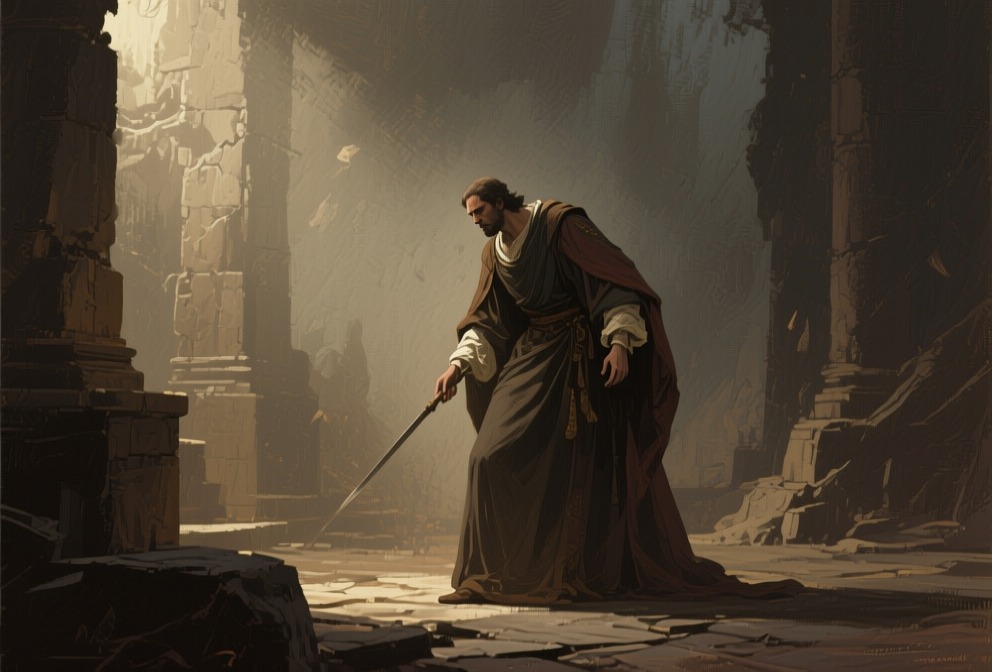
It is the custom that every Wednesday (which is their Sabbath) the king and queen, with the royal issue of both sexes, dine together in the apartment of his majesty, to whom Gulliver is now become a great favorite, and at these times his little chair and table are placed at his left hand before one of the salt-cellars. This prince takes a pleasure in conversing with him, inquiring into the manners, religion, laws, government, and learning of Europe, wherein Gulliver gives him the best account he is able. His apprehension is so clear and his judgment so exact that he makes very wise reflections and observations upon all Gulliver says. But Gulliver confesses that after he has been a little too copious in talking of his own beloved country, of their trade and wars by sea and land, of their schisms in religion and parties in the state, the prejudices of his education prevail so far that he cannot forbear taking Gulliver up in his right hand and, stroking him gently with the other after a hearty fit of laughing, asks him whether he is a whig or a tory. Then turning to his first minister, who waits behind him with a white staff near as tall as the mainmast of the "Royal Sovereign," he observes how contemptible a thing is human grandeur, which could be mimicked by such diminutive insects as Gulliver, and yet, says he, I dare engage these creatures have their titles and distinctions of honor; they contrive little nests and burrows that they call houses and cities; they make a figure in dress and equipage; they love, they fight, they dispute, they cheat, they betray. And thus he continues on while Gulliver's color comes and goes several times with indignation to hear their noble country, the mistress of arts and arms, the scourge of France, the arbitress of Europe, the seat of virtue, piety, honor, and truth, the pride and envy of the world, so contemptuously treated. But as he is not in a condition to resent injuries, so upon mature thoughts he begins to doubt whether he is injured or no. For after having been accustomed several months to the sight and converse of this people and observed every object upon which he cast his eyes to be of proportionable magnitude, the horror he had at first conceived from their bulk and aspect is so far worn off that if he had then beheld a company of English lords and ladies in their finery and birthday clothes acting their several parts in the most courtly manner of strutting and bowing and prating, to say the truth, he should have been strongly tempted to laugh as much at them as the king and his grandees did at him. Neither indeed can he forbear smiling at himself when the queen used to place him upon her hand towards a looking-glass, by which both their persons appear before him in full view together, and there could nothing be more ridiculous than the comparison, so that he really begins to imagine himself dwindled many degrees below his usual size.
during Gulliver's stay at court
The Dwarf Drops Gulliver into Cream
Nothing angers and mortifies Gulliver so much as the queen's dwarf, who being of the lowest stature that ever in that country (for he verily thinks he was not full thirty feet high) becomes so insolent at seeing a creature so much beneath him that he would always affect to swagger and look big as he passed by Gulliver in the queen's ante-chamber while Gulliver was standing on some table talking with the lords or ladies of the court, and he seldom fails of a smart word or two upon Gulliver's littleness, against which Gulliver can only revenge himself by calling him brother, challenging him to wrestle, and such repartees as are usual in the mouths of court pages. One day at dinner, this malicious little cub is so nettled with something Gulliver has said to him that, raising himself upon the frame of her majesty's chair, he takes Gulliver up as he is sitting down, not thinking any harm, and lets him drop into a large silver bowl of cream, and then runs away as fast as he can. Gulliver falls over head and ears, and if he had not been a good swimmer, it might have gone very hard with him, for Glumdalclitch in that instant happens to be at the other end of the room, and the queen is in such a fright that she wants presence of mind to assist him. But his little nurse runs to his relief and takes him out after he has swallowed above a quart of cream. He is put to bed; however, he receives no other damage than the loss of a suit of clothes, which is utterly spoiled. The dwarf is soundly whipped, and as a farther punishment forced to drink up the bowl of cream into which he had thrown Gulliver, neither is he ever restored to favor, for soon after the queen bestows him on a lady of high quality, so that Gulliver sees him no more, to his very great satisfaction, for he could not tell to what extremity such a malicious urchin might have carried his resentment.
before the cream incident
The Dwarf Wedges Gulliver in a Marrow-Bone
The dwarf had before served Gulliver a scurvy trick which set the queen a-laughing, although at the same time she was heartily vexed and would have immediately cashiered him if Gulliver had not been so generous as to intercede. Her majesty had taken a marrow-bone upon her plate and, after knocking out the marrow, placed the bone on the dish erect as it stood before. The dwarf, watching his opportunity while Glumdalclitch was gone to the sideboard, mounted upon the stool she stood on to take care of Gulliver at meals, took him up in both hands, and squeezing his legs together, wedged them into the marrow-bone above his waist, where he stuck for some time and made a very ridiculous figure. It was near a minute before any one knew what was become of him, for he thought it below him to cry out. But as princes seldom get their meat hot, his legs were not scalded, only his stockings and breeches in a sad condition. The dwarf, at Gulliver's entreaty, had no other punishment than a sound whipping.
during his stay at court
Gulliver's Adventures with Flies and Wasps
Gulliver is frequently rallied by the queen upon account of his fearfulness, and she used to ask him whether the people of his country were as great cowards as himself. The occasion is this: the kingdom is much pestered with flies in summer, and these odious insects, each of them as big as a Dunstable lark, hardly give him any rest while he sits at dinner with their continual humming and buzzing about his ears. They would sometimes alight upon his victuals. Sometimes they would fix upon his nose or forehead, where they stung him to the quick, and he has much ado to defend himself against these detestable animals and cannot forbear starting when they come on his face. It is the common practice of the dwarf to catch a number of these insects in his hand, as school-boys do among us, and let them out suddenly under Gulliver's nose on purpose to frighten him and divert the queen. Gulliver's remedy is to cut them in pieces with his knife as they fly in the air, wherein his dexterity is much admired. He remembers one morning when Glumdalclitch had set him in his box upon a window, as she usually did in fair days, to give him air (for he durst not venture to let the box be hung on a nail out of the window, as we do with cages in England), after he had lifted up one of his sashes and sat down at his table to eat a piece of sweet-cake for his breakfast, above twenty wasps, allured by the smell, came flying into the room, humming louder than the drones of as many bag-pipes. Some of them seized his cake and carried it piece-meal away; others flew about his head and face, confounding him with the noise and putting him in the utmost terror of their stings. However, he has the courage to rise and draw his hanger and attack them in the air. He dispatches four of them, but the rest get away, and he presently shuts his window. These creatures are as large as partridges; he takes out their stings, finds them an inch and a half long and as sharp as needles. He carefully preserves them all and, having since shown them with some other curiosities in several parts of Europe upon his return to England, he gives three of them to Gresham College and keeps the fourth for himself.
before the dwarf left the queen
The Apple Incident with the Dwarf
Glumdalclitch often carries Gulliver into the gardens of the court in his smaller box and would sometimes take him out of it and hold him in her hand or set him down to walk. Gulliver remembers before the dwarf left the queen, he followed them one day into those gardens, and his nurse having set him down, he and the dwarf being close together near some dwarf apple-trees, Gulliver must needs show his wit by a silly allusion between him and the trees, which happens to hold in their language as it doth in ours. Whereupon the malicious rogue, watching his opportunity when Gulliver is walking under one of them, shakes it directly over his head, by which a dozen apples, each of them near as large as a Bristol barrel, come tumbling about his ears; one of them hits him on the back as he chances to stoop and knocks him down flat on his face, but he receives no other hurt, and the dwarf is pardoned at his desire because he had given the provocation.
during his stay at court
Gulliver's Hailstorm and Other Accidents
Another day, Glumdalclitch leaves Gulliver on a smooth grass-plot to divert himself while she walks at some distance with her governess. In the meantime, there suddenly falls such a violent shower of hail that he is immediately by the force of it struck to the ground, and when he is down, the hail stones give him such cruel bangs all over the body as if he had been pelted with tennis-balls. However, he makes a shift to creep on all fours and shelter himself by lying flat on his face on the lee-side of a border of lemon-thyme, but so bruised from head to foot that he cannot go abroad in ten days. A more dangerous accident happens to him in the same garden when his little nurse, believing she had put him in a secure place, which he often entreated her to do that he might enjoy his own thoughts, and having left his box at home to avoid the trouble of carrying it, goes to another part of the garden with governess and some ladies of her acquaintance. While she is absent and out of hearing, a small white spaniel belonging to one of the chief gardeners, having got by accident into the garden, happens to place where Gulliver lies. The dog, following the scent, comes directly up and, taking him in his mouth, runs straight to his master, wagging his tail, and sets him gently on the ground. By good fortune, he had been so well taught that Gulliver is carried between his teeth without the least hurt or even tearing his clothes. But the poor gardener, who knows him well and has a great kindness for him, is in a terrible fright. He gently takes him up in both his hands and asks him how he did, but Gulliver is so amazed and out of breath that he cannot speak a word. In a few minutes he comes to himself, and the gardener carries him safe to his little nurse, who by this time has returned to the place where she left him and is in cruel agonies when he does not appear nor answer when she calls. She severely reprimands the gardener on account of his dog, but the thing is hushed up and never known at court, for the girl is afraid of the queen's anger, and truly as to himself, Gulliver thinks it would not be for his reputation that such a story should go about. This accident absolutely determines Glumdalclitch never to trust him abroad for the future out of her sight. Gulliver had been long afraid of this resolution and therefore concealed from her some little unlucky adventures that happened in those times when he was left by himself. Once a kite, hovering over the garden, made a stoop at him, and if he had not resolutely drawn his hanger and run under a thick espalier, he would have certainly carried him away in his talons. Another time, walking to the top of a fresh mole-hill, he fell to his neck in the hole through which that animal had cast up the earth. He likewise broke his right shin against the shell of a snail, which he happened to stumble over as he was walking alone and thinking on poor England.
during his stay at court
Gulliver's Boat and Rowing Adventures
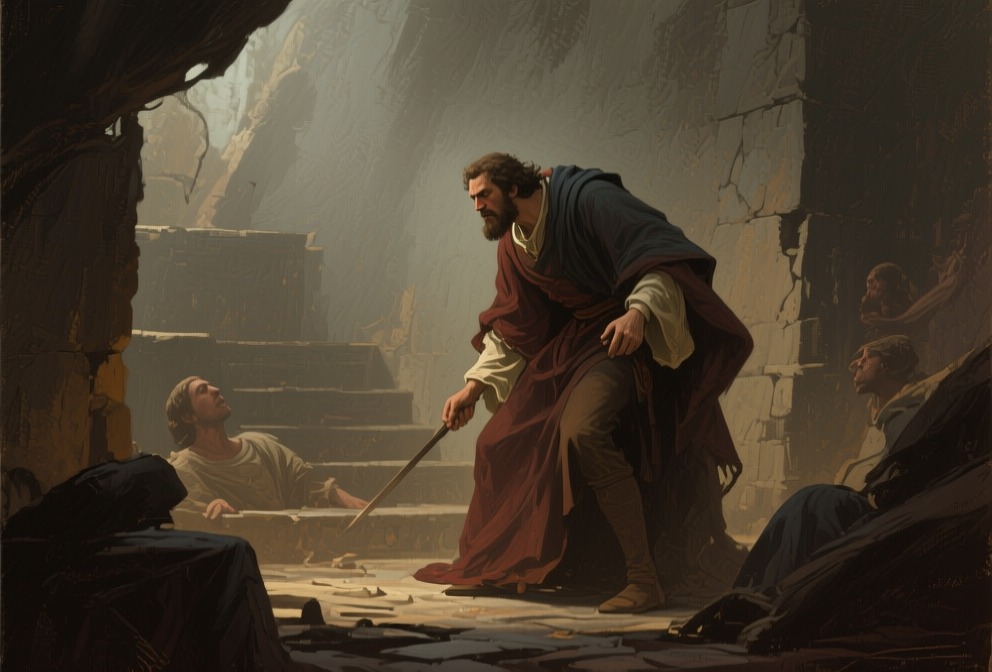
The queen, who often used to hear Gulliver talk of his sea-voyages and took all occasions to divert him when he was melancholy, asks him whether he understood how to handle a sail or an oar and whether a little exercise of rowing might not be convenient for his health. Gulliver answers that he understands both very well, for although his proper employment had been to be surgeon or doctor to the ship, yet often upon a pinch he was forced to work like a common mariner. But he could not see how this could be done in their country, where the smallest wherry was equal to a first-rate man-of-war among us, and such a boat as he could manage would never live in any of their rivers. Her majesty says if he could contrive a boat, her own joiner should make it, and she would provide a place for him to sail in. The fellow is an ingenious workman, and by Gulliver's instructions, in ten days finishes a pleasure-boat with all its tackling, able conveniently to hold eight Europeans. When it is finished, the queen is so delighted that she runs with it in her lap to the king, who orders it to be put in a cistern full of water with Gulliver in it by way of trial, where he could not manage his two sculls or little oars for want of room. But the queen had before contrived another project. She orders the joiner to make a wooden trough of three hundred feet long, fifty broad, and eight deep, which, being well pitched to prevent leaking, is placed on the floor along the wall in an outer room of the palace. It has a cock near the bottom to let out the water when it begins to grow stale, and two servants can easily fill it in half an hour. Here Gulliver often used to row for his own diversion as well as that of the queen and her ladies, who think themselves well entertained with his skill and agility. Sometimes he would put up his sail, and then his business is only to steer while the ladies give him a gale with their fans, and when they are weary, some of their pages would blow his sail forward with their breath while he shows his art by steering starboard or larboard as he pleases. When he has done, Glumdalclitch always carries back his boat into her closet and hangs it on a nail to dry. In this exercise he once meets an accident which had like to have cost him his life, for one of the pages having put his boat into the trough, the governess who attends Glumdalclitch very officiously lifts him up to place him in the boat, but he happens to slip through her fingers and should infallibly have fallen down forty feet upon the floor if, by the luckiest chance in the world, he had not been stopped by a corking-pin that stuck in the good gentlewoman's stomacher; the head of the pin passed between his shirt and the waistband of his breeches, and thus he held by the middle in the air till Glumdalclitch runs to his relief. Another time, one of the servants whose office it is to fill his trough every third day with fresh water is so careless as to let a huge frog (not perceiving it) slip out of his pail. The frog lies concealed till Gulliver is put into his boat, but then seeing a resting-place, climbs up and makes it lean so much on one side that he is forced to balance it with all his weight on the other to prevent overturning. When the frog is got in, it hops at once half the length of the boat and then over his head backwards and forwards. The largeness of its features makes it appear the most deformed animal that can be conceived. However, Gulliver desires Glumdalclitch to let him deal with it alone. He bangs it a good while with one of his sculls and at last forces it to leap out of the boat.
during Gulliver's stay at court
The Monkey Incident in Brobdingnag
The greatest danger Gulliver ever undergoes in that kingdom is from a monkey who belongs to one of the clerks of the kitchen. Glumdalclitch had locked him up in her closet while she went somewhere upon business or a visit. The weather being very warm, the closet window is left open, as well as the windows and the door of his bigger box, in which he usually lived because of its largeness and conveniency. As he sits quietly meditating at his table, he hears something bounce in at the closet window and skip about from one side to the other, whereat although he is much alarmed, yet he ventures to look out, but not stirring from his seat, and then he sees this frolicsome animal frisking and leaping up and down till at last he comes to his box, which he seems to view with great pleasure and curiosity, peeping in at the door and every window. Gulliver retreats to the farther corner of his room or box, but the monkey looking in at every side puts him into such a fright that he wants presence of mind to conceal himself under the bed, as he might easily have done. After some time spent in peeping, grinning, and chattering, he at last espies Gulliver and, reaching one of his paws in at the door as a cat does when she plays with a mouse, although Gulliver often shifts place to avoid him, he at length seizes the lappet of his coat (which, being made of that country silk, was very thick and strong) and drags him out. He takes him out in his right fore-foot and holds him as a nurse does a child, just as Gulliver has seen the same sort of creature do with a kitten in Europe, and when Gulliver offers to struggle, he squeezes him so hard that he thinks it more prudent to submit. He has good reason to believe that he took him for a young one of his own species, by his often stroking his face very gently with his other paw. In these diversions he is interrupted by a noise at the closet door as if somebody were opening it, whereupon he suddenly leaps up to the window at which he had come in and thence upon the leads and gutters, walking upon three legs and holding Gulliver in the fourth, till he clambers up to a roof that is next to theirs. Gulliver hears Glumdalclitch give a shriek at the moment he is carrying him out. The poor girl is almost distracted. That quarter of the palace is all in an uproar; the servants run for ladders; the monkey is seen by hundreds in the court, sitting upon the ridge of a building, holding Gulliver like a baby in one of his fore-paws, whereat many of the rabble below cannot forbear laughing, and without question the sight is ridiculous enough to everybody but himself. Some of the people throw up stones, hoping to drive the monkey down, but this is strictly forbidden, or else very probably his brains had been dashed out. The ladders are now applied and mounted by several men, which the monkey observing, and finding himself almost encompassed, not being able to make speed enough with his three legs, lets Gulliver drop on a ridge tile and makes his escape. Here Gulliver sits for some time, five hundred yards from the ground, expecting every moment to be blown down by the wind or to fall by his own giddiness and come tumbling over and over from the ridge to the eaves, but an honest lad, one of his nurse's footmen, climbs up and, putting him into his breeches-pocket, brings him down safe. Gulliver is so weak and bruised in the sides with the squeezes given him by this odious animal that he is forced to keep his bed a fortnight. The king, queen, and all the court send every day to inquire after his health, and her majesty makes him several visits during his sickness. The monkey is killed, and an order made that no such animal should be kept about the palace.
during his conversations with the king
Gulliver's Proposal of Gunpowder Rejected
In hopes to ingratiate himself farther into his majesty's favor, Gulliver tells him of an invention discovered between three and four hundred years ago to make a certain powder into a heap on which the smallest spark of fire falling would kindle the whole in a moment, although it were as big as a mountain, and make it all fly up in the air together with a noise and agitation greater than thunder. That a proper quantity of this powder rammed into a hollow tube of brass or iron, according to its bigness, would drive a ball of iron or lead with such violence and speed as nothing was able to sustain its force. That the largest balls thus discharged would not only destroy whole ranks of an army at once but batter the strongest walls to the ground, sink down ships with a thousand men in each to the bottom of the sea, and when linked together by a chain would cut through masts and rigging, divide hundreds of bodies in the middle, and lay all waste before them. That they often put this powder into large hollow balls of iron and discharged them by an engine into some city they were besieging, which would rip up the pavements, tear the houses to pieces, burst and throw splinters on every side, dashing out the brains of all who came near. That he knew the ingredients very well, which were cheap and common; he understood the manner of compounding them and could direct his workman how to make those tubes of a size proportionable to all other things in his majesty's kingdom, and the largest need not to be above a hundred feet long; twenty or thirty of which tubes, charged with the proper quantity of powder and balls, would batter down the walls of the strongest town in his dominions in a few hours or destroy the whole metropolis if ever it should pretend to dispute his absolute commands. This he humbly offers to his majesty as a small tribute of acknowledgment in return for so many marks that he had received of his royal favor and protection. The king is struck with horror at the description Gulliver has given him of those terrible engines and the proposal he has made. He is amazed how so impotent and grovelling an insect as Gulliver (these are his expressions) could entertain such inhuman ideas and in so familiar a manner as to appear wholly unmoved at all the scenes of blood and desolation which he had painted as the common effects of those destructive machines, whereof, he says, some evil genius, enemy to mankind, must have been the first contriver. As for himself, he protests that although few things delighted him so much as new discoveries in art or in nature, yet he would rather lose half his kingdom than be privy to such a secret, which he commands Gulliver, as he values his life, never to mention any more.
during his stay in the country
Gulliver's Description of Brobdingnag
Gulliver now intends to give the reader a short description of this country as far as he travelled in it, which was not above two thousand miles round Lorbrulgrud, the metropolis. For the queen, whom he always attended, never went farther when she accompanied the king in his progresses, and there stayed till his majesty returned from viewing his frontiers. The whole extent of this prince's dominions reaches about six thousand miles in length and from three to five in breadth. From whence Gulliver cannot but conclude that their geographers of Europe are in a great error by supposing nothing but sea between Japan and California, for it was ever his opinion that there must be a balance of earth to counterpoise the great continent of Tartary, and therefore they ought to correct their maps and charts by joining this vast tract of land to the northwest parts of America. The kingdom is a peninsula, terminated to the northeast by a ridge of mountains thirty miles high, which are altogether impassable by reason of the volcanoes upon the tops. On the three other sides it is bounded by the ocean. There is not one sea-port in the whole kingdom, and those parts of the coasts into which the rivers issue are so full of pointed rocks and the sea generally so rough that there is no venturing with the smallest of their boats, so that these people are wholly excluded from any commerce with the rest of the world. But the large rivers are full of vessels and abound with excellent fish, for they seldom get any from the sea because the sea-fish are of the same size with those in Europe and consequently not worth catching. The country is well inhabited, for it contains fifty-one cities, near a hundred walled towns, and a great number of villages. The city of Lorbrulgrud stands upon almost two equal parts on each side the river that passes through. It contains above eighty thousand houses and about six hundred thousand inhabitants. It is in length three glomglungs (which make about fifty-four English miles) and two and a half in breadth, as Gulliver measured it himself in the royal map made by the king's order, which was laid on the ground on purpose for him and extended a hundred feet. The king's palace is no regular edifice but a heap of buildings about seven miles round; the chief rooms are generally two hundred and forty feet high and broad and long in proportion. A coach was allowed to Glumdalclitch and Gulliver, wherein her governess frequently took her out to see the town or go among the shops, and Gulliver was always of the party, carried in his box, although the girl at his own desire would often take him out and hold him in her hand that he might more conveniently view the houses and the people as they passed along the streets. Besides the large box in which he was usually carried, the queen ordered a smaller one to be made for him of about twelve feet square and ten high for the convenience of travelling, because the other was somewhat too large for Glumdalclitch's lap and cumbersome in the coach. This travelling closet was an exact square with a window in the middle of three of the squares, and each window was latticed with iron wire on the outside to prevent accidents in long journeys. On the fourth side, which had no window, two strong staples were fixed, through which the person who carried him, when he had a mind to be on horseback, put a leathern belt and buckled it about his waist. This was always the office of some grave, trusty servant in whom he could confide, whether he attended the king and queen in their progresses or were disposed to see the gardens or pay a visit to some great lady or minister of state in the court, for he soon began to be known and esteemed among the greatest officers, he supposes more on account of their majesties' favor than any merit of his own.
about the beginning of the third year
Gulliver's Escape from Brobdingnag
Gulliver had always a strong impulse that he should sometime recover his liberty, though it was impossible to conjecture by what means or to form any project with the least hope of succeeding. He had now been two years in this country, and about the beginning of the third, Glumdalclitch and he attend the king and queen in a progress to the south coast of the kingdom. Gulliver is carried, as usual, in his travelling-box, which is a very convenient closet of twelve feet wide. He had ordered a hammock to be fixed by silken ropes from the four corners at the top to break the jolts when a servant carries him before him on horseback, as he sometimes desires, and would often sleep in his hammock while they are upon the road. On the roof of his closet, not directly over the middle of the hammock, he ordered the joiner to cut out a hole of a foot square to give him air in hot weather as he slept, which hole he shuts at pleasure with a board that draws backwards and forwards through a groove. When they come to their journey's end, the king thinks proper to pass a few days at a palace he hath near Flanflasnic, a city within eighteen English miles of the sea-side. Glumdalclitch and Gulliver are much fatigued; Gulliver has gotten a small cold, but the poor girl is so ill as to be confined to her chamber. Gulliver longs to see the ocean, which must be the only scene of his escape if ever it should happen. He pretends to be worse than he really is and desires leave to take the fresh air of the sea with a page, whom he is very fond of and who has sometimes been trusted with him. He shall never forget with what unwillingness Glumdalclitch consents, nor the strict charge she gives the page to be careful of him, bursting at the same time into a flood of tears as if she had some foreboding of what is to happen. The boy takes Gulliver out in his box about half an hour's walk from the palace towards the rocks on the sea-shore. Gulliver orders him to set him down, and lifting up one of his sashes, casts many a wistful melancholy look towards the sea. He finds himself not very well and tells the page that he has a mind to take a nap in his hammock, which he hopes will do him good. He gets in, and the boy shuts the window close down to keep out the cold. He soon falls asleep, and all he can conjecture is that while he slept, the page, thinking no danger could happen, went among the rocks to look for birds' eggs, having before observed him from his windows searching about and picking up one or two in the clefts. Be that as it will, Gulliver finds himself suddenly awaked with a violent pull upon the ring which was fastened at the top of his box for the conveniency of carriage. He feels his box raised very high in the air and then borne forward with prodigious speed. The first jolt had like to have shaken him out of his hammock, but afterwards the motion is easy enough. He calls out several times as loud as he can raise his voice, but all to no purpose. He looks towards his windows and can see nothing but the clouds and sky. He hears a noise just over his head like the clapping of wings and then begins to perceive the woful condition he is in: that some eagle had got the ring of his box in his beak with an intent to let it fall on a rock like a tortoise in a shell and then pick out his body and devour it, for the sagacity and smell of this bird enabled him to discover his quarry at a great distance, though better concealed than Gulliver could be within a two-inch board. In a little time he observes the noise and flutter of wings to increase very fast, and his box is tossed up and down like a sign in a windy day. He hears several bangs or buffets, as he thought, given to the eagle (for such he is certain it must have been that held the ring of his box in his beak), and then all on a sudden feels himself falling perpendicularly down for above a minute, but with such incredible swiftness that he almost loses his breath. His fall is stopped by a terrible squash that sounds louder to his ears than the cataract of Niagara, after which he is quite in the dark for another minute, and then his box begins to rise so high that he can see light from the tops of the windows. He now perceives he is fallen into the sea. His box, by the weight of his body, the goods that were in, and the broad plates of iron fixed for strength at the four corners of the top and bottom, floats about five feet deep in the water. He does then, and does now suppose, that the eagle which flew away with his box was pursued by two or three others and forced to let him drop while he defended himself against the rest, who hoped to share in the prey. The plates of iron fastened at the bottom of the box (for those were the strongest) preserved the balance while it fell and hindered it from being broken on the surface of the water. Every joint of it was well grooved, and the door did not move on hinges but up and down like a sash, which kept his closet so tight that very little water came in. He gets with much difficulty out of his hammock, having first ventured to draw back his slip-board on the roof already mentioned, contrived on purpose to let in air, for want of which he finds himself almost stifled. How often does he then wish himself with his dear Glumdalclitch, from whom one single hour had so far divided him. And he may say with truth that in the midst of his own misfortunes he could not forbear lamenting his poor nurse, the grief she would suffer for his loss, the displeasure of the queen, and the ruin of her fortune. He is four hours under these circumstances, expecting and indeed wishing every moment to be his last.
after falling into the sea
Gulliver Rescued by Captain Wilcocks
Gulliver has already told the reader that there were two strong staples fixed upon that side of his box which had no window, and into which the servant who used to carry him on horseback would put a leathern belt and buckle it about his waist. Being in this disconsolate state, he hears, or at least thinks he hears, some kind of grating noise on that side of his box where the staples are fixed, and soon after he begins to fancy that the box is pulled or towed along in the sea, for he now and then feels a sort of tugging which makes the waves rise near the tops of his windows, leaving him almost in the dark. This gives him some faint hopes of relief, although he is not able to imagine how it could be brought about. He ventures to unscrew one of his chairs, which were always fastened to the floor, and having made a hard shift to screw it down again directly under the slipping board that he had lately opened, he mounts on the chair and, putting his mouth as near as he can to the hole, calls for help in a loud voice and in all the languages he understands. He then fastens his handkerchief to a stick he usually carries and, thrusting it up the hole, waves it several times in the air, that if any boat or ship were near, the seamen might conjecture some unhappy mortal to be shut up in the box. He finds no effect from all he can do but plainly perceives his closet to be moved along, and in the space of an hour or better, that side of the box where the staples were and had no window strikes against something that is hard. He apprehends it to be a rock and finds himself tossed more than ever. He plainly hears a noise upon the cover of his closet like that of a cable and the grating of it as it passes through the ring. He then finds himself hoisted up by degrees at least three feet higher than he was before. Whereupon he again thrusts up his stick and handkerchief, calling for help till he is almost hoarse. In return to which he hears a great shout repeated three times, giving him such transports of joy as are not to be conceived but by those who feel them. He now hears a trampling over his head and somebody calling through the hole with a loud voice in the English tongue: "If there be anybody below, let them speak." He answers he is an Englishman, drawn by ill fortune into the greatest calamity that ever any creature underwent, and begs by all that is moving to be delivered out of the dungeon he is in. The voice replies he is safe, for his box is fastened to their ship, and the carpenter should immediately come and saw a hole in the cover large enough to pull him out. Gulliver answers that is needless and would take up too much time, for there is no more to be done but let one of the crew put his finger into the ring and take the box out of the sea into the ship and so into the captain's cabin. Some of them upon hearing him talk so wildly think he is mad; others laugh, for indeed it never came into his head that he was now got among people of his own stature and strength. The carpenter comes and in a few minutes saws a passage about four feet square, then lets down a small ladder upon which Gulliver mounts, and from thence is taken into the ship in a very weak condition. The sailors are all in amazement and ask him a thousand questions, which he has no inclination to answer. He is equally confounded at the sight of so many pygmies, for such he takes them to be after having so long accustomed his eyes to the monstrous objects he had left. But the captain, Mr. Thomas Wilcocks, an honest, worthy Shropshire man, observing he is ready to faint, takes him into his cabin, gives him a cordial to comfort him, and makes him turn in upon his own bed, advising him to take a little rest, of which he has great need. Before he goes to sleep, he gives him to understand that he has some valuable furniture in his box too good to be lost: a fine hammock, a handsome two chairs, a table, and a cabinet. That his closet was hung on all sides, or rather quilted, with silk and cotton; that if he would let one of the crew bring his closet into his cabin, he would open it there before him and show him his goods. The captain, hearing him utter these absurdities, concludes he is raving, however (he supposes to pacify him), he promises to give orders as he desires, and going upon deck, sends some of his men down into his closet, from whence (as Gulliver afterwards finds) they draw up all his goods and strip off the quilting, but the chairs, cabinet, and bedstead, being screwed to the floor, are much damaged by the ignorance of the seamen, who tear them up by force. Then they knock off some of the boards for the use of the ship, and when they have got all they have a mind for, let the hull drop into the sea, which, by reason of so many breaches made in the bottom and sides, sinks to rights. And indeed Gulliver is glad not to have been a spectator of the havoc they made, because he is confident it would have sensibly touched him by bringing former passages into his mind which he had rather forgotten.
June 3, 1706
Gulliver's Return to England
Gulliver sleeps some hours but is perpetually disturbed with dreams of the place he had left and the dangers he had escaped. However, upon waking, he finds himself much recovered. It is now about eight o'clock at night, and the captain orders supper immediately, thinking he has already fasted too long. He entertains Gulliver with great kindness, observing him not to look wildly or talk inconsistently, and when they are left alone, desires Gulliver would give him a relation of his travels and by what accident he came to be set adrift in that monstrous wooden chest. Gulliver begs his patience to hear him tell his story, which he faithfully does from the last time he left England to the moment he first discovered him. And as truth always forceth its way into rational minds, so this honest worthy gentleman, who had some tincture of learning and very good sense, is immediately convinced of Gulliver's candor and veracity. But farther to confirm all he had said, Gulliver entreats him to give order that his cabinet should be brought, of which he has the key in his pocket (for he had already informed him how seamen disposed of his closet). He opens it in his own presence and shows him the small collection of rarities he made in the country from whence he had been so strangely delivered. There is the comb he had contrived out of the stumps of the king's beard; a collection of needles and pins from a foot to half a yard long; four wasps' stings like joiners' tacks; some combings of the queen's hair; a gold ring which one day she made him a present of in a most obliging manner, taking it from her little finger and throwing it over his head like a collar. He desires the captain would please to accept this ring in return of his civilities, which he absolutely refuses. Lastly he desires him to see the breeches he had then on, which were made of a mouse's skin. He could force nothing upon him but a footman's tooth, which he observes him to examine with great curiosity and finds he has a fancy for it. He receives it with abundance of thanks, more than such a trifle could deserve. It was drawn by an unskilful surgeon in a mistake from one of Glumdalclitch's men who was affected with the toothache, but it was as sound as any in his head. Gulliver got it cleaned and put it in his cabinet. It was about a foot long and four inches in diameter. The captain is very well satisfied with this plain relation and says he hopes when they return to England Gulliver will oblige the world by putting it on paper and making it public. Gulliver answers that he thinks they are already overstocked with books of travels, that nothing could now pass which was not extraordinary, wherein he doubted some authors less consulted truth than their own vanity or interest or the diversion of ignorant readers, that his story could contain little besides common events without those ornamental descriptions of strange plants, trees, birds, and other animals or of the barbarous customs and idolatry of savage people with which most writers abound. However, he thanks him for his good opinion and promises to take the matter into his thoughts. The captain having been at Tonquin was, in his return to England, driven northeastward to the latitude of 44 degrees and of longitude 143. But meeting a trade-wind two days after Gulliver came on board him, they sail southward a long time and, coasting New Holland, keep their course west-south-west and then south-south-west till they double the Cape of Good Hope. Their voyage is very prosperous, but Gulliver shall not trouble the reader with a journal of it. The captain calls in at one or two ports and sends in his long-boat for provisions and fresh water, but Gulliver never goes out of the ship till they come into the Downs, which is on the third day of June, 1706, about nine months after his escape. He offers to leave pay goods in security for payment of his freight, but the captain protests he will not receive one farthing. They take a kind leave of each other, and Gulliver makes him promise he will come to see him at his house in Redriff. He hires a horse and guide for five shillings, which he borrows of the captain. As he is on the road, observing the littleness of the houses, the trees, the cattle, and the people, he begins to think himself in Lilliput. He is afraid of trampling on every traveller he meets and often calls aloud to have them stand out of the way, so that he had like to have gotten one or two broken heads for his impertinence. When he comes to his own house, for which he is forced to inquire, one of the servants opens the door; he bends down to go in (like a goose under a gate) for fear of striking his head. His wife runs out to embrace him, but he stoops lower than her knees, thinking she could otherwise never be able to reach his mouth. His daughter kneels to ask his blessing, but he cannot see her till she arises, having been so long used to stand with his head and eyes erect to above sixty feet, and then he goes to take her up with one hand by the waist. He looks down upon the servants and one or two friends who are in the house as if they had been pygmies and he a giant. He tells his wife she has been too thrifty, for he finds she has starved herself and her daughter to nothing. In short, he behaves himself so unaccountably that they are all of the captain's opinion when he first saw him and conclude he has lost his wits. This he mentions as an instance of the great power of habit and prejudice. In a little time, he and his family and friends come to a right understanding, but his wife protests he should never go to sea any more, although his evil destiny so orders that she has not power to hinder him, as the reader may know hereafter. In the meantime he here concludes the second part of his unfortunate voyages.