Blefuscu
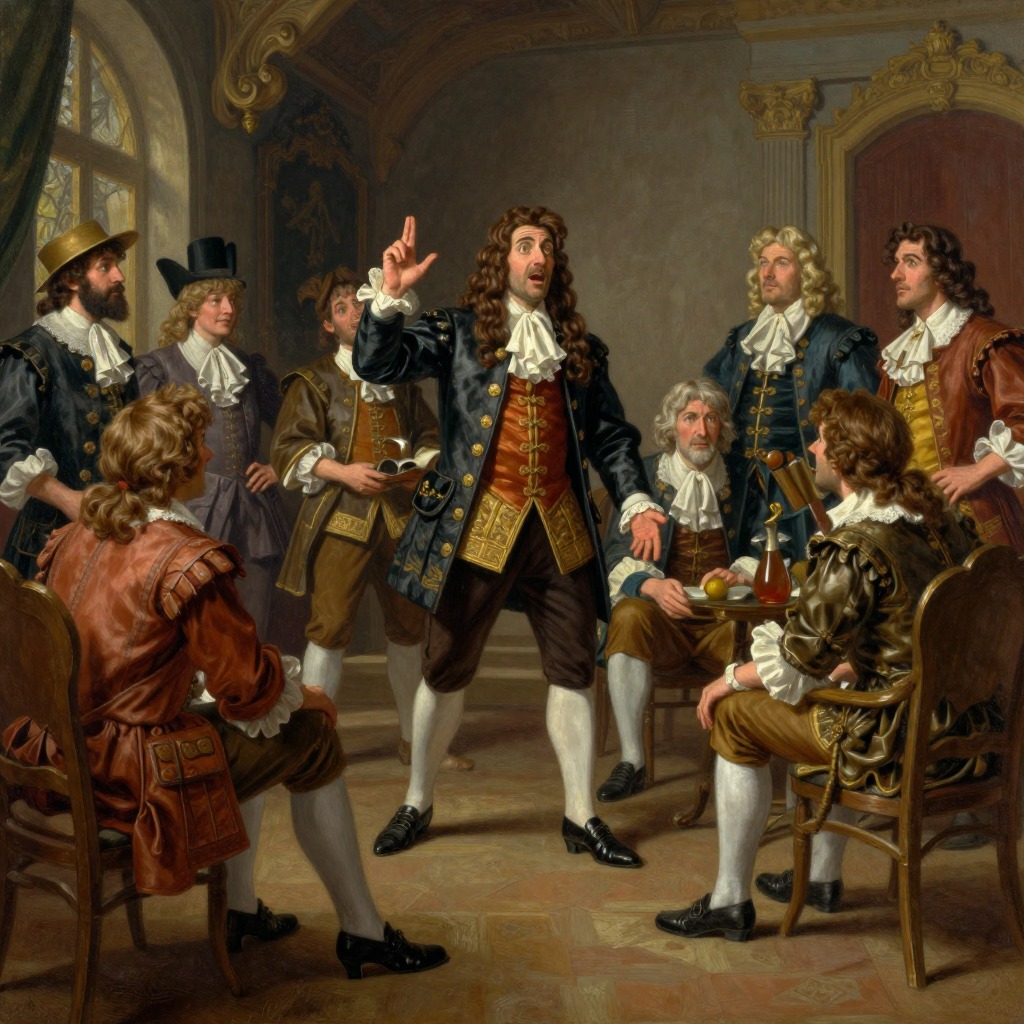
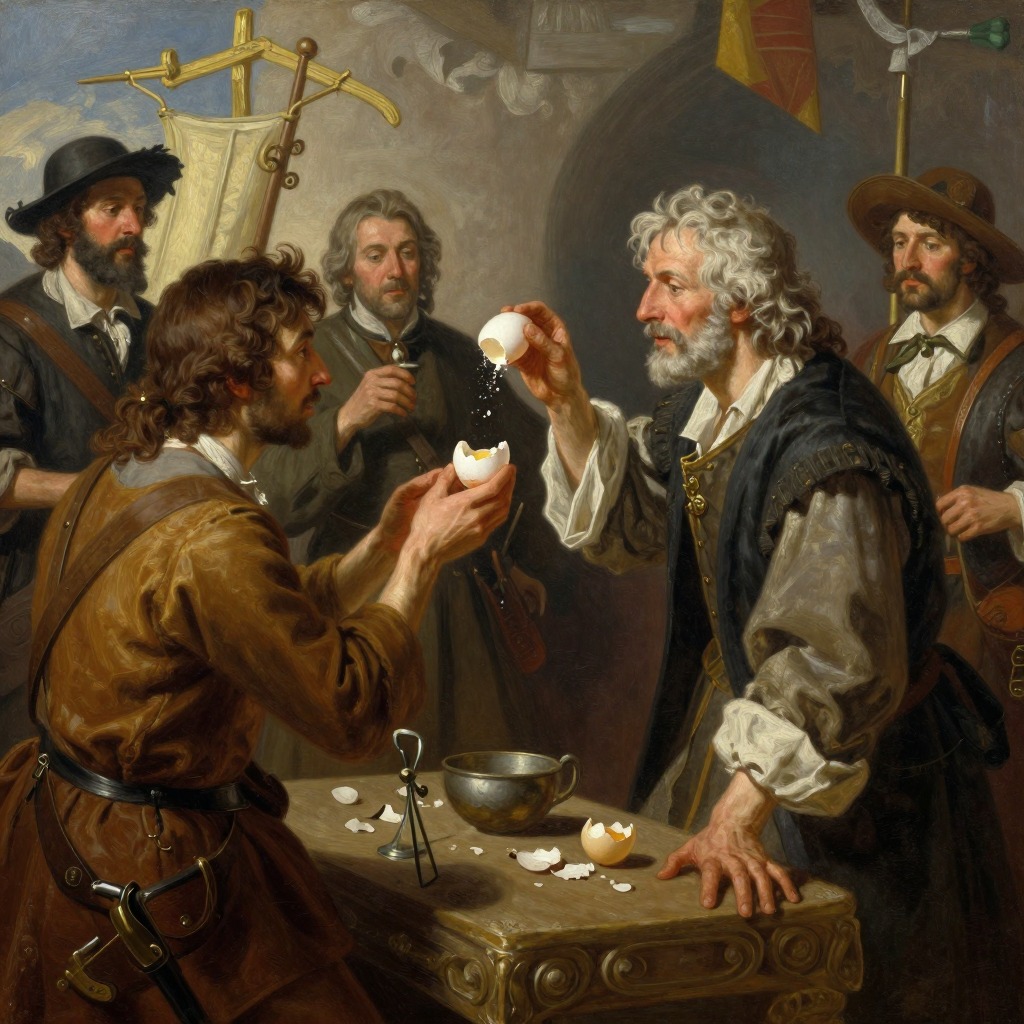
Gulliver's TravelsBlefuscu is the other great empire of the universe in the world of Lilliput, an island situated to the north-northeast of Lilliput and parted from it only by a channel eight hundred yards wide. The two empires have been engaged in a most obstinate war for six-and-thirty moons, a conflict that began over the proper way to break an egg: the Big-endians, who break their eggs at the larger end, were exiled from Lilliput after an edict commanded the smaller end to be broken, and they found refuge and support in Blefuscu. The war has cost Lilliput forty capital ships, a much greater number of smaller vessels, and thirty thousand of its best seamen and soldiers, with the damage received by the enemy reckoned to be somewhat greater. The Blefuscu navy, consisting of about fifty men-of-war and a great number of transports, lies at anchor in its harbor, ready to invade Lilliput with the first fair wind.
Gulliver's Capture of the Blefuscu Fleet
Lemuel Gulliver, having obtained his liberty from the Emperor of Lilliput on certain conditions, devises a project to seize the enemy's entire fleet. He walks to the northeast coast opposite Blefuscu, lies down behind a hillock, and views the enemy's fleet through his pocket perspective glass. He then returns to his house and prepares a great quantity of the strongest cable, about as thick as packthread, and bars of iron of the length and size of a knitting needle, trebling the cable and twisting three iron bars together to form hooks. Wading into the sea in his leathern jerkin about half an hour before high water, he swims in the middle about thirty yards until he feels ground, arriving at the fleet in less than half an hour. The enemy, so frightened at the sight of him, leap out of their ships and swim to shore, where there could not be fewer than thirty thousand souls. Gulliver fastens a hook to the hole at the prow of each ship, ties all the cords together, and, despite being discharged at by several thousand arrows, many of which stick in his hands and face, he uses his spectacles to protect his eyes and cuts the cables that fasten the anchors with his knife, receiving above two hundred shots in his face and hands. He then draws fifty of the enemy's largest men-of-war after him, and the Blefuscudians, who had not the least imagination of his intent, set up such a scream of grief and despair as is almost impossible to describe. He arrives safe at the royal port of Lilliput, where the emperor and his whole court stand on the shore, and the emperor creates him a nardac upon the spot, the highest title of honor among them.
Gulliver's Escape to Blefuscu
After the capture of the fleet, the Emperor of Lilliput desires Gulliver to take some other opportunity to bring all the rest of the enemy's ships into his ports, with the ambition of reducing the whole empire of Blefuscu into a province and compelling the Big-endian exiles to break the smaller end of their eggs. Gulliver, however, endeavors to divert him from this design, protesting that he will never be an instrument of bringing a free and brave people into slavery. This open, bold declaration so opposite to the emperor's schemes that he can never forgive Gulliver, and an intrigue begins between his majesty and a junto of ministers maliciously bent against him. A conspiracy is formed, and articles of impeachment are prepared against Gulliver for high treason, including the charge that he maliciously and traitorously pulled the empress by the arms to extinguish a fire, and that he refused to seize all the other ships of Blefuscu and reduce that empire to a province. The council debates whether to put him to a most painful and ignominious death, but the emperor, resolving to spare his life, at last brings off the chamberlain, and the sentence is to put out both his eyes. Gulliver, learning of the plot from a friend, takes the opportunity of his license to pay his attendance upon the Emperor of Blefuscu and sets out that morning. He seizes a large man-of-war, ties a cable to the prow, lifts up the anchors, strips himself, puts his clothes and coverlet into the vessel, and, drawing it after him between wading and swimming, arrives at the royal port of Blefuscu, where the people had long expected him.
Reception at the Blefuscu Court and Departure
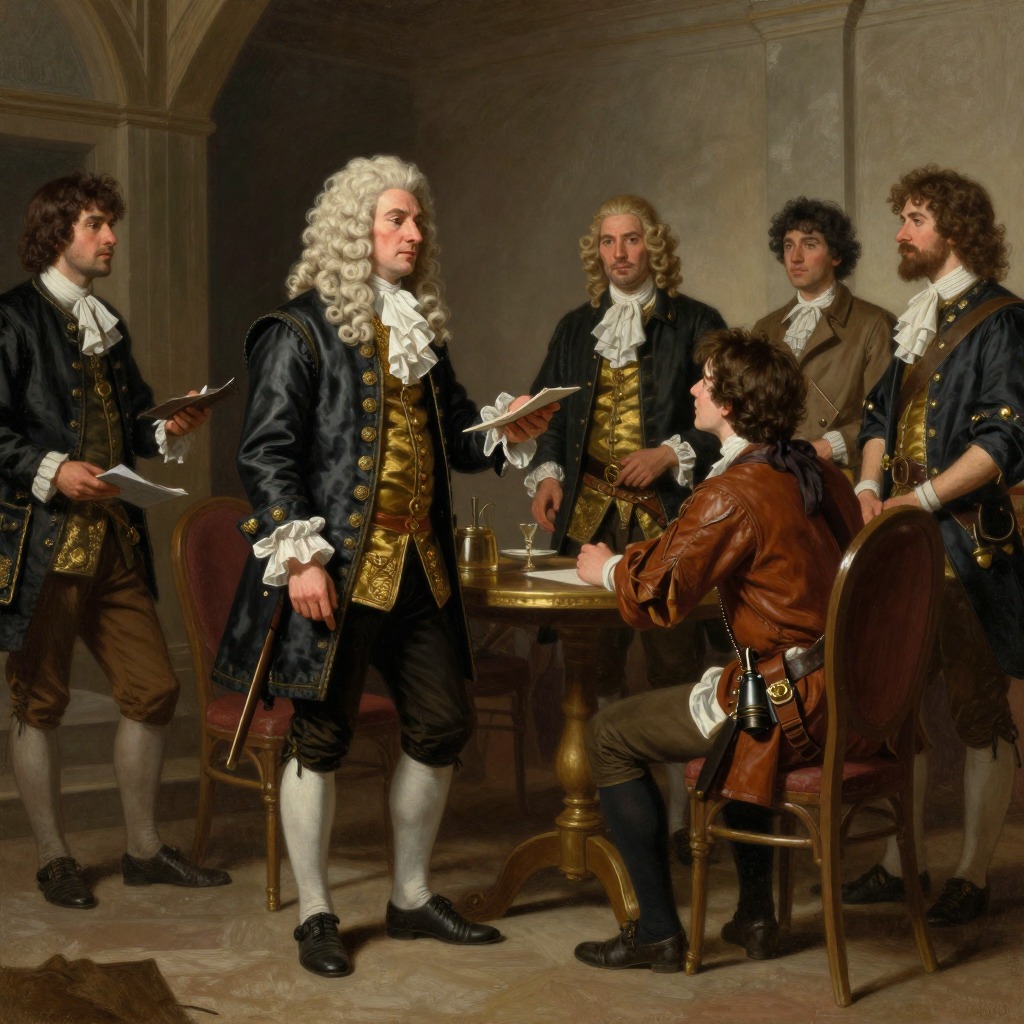
At Blefuscu, Gulliver is received with suitable generosity by the emperor. He lies on the ground to kiss his majesty's and the empress's hand, and offers any service in his power consistent with his duty to his own prince, not mentioning a word of his disgrace. Three days after his arrival, walking out of curiosity to the northeast coast of the island, he observes about half a league off in the sea something that looks like a boat overturned. He returns to the city and desires the emperor to lend him twenty of the tallest vessels he has left after the loss of his fleet, and three thousand seamen under the command of his vice-admiral. With great difficulty, he retrieves the boat, and after ten days of making paddles, gets it to the royal port of Blefuscu, where a mighty concourse of people appears upon his arrival, full of wonder at the sight of so prodigious a vessel. He tells the emperor that his good fortune has thrown this boat in his way to carry him to some place from whence he might return into his native country, and begs his majesty's orders for getting materials to fit it up, together with his license to depart, which, after some kind expostulation, he is pleased to grant. Meanwhile, the Emperor of Lilliput, having consulted with the treasurer and the rest of that cabal, sends an envoy to the monarch of Blefuscu with a copy of the articles against Gulliver, expecting him to be sent back bound hand and foot. The Emperor of Blefuscu, after three days' consultation, returns an answer consisting of many civilities and excuses, saying that as for sending him bound, his brother knew it was impossible, and that he had found a prodigious vessel on the shore which he had given orders to fit up, hoping in a few weeks both empires would be freed from so insupportable an incumbrance. Gulliver, resolved never more to put any confidence in princes or ministers, hastens his departure, and the court, impatient to have him gone, readily contributes. Five hundred workmen are employed to make two sails, and he is at the pains of making ropes and cables, finding a great stone for an anchor, and using the tallow of three hundred cows for greasing his boat. In about a month, all is prepared, and he takes his leave of the emperor and royal family, receiving fifty purses of two hundred sprugs a-piece, together with his majesty's picture at full length. He sets sail on the twenty-fourth day of September, 1701, at six in the morning, and after a voyage of several days, he descries a sail and is taken aboard an English merchantman, the ship of Captain John Biddle, returning from Japan. He shows the captain the gold given him by the Emperor of Blefuscu, together with his majesty's picture, and some other rarities of that country, and gives him two purses of two hundred sprugs each. They arrive in the Downs on the thirteenth of April, 1702, and Gulliver returns to his family, though his insatiable desire of seeing foreign countries will soon drive him to sea again.