Lilliputian law of high treason
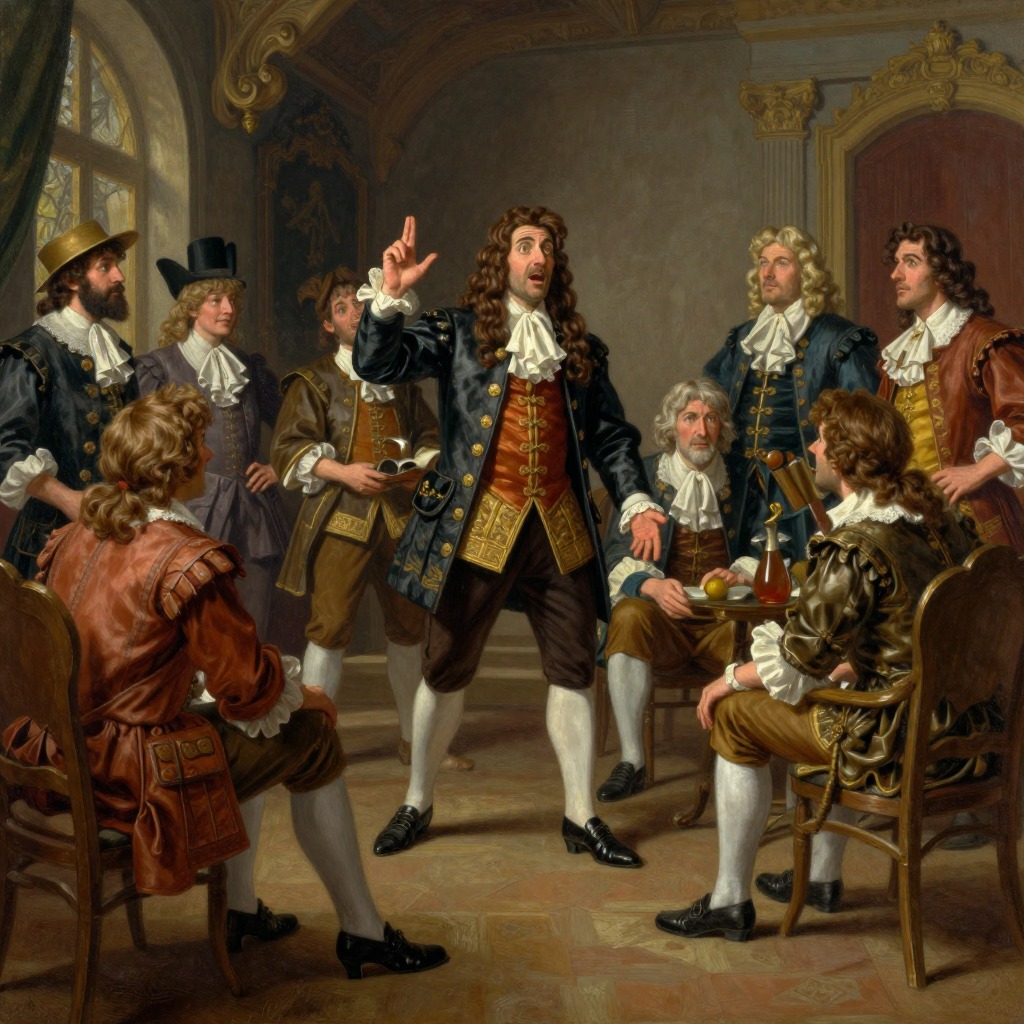
Gulliver's TravelsThe Lilliputian law of high treason, codified in the reign of Emperor Calin Deffar Plune, decrees that "whoever shall lay hands upon the empress, or upon any of the royal children, shall be liable to the pains and penalties of high treason." This statute, ostensibly designed to protect the royal family from physical violation, becomes the primary legal weapon used against Lemuel Gulliver after he saves the palace from destruction. The law's application in his case exposes the gap between its stated purpose and its use as an instrument of political revenge, and it stands as one of the most pointed examples of how Lilliputian legal institutions are corrupted by factional malice and personal spite.
The Statute and Its Original Context
The law was enacted under a previous reign and is presented as a fundamental rule of the realm, carrying the ultimate penalty. Its wording is absolute: any physical contact with the empress or the royal children, without explicit invitation, constitutes high treason. The Lilliputian legal system, as described elsewhere, treats crimes against the state with the utmost severity, and this statute fits within that framework of harsh, unyielding punishment. Yet the law's rigidity also makes it susceptible to exploitation, as it provides no allowance for circumstances or intent, a flaw that Gulliver's enemies will later exploit to the fullest.
The Fire and the Alleged Transgression
The occasion for the law's invocation is the fire that breaks out in the empress's apartment, caused by a maid of honor who fell asleep while reading a romance. Gulliver, awakened at midnight by the cries of hundreds of people, rushes to the palace. Finding the buckets provided by the Lilliputians no larger than thimbles and the water supply distant, he realizes the fire cannot be contained by ordinary means. Having left his coat behind in his haste, he is wearing only his leathern jerkin. In a moment of presence of mind, he "suddenly thought of an expedient" and extinguishes the flames in three minutes, saving the rest of the palace. The method he uses—though not explicitly described in the text—is later revealed in the articles of impeachment: he "did maliciously, and traitorously, pull her by the arms, and lift her high in the air in both his hands." The empress, far from being grateful, conceives "the greatest abhorrence of me" and, in the presence of her chief confidants, cannot forbear vowing revenge. The law, which was designed to protect her, now becomes the instrument of her personal vendetta.
The Articles of Impeachment and the Political Conspiracy
The law of high treason forms the first and most damning article of the formal impeachment drawn up against Gulliver by a junto of his enemies: Skyrris Bolgolam the high admiral, Flimnap the high treasurer, Limtoc the general, Lalcon the chamberlain, and Balmuff the grand justiciary. The article states that Gulliver, "in open breach of the said law, under color of extinguishing the fire kindled in the apartment of his Majesty's most dear imperial consort, did maliciously, and traitorously, pull her by the arms, and lift her high in the air in both his hands, against the statute in that case provided." The charge is a masterpiece of legalistic distortion: it acknowledges the fire and Gulliver's role in extinguishing it, but reinterprets his necessary physical contact as a malicious act of treason. The law's absolute prohibition on touching the royal person is applied without regard to the emergency that compelled the action, and the word "maliciously" is inserted to transform a rescue into a crime. The conspiracy against Gulliver had been forming for two months, and the fire provided the pretext his enemies needed to activate the statute.
The Sentence and the Empress's Role
The proposed punishments for this and the other articles of impeachment reveal the law's function as a cover for cruelty. The treasurer and admiral insist on a painful and ignominious death: setting fire to Gulliver's house at night, with twenty thousand men armed with poisoned arrows to shoot him in the face and hands. Some of his servants are to be ordered to strew poisonous juice on his shirts and sheets, so that he would "tear your own flesh, and die in the utmost torture." The secretary Reldresal, Gulliver's friend, proposes a compromise: the loss of both eyes. This proposal is received with "the utmost disapprobation" by the board, and Bolgolam rises in fury, arguing that Gulliver's services are aggravations of his crimes and that he who extinguished the fire "in that unprincipled manner" might at another time "inundate and drown the whole palace." The empress, who is perpetually instigating Bolgolam (described as "a creature of the empress"), insists upon Gulliver's death, bearing "perpetual malice against you, on account of that illegal method you took to remove her and her children the night of the fire." The law, originally a shield for the royal family, is thus wielded by the empress herself as a sword of revenge, and the legal process becomes a theater for her personal grievance.
Contrast with Other Lilliputian Laws
The law of high treason stands in stark contrast to other, more enlightened Lilliputian legal principles. The Lilliputians punish false accusers with death and quadruple recompense to the innocent; they treat fraud as a greater crime than theft; they reward those who strictly observe the laws for seventy-three moons with the title of "snillpall" and a sum of money; and their image of Justice has six eyes and holds a bag of gold open in her right hand, to show she is "more disposed to reward than to punish." Yet none of these safeguards protect Gulliver. The law of high treason is applied without any consideration of his intent, his service, or the emergency that justified his action. The gap between the ideal of Lilliputian justice—with its rewards for virtue and its protection of the innocent—and the reality of its application in Gulliver's case is the measure of the corruption that has overtaken the court. The law, in the hands of a vindictive empress and a cabal of jealous ministers, becomes a tool of persecution rather than a guarantor of justice.
Thematic Significance
The Lilliputian law of high treason encapsulates Swift's satire of legal systems that are absolute in form but arbitrary in application. The law's rigidity—its failure to distinguish between a malicious assault and a life-saving intervention—mirrors the absurdity of the Big-endian and Small-endian controversy, where a trivial difference in egg-breaking practice leads to war and persecution. The law is not an abstract principle of justice but a weapon in the hands of those who control its interpretation. Gulliver's experience teaches him a bitter lesson about courts and ministers, one that he later reflects upon when he considers how easily he might have submitted to the loss of his eyes had he then known "the nature of princes and ministers." The law, in its absolute and unyielding form, is a mask for power, and the empress's revenge is its true content.