Skyrris Bolgolam
Gulliver's TravelsSkyrris Bolgolam, the galbet or high admiral of Lilliput, is the most formidable and relentless adversary Lemuel Gulliver encounters in the diminutive empire. A minister deeply trusted by the Emperor of Lilliput and a person well versed in affairs, Bolgolam is distinguished by a morose and sour complexion that sets him apart from the court's more flexible figures. From the moment of Gulliver's arrival, without any provocation, Bolgolam becomes his mortal enemy, and his sustained malice shapes the most dangerous crisis of Gulliver's Lilliputian adventure.
Identity and Position
Bolgolam holds the title of galbet, which Gulliver translates as admiral of the realm, placing him at the head of Lilliput's naval forces. He enjoys his master's confidence to a remarkable degree, and his influence in the Lilliputian council is substantial. When the question of granting Gulliver his liberty first arises, Bolgolam stands alone in opposition, the only voice raised against the motion that is carried by the whole board and confirmed by the emperor. Though eventually persuaded to comply, he exacts a concession: the articles and conditions upon which Gulliver is to be set free are drawn up by Bolgolam himself, ensuring they contain provisions more servile than Gulliver would have wished.
The Growth of Enmity
Bolgolam's original reasons for hating Gulliver remain unknown, but his hatred intensifies dramatically after Gulliver's great success against Blefuscu. By single-handedly capturing the entire Blefuscu fleet, Gulliver obscures the admiral's glory, striking at the very source of Bolgolam's professional pride and political power. This personal grievance transforms into a driving force for destruction. Bolgolam becomes the leading figure in a junto of ministers—including Flimnap the high treasurer, Limtoc the general, Lalcon the chamberlain, and Balmuff the grand justiciary—who are maliciously bent against Gulliver and who prepare articles of impeachment against him for high treason and other capital crimes.
The Conspiracy and the Demand for Death
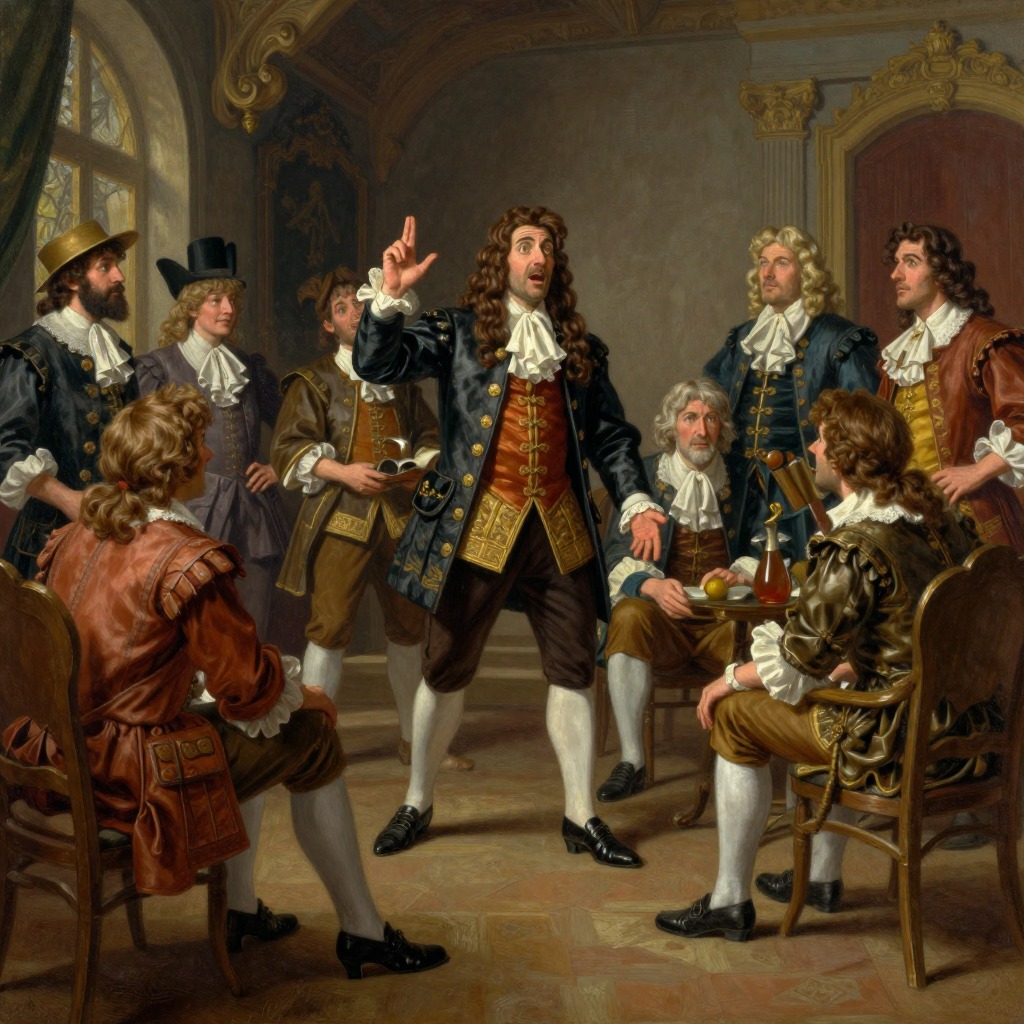
When the council debates Gulliver's fate, Bolgolam emerges as the most extreme voice, insisting that Gulliver be put to the most painful and ignominious death. He advocates setting fire to Gulliver's house at night, with the general attending with twenty thousand men armed with poisoned arrows to shoot Gulliver in the face and hands. He also proposes that some of Gulliver's servants receive private orders to strew a poisonous juice on his shirts and sheets, which would cause him to tear his own flesh and die in the utmost torture. When Reldresal, the principal secretary for private affairs and Gulliver's friend, suggests the more merciful punishment of putting out both eyes, Bolgolam cannot preserve his temper. Rising up in fury, he argues that Gulliver's services are, by all true reasons of state, the great aggravation of his crimes. He warns that the same strength that enabled Gulliver to bring over the enemy's fleet might, upon the first discontent, serve to carry it back. Most damningly, Bolgolam accuses Gulliver of being a Big-endian in his heart, asserting that treason begins in the heart before it appears in overt acts, and therefore insists on death.
The Empress's Ally
Bolgolam's position is further strengthened by his connection to the Empress of Lilliput. He is described as a creature of the empress, perpetually instigated by her majesty to insist upon Gulliver's death. The empress bears perpetual malice against Gulliver on account of the illegal method he took to extinguish the fire in her apartment—an act that, while saving the palace, involved touching her person in violation of Lilliputian law. Bolgolam thus becomes the instrument of the empress's revenge, and his vote against the compromise of blinding is the only dissenting voice when the sentence of putting out Gulliver's eyes is entered on the books.
Narrative Role and Significance
Bolgolam functions as the primary antagonist in the Lilliputian portion of Gulliver's travels, embodying the irrational, personal malice that can flourish in court politics. Unlike Flimnap, whose enmity is partly motivated by financial concerns over the cost of maintaining Gulliver, Bolgolam's hatred appears more visceral and ideological. His accusation that Gulliver is a Big-endian at heart—a charge with no evidence—reveals how political enemies can weaponize religious and factional labels to destroy a rival. Bolgolam's relentless pursuit of Gulliver's death, even after the emperor has shown lenity, demonstrates the danger posed by a trusted minister whose personal grievances align with the resentments of a powerful queen. His role in drafting the harsh articles of release and in leading the impeachment ensures that Gulliver's experience of Lilliput is shadowed by the threat of arbitrary, vengeful power, and ultimately forces Gulliver's desperate escape to Blefuscu.