The dwarf drops Gulliver into a bowl of cream
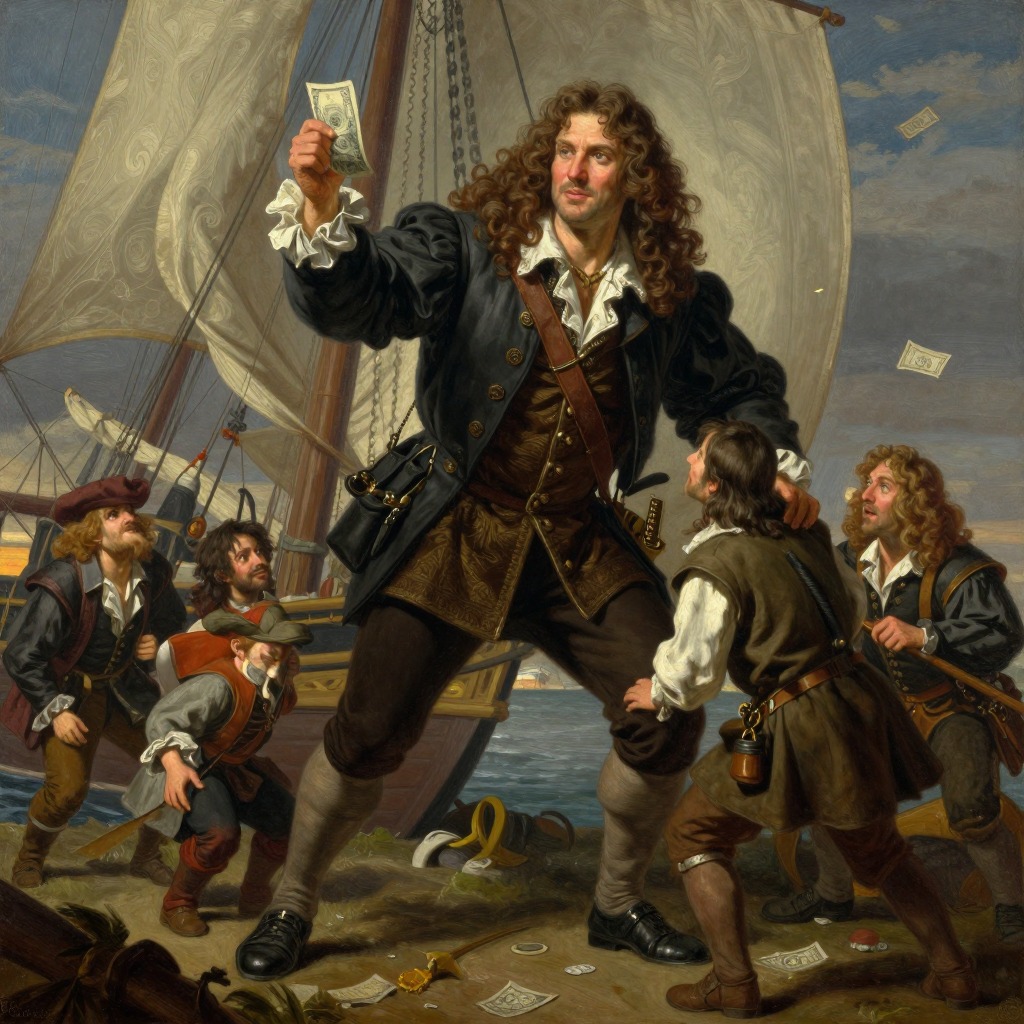
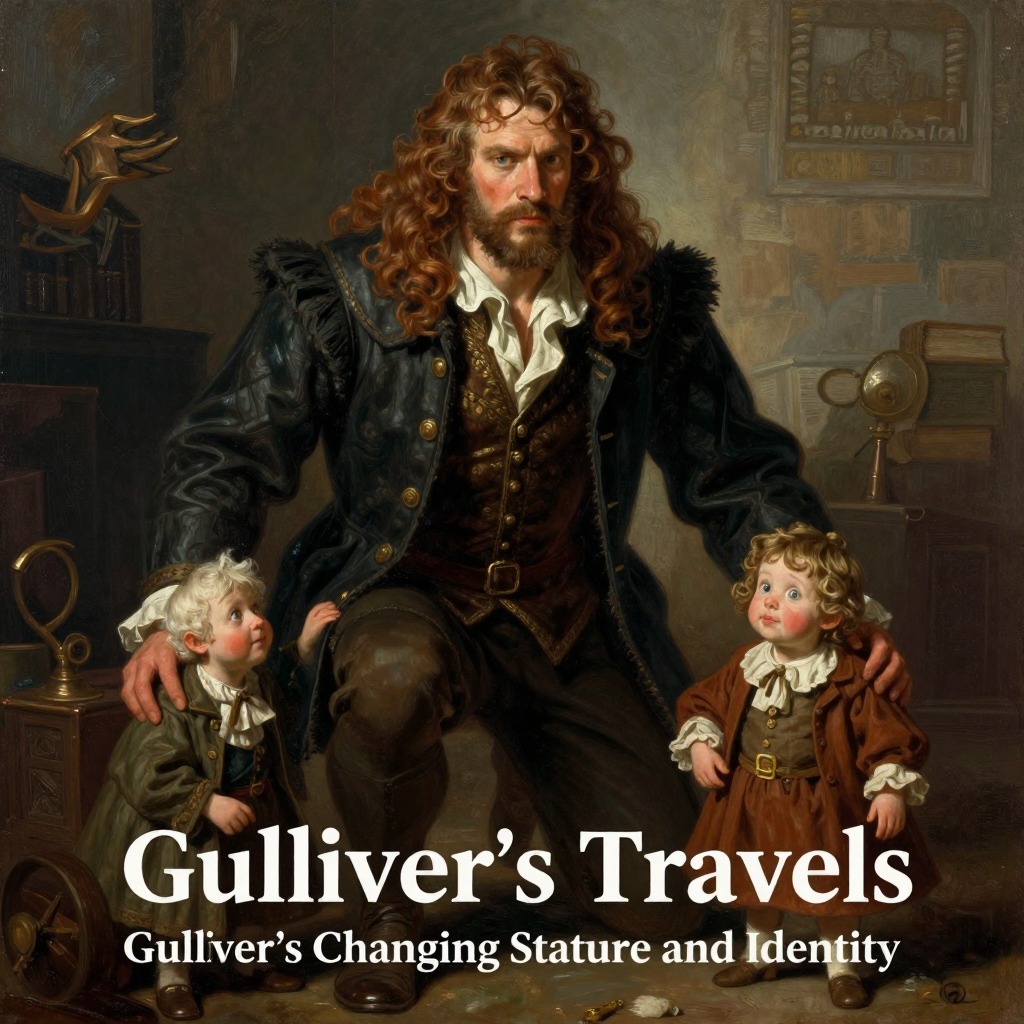
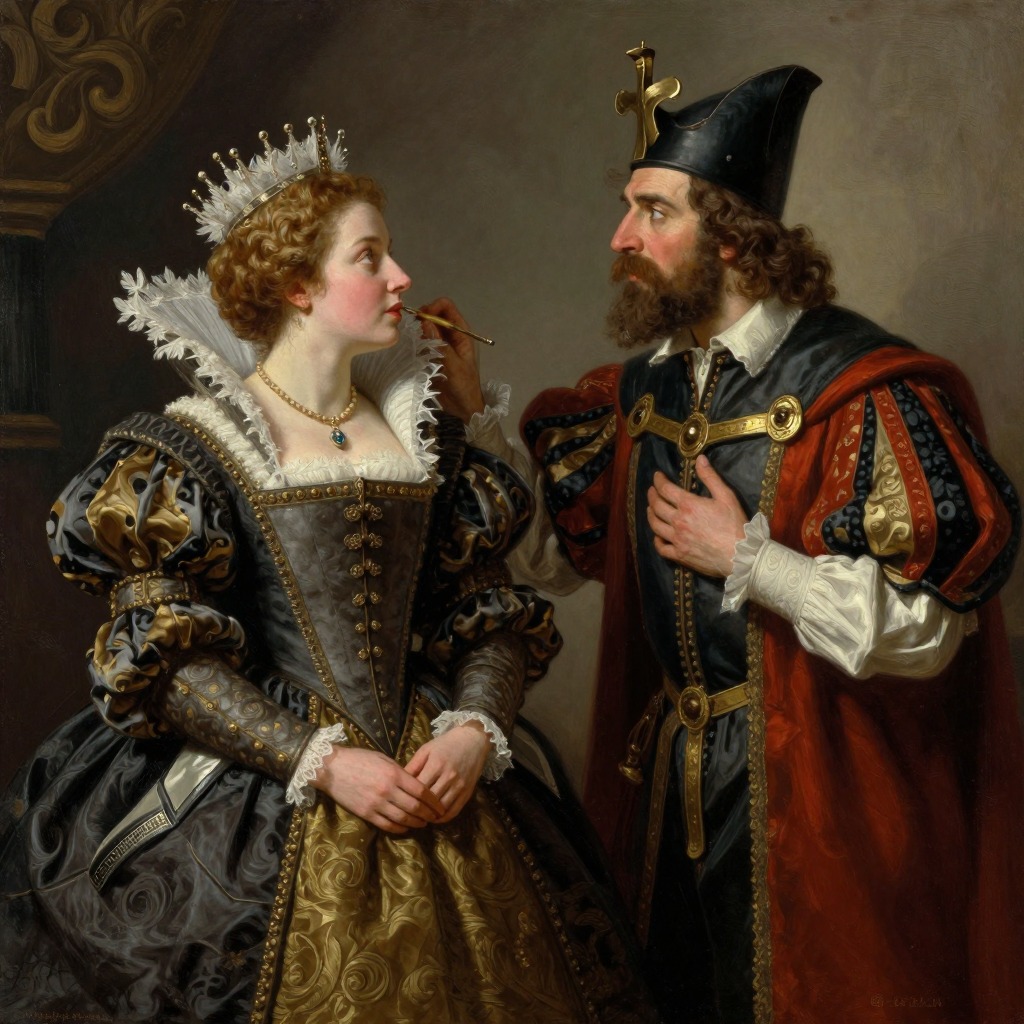
Gulliver's TravelsThe dwarf of the Brobdingnag court, a figure of the lowest stature in that kingdom—standing not full thirty feet high—had from the first moment resented the arrival of a creature even smaller than himself. In the queen's ante-chamber, he would swagger and look big as he passed Gulliver, who stood on some table talking with lords or ladies, and seldom failed to offer a smart word upon Gulliver's littleness. Gulliver could only revenge himself by calling the dwarf brother, challenging him to wrestle, and such repartees as are usual in the mouths of court pages. This simmering hostility came to a head at a dinner where the queen, who had become fond of Gulliver's company, had him seated at a table placed just at her left elbow, with Glumdalclitch standing on a stool near by to assist him.
The Assault at Dinner
One day at dinner, the malicious little cub was so nettled by something Gulliver had said to him that, raising himself upon the frame of her majesty's chair, he took Gulliver up as he was sitting down, not thinking any harm, and let him drop into a large silver bowl of cream. Gulliver fell over head and ears, and if he had not been a good swimmer, it might have gone very hard with him. Glumdalclitch, in that instant, happened to be at the other end of the room, and the queen was in such a fright that she wanted presence of mind to assist him. But his little nurse ran to his relief and took him out, after he had swallowed above a quart of cream. Gulliver was put to bed; he received no other damage than the loss of a suit of clothes, which was utterly spoiled.
The Dwarf's Punishment and Dismissal
The dwarf was soundly whipped, and as a further punishment forced to drink up the bowl of cream into which he had thrown Gulliver. He was never restored to favor; soon after, the queen bestowed him on a lady of high quality, so that Gulliver saw him no more, to his very great satisfaction. Gulliver could not tell to what extremity such a malicious urchin might have carried his resentment.
Earlier Provocations and the Dwarf's Character
This was not the first time the dwarf had served Gulliver a scurvy trick. On an earlier occasion, the queen had taken a marrow-bone upon her plate and, after knocking out the marrow, placed the bone on the dish erect. The dwarf, watching his opportunity while Glumdalclitch was gone to the sideboard, mounted upon the stool she stood on to take care of Gulliver at meals, took him up in both hands, and squeezing his legs together, wedged them into the marrow-bone above his waist, where Gulliver stuck for some time, making a very ridiculous figure. It was near a minute before anyone knew what had become of him, for Gulliver thought it below him to cry out. As princes seldom get their meat hot, his legs were not scalded, only his stockings and breeches in a sad condition. The dwarf, at Gulliver's entreaty, had no other punishment than a sound whipping.
The dwarf also made a common practice of catching flies—each as big as a Dunstable lark—in his hand, as school-boys do, and letting them out suddenly under Gulliver's nose on purpose to frighten him and divert the queen. Gulliver's remedy was to cut them in pieces with his knife as they flew in the air, wherein his dexterity was much admired. The queen frequently rallied Gulliver upon account of his fearfulness, and used to ask him whether the people of his country were as great cowards as himself.
Thematic Significance
The dwarf's persecution of Gulliver dramatizes the precariousness of Gulliver's position in Brobdingnag, where his physical insignificance makes him vulnerable to the casual cruelty of those who are themselves considered small by their own society. The dwarf, a figure of contempt among the giants, finds in Gulliver a being he can dominate, and his malice—expressed through pranks that could easily have killed Gulliver—reveals the dark side of the court's amusement at Gulliver's expense. The queen's swift punishment and dismissal of the dwarf, while protecting Gulliver, also underscores the absolute power of the monarch and the disposability of even a long-standing servant. The episode, like the later monkey incident, reinforces the theme that in a world of radical size disparity, the smallest creature is never safe, and that the laughter of the powerful is often purchased at the cost of the powerless.