two ears of corn
Gulliver's TravelsThe King of Brobdingnag's remark that whoever could make two ears of corn, or two blades of grass, grow upon a spot of ground where only one grew before would deserve better of mankind and do more essential service to his country than the whole race of politicians put together is the most concentrated expression of the Brobdingnagian king's political philosophy and the moral center of Gulliver's second voyage. It crystallizes the king's rejection of statecraft as mystery, his contempt for European political science, and his elevation of practical, life-sustaining labor above all forms of political manipulation. The phrase appears at the climax of a series of audiences in which Gulliver, having been asked to describe the government of England, delivers a long, self-congratulatory account of its parliament, courts, treasury, military, and recent history, only to have the king dismantle every institution with relentless, commonsensical questions.
Context and the King's Rejection of Political Science
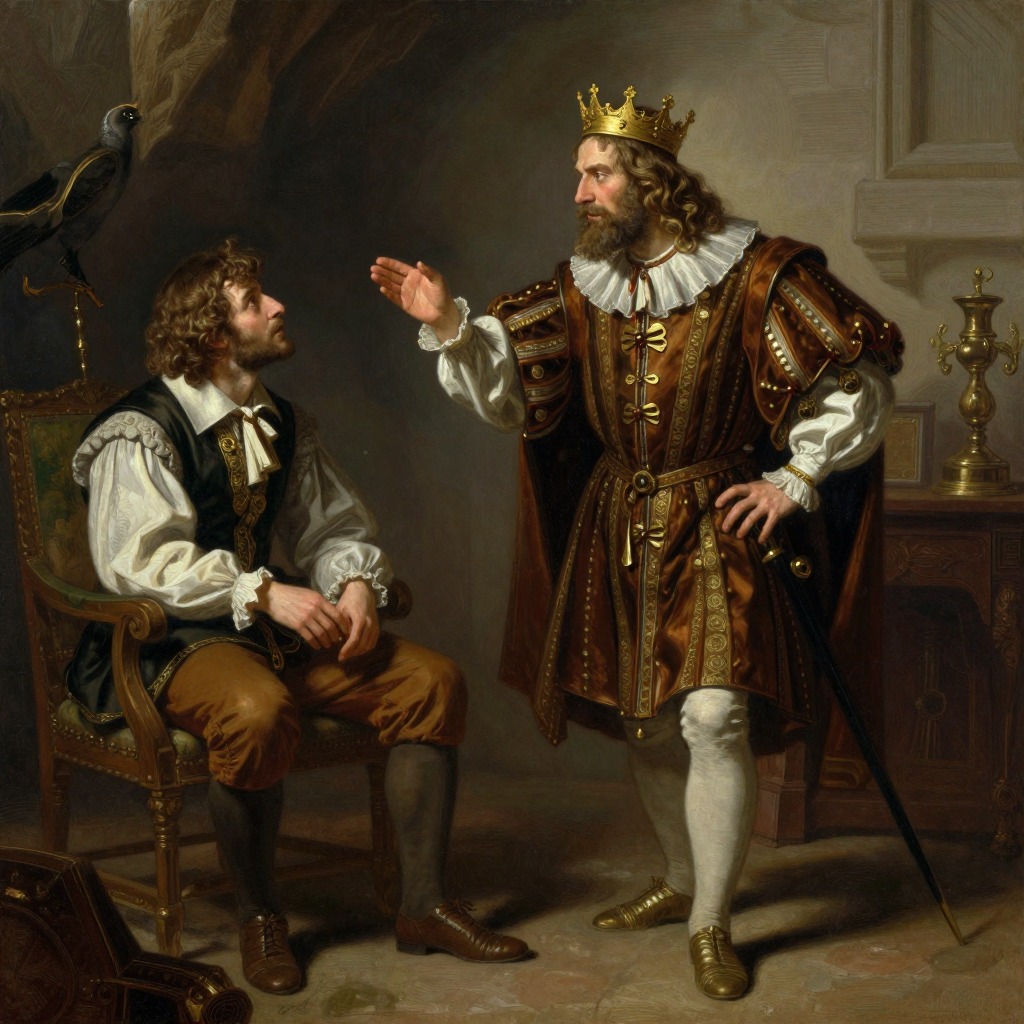
The remark comes after Gulliver has spent five audiences describing England's constitution, and a sixth in which the king, consulting his notes, proposes "many doubts, queries, and objections" upon every article. The king asks how the nobility are educated, how new lords are created, whether bribery influences judges, whether elections can be bought, and why a standing army is needed in peacetime among a free people. He is "perfectly astonished" by Gulliver's historical account of the last century, calling it "only a heap of conspiracies, rebellions, murders, massacres, revolutions, banishments" produced by every vice. Then, taking Gulliver into his hands and stroking him gently, he delivers his verdict: Gulliver has proved that "ignorance, idleness, and vice are the proper ingredients for qualifying a legislator" and that the bulk of his countrymen are "the most pernicious race of little odious vermin that nature ever suffered to crawl upon the surface of the earth." It is immediately after this devastating judgment that Gulliver, still hoping to ingratiate himself, offers to reveal the secret of gunpowder.
The Gunpowder Proposal and the King's Response
Gulliver tells the king of an invention discovered three or four hundred years earlier—gunpowder—which, when rammed into hollow tubes, can drive iron or lead balls with such force as to destroy whole ranks of an army, batter the strongest walls, sink ships, and cut through masts and rigging. He offers to direct the king's workmen in making tubes proportionable to the kingdom, claiming that twenty or thirty such tubes could batter down the walls of the strongest town in a few hours. The king is "struck with horror" at the description. He is amazed that so "impotent and grovelling an insect" could entertain such inhuman ideas and appear wholly unmoved by scenes of blood and desolation. He protests that he would rather lose half his kingdom than be privy to such a secret, and commands Gulliver, as he values his life, never to mention it again.
The Two Ears of Corn as the Moral Climax
Gulliver, in his own voice, calls the king's rejection "a strange effect of narrow principles and short views," complaining that a prince possessed of every quality for government should, from a "nice unnecessary scruple," let slip an opportunity to become absolute master of his people's lives, liberties, and fortunes. He attributes this defect to the Brobdingnagians' ignorance of politics as a science. But it is precisely in this context that the king delivers his definitive judgment on the relative value of political science and practical agriculture. He professes to "abominate and despise all mystery, refinement, and intrigue" in a prince or minister. He confines the knowledge of governing to "common sense and reason, to justice and lenity, to the speedy determination of civil and criminal causes." And then he gives his opinion: "whoever could make two ears of corn, or two blades of grass to grow upon a spot of ground, where only one grew before, would deserve better of mankind, and do more essential service to his country, than the whole race of politicians put together." The remark is not a casual aside but the philosophical capstone of the king's entire critique of European civilization. It asserts that the true measure of service to humanity is not the manipulation of power, the accumulation of wealth, or the conduct of war, but the increase of the means of subsistence—the most basic, life-giving work.
The Brobdingnagian Context: Laws, Learning, and the Rejection of Abstraction
The king's remark is embedded in a broader description of Brobdingnagian learning and law that reinforces its values. Their learning is "very defective" by European standards, consisting only of morality, history, poetry, and mathematics, and the last is applied wholly to the improvement of agriculture and mechanical arts. "Ideas, entities, abstractions, and transcendentals" are concepts they cannot grasp. Their laws must not exceed the number of letters in their alphabet (twenty-two), are expressed in the plainest terms, and to write a commentary on any law is a capital crime. Their libraries are small—the king's, the largest, contains no more than a thousand volumes. This is a society that values the concrete, the useful, and the clear over the abstract, the speculative, and the obscure. The two ears of corn are the emblem of that value system: a tangible, measurable improvement in the world's food supply, achieved by patient labor and knowledge of the natural world, is worth more than all the political maneuvering, legal sophistry, and military glory that Gulliver has so proudly described.
Thematic Significance: The Satire of European Politics and the Ideal of Useful Labor
The two ears of corn stand as the most succinct and powerful indictment of European political culture in the entire Brobdingnag section. The king's words invert the hierarchy of values that Gulliver takes for granted: the politician, the general, the lawyer, and the courtier are not the pillars of society but its parasites; the farmer who increases the yield of a field is the true benefactor. The remark also completes the king's characterization as a ruler of "strong parts, great wisdom, and profound learning" who is nonetheless "wholly secluded from the rest of the world" and therefore unacquainted with the manners of other nations—a seclusion that Gulliver, with his European prejudices, sees as a defect but that the book's implied author presents as the very condition of the king's moral clarity. The two ears of corn are not a practical policy proposal but a moral touchstone: they measure the distance between a society organized for life and one organized for power, and they expose the emptiness of the political arts that Gulliver so admires.