
Landscape, Belonging, and History
H is for HawkThe book challenges nostalgic claims to an ancient national landscape by tracing the human histories and exclusions that shape places and their wildlife.
increasing Bearing strength in each event
 decreasing
Bearing strength in each eventdecreasingA Made Landscape
Broken Country
Layers of Use
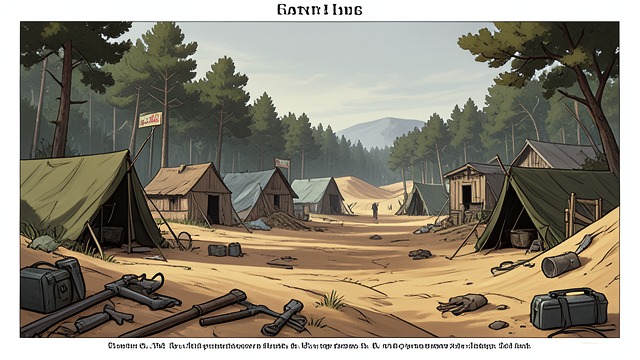
The Brecklands combine forestry, military bases, abandoned buildings, sandy ground, and signs of earlier settlement. Helen loves the place not because it is untouched but because its strangeness bears the marks of human work.
A Complicated Wildness
The landscape’s histories include industry, military planning, farming, and disaster. Its wildness is entangled with the people who have altered it.
The place resists a simple division between human history and nature.
A Hawk Returned
Human Hands and Wild Birds
An Unofficial Effort
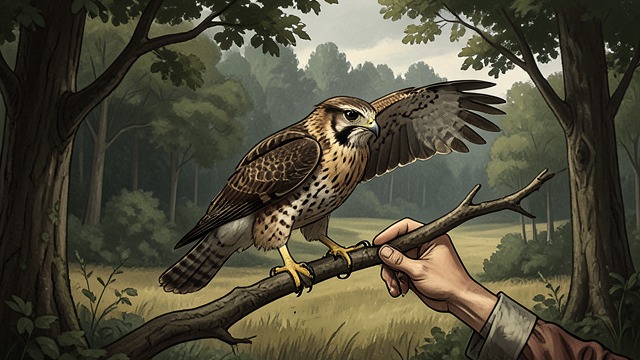
Falconers import goshawks for their own use and release additional birds into suitable forests. The birds survive and breed, establishing a population after native goshawks had disappeared from Britain.
A Different Kind of Wild
Their descendants are wild without being untouched by human history. Helen finds this reassuring: human involvement need not only destroy the natural world.
The story unsettles the idea that genuine wildness exists only beyond human influence.
The Chalk’s Seduction
Feeling Deep Time
A Powerful Landscape
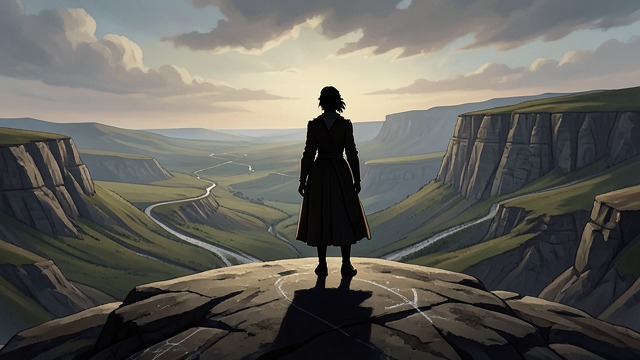
On chalk ground, Helen feels a sudden exhilaration and recognizes the appeal of ancient paths, exposed geology, and open views. The landscape seems to offer a revelation of belonging.
A Troubled Inheritance
She also sees how such feelings can attach purity and lineage to a particular landscape. Myths of rooted identity can erase other histories and ways of living there.
The beauty remains, but it can no longer be treated as politically innocent.
The Deer and the Claim
A Beautiful Sight Reframed
Shared Wonder
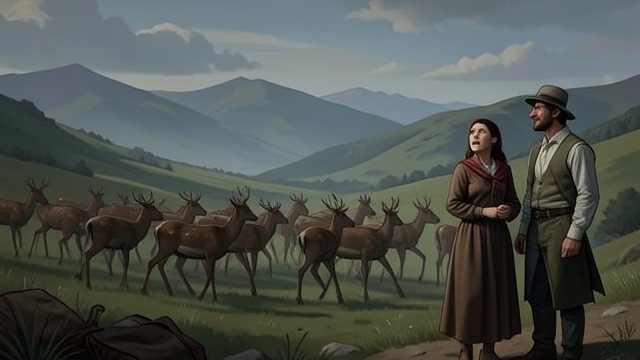
Helen watches a herd of fallow deer move across a valley and is eager to share the sight with a local couple. They describe the animals as a remnant of Old England.
An Exclusionary Turn
The man links his hope to the presence of deer despite immigrants. Helen is too embarrassed to challenge him and walks away, troubled by how landscape beauty has been recruited into a story of exclusion.
The scene makes silence itself part of the conflict.
A Living Landscape, Not a Relic
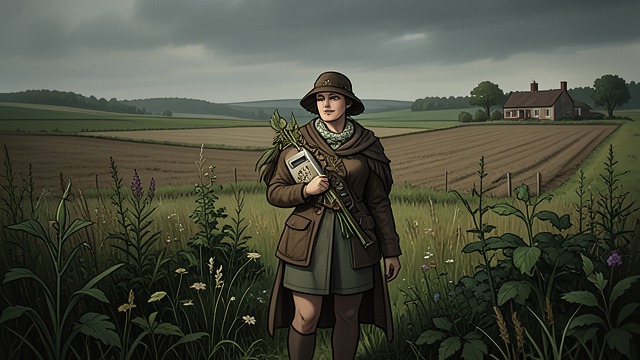
Beyond Nostalgia
What Has Vanished
Helen thinks of the many birds and other species no longer present in the countryside she knows. Familiar fields may look old while their ecological life has been thinned by modern agriculture.
A Different Obligation
She wishes people would defend landscapes for their abundant and varied life, not because they seem to confirm an imagined national identity. Her own attempt to flee history has also proved dangerous.
Attention must include both ecological loss and the histories that produced it.
Helen’s morning in the Brecklands
Britain, during the 1960s and 1970s
during Helen’s winter walk beyond the familiar field
the same winter walk, after Helen sees the herd
near the ending, as Helen returns to the fields
