
From Watching to Responsibility
H is for HawkHunting forces Helen to leave the safety of observation and confront her practical responsibility for the animals Mabel catches.
increasing Bearing strength in each event
 decreasing
Bearing strength in each eventdecreasingThe Spectator’s Past
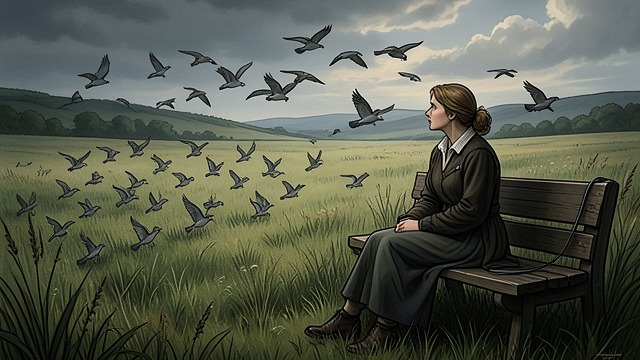
Watching at a Distance
A Child’s Attention
Helen learns to study birds and animals with intense concentration. She experiences herself primarily as a watcher, someone able to disappear while observing the lives of other creatures.
The Comfort of Books
The animal stories she loves often end in death, but at a distance their endings remain literary events. She has not yet had to act within an animal’s death.
That gap between seeing and doing is the one hunting will close.
A First Kill Reconsidered
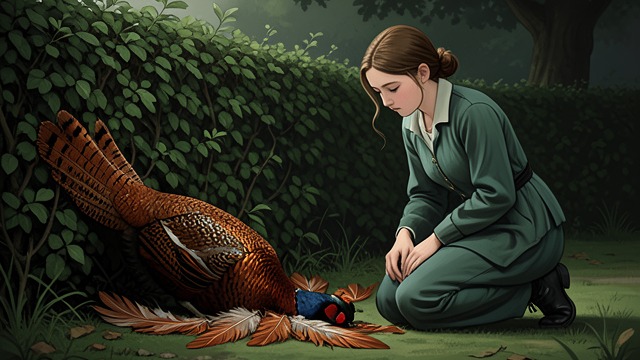
Death in the Hedge
The Kill
A trained goshawk catches a pheasant during a childhood outing. Helen sees the sudden violence, then finds the bird’s copper feathers in the hedge.
An Unnamed Response
She cannot yet name what the death makes her feel. The event stays with her as an encounter with a reality her falconry books had made ceremonial and distant.
Its meaning changes only after she begins hunting herself.
The Necessary Intervention
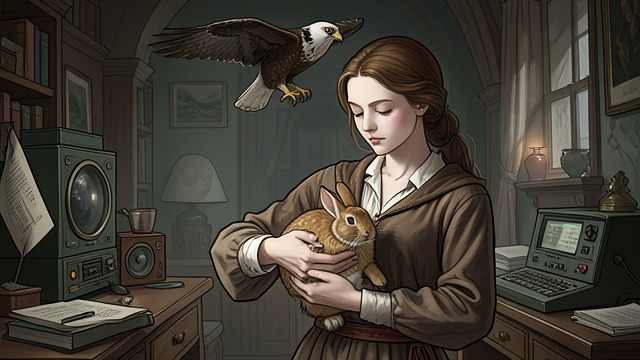
Taking Responsibility
The Hawk’s Prey
When Mabel catches a rabbit, Helen must decide what to do while the hawk holds it. She understands that allowing the bird to eat without intervention may prolong the rabbit’s suffering.
An Unavoidable Act
Helen kills the rabbit quickly and checks that it is dead. The action makes her responsible for the death in a way that watching never did.
Care now requires participation rather than emotional distance.
Grief in the Body
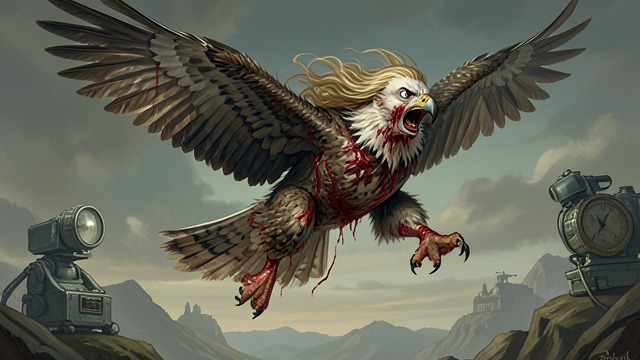
Mortality Made Immediate
The Human Return
In flight, Helen experiences a temporary absorption into the hawk’s attention. At the kill, she feels her own body again: cold, scratched, and vulnerable.
Sorrow Without Denial
She grieves for the individual animal even while recognizing Mabel’s success. The sorrow does not make the hunt unreal or undo its necessity.
The encounter gives death a scale and responsibility that abstract arguments cannot supply.
A Wider Accountability
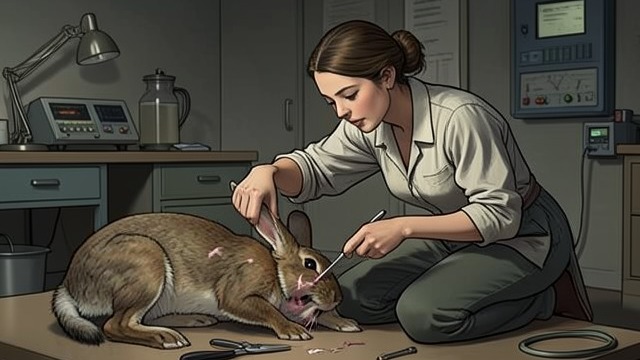
Mercy Beyond the Hunt
A Sick Animal
Helen encounters a rabbit suffering from myxomatosis after other people have been unable to intervene. She approaches and ends its suffering, using the experience she has gained through hunting.
A Changed Relation
The act brings older memories of ecological collapse into the present. Helen’s responsibility is no longer limited to the animals caught by Mabel; it includes the consequences of human actions on wildlife.
Participation replaces the comfort of innocence with an imperfect duty of care.
Helen’s childhood, before she trains a goshawk
Helen’s first childhood experience of a hawk catching a pheasant
after Mabel begins catching rabbits
during Helen’s first successful hunts
after Helen helps a rabbit with myxomatosis
