
The Return of Wild Life
H is for HawkThe novel weighs the losses represented by endangered and extinct animals against the complex realities of living wildlife and human conservation.
increasing Bearing strength in each event
 decreasing
Bearing strength in each eventdecreasingA Childhood of Extinction
Nature Under Threat
Disappearing Animals
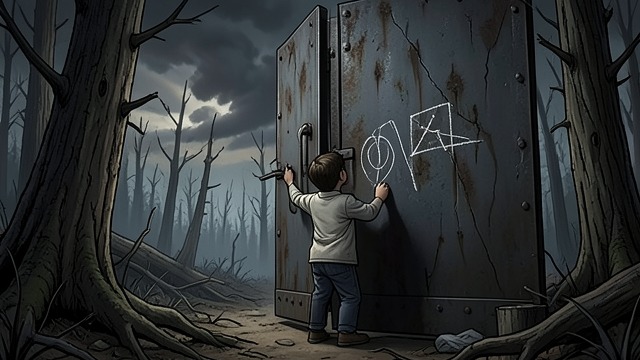
Helen remembers a childhood landscape shadowed by poisoned rivers, declining raptors, diseased rabbits, and fears of nuclear destruction. Environmental crisis becomes part of her earliest idea of the future.
Fear of the End
She imagines a mushroom cloud and scratches her name into buried slate, hoping that something might survive. The fear is not an abstraction for the child; it organizes how she sees nature and safety.
Later losses awaken this older sense of impending extinction.
A Species Survives by Help
Return Through Human Action
A Lost Native Bird
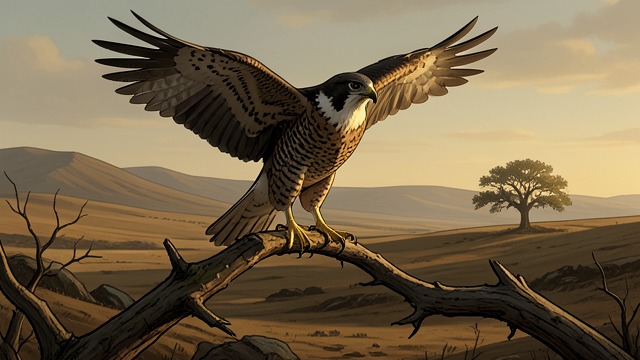
Goshawks disappear from Britain after persecution and habitat loss. Their absence becomes part of a history in which human interests determine which animals can remain.
Reintroduction
Falconers later import and release birds, and the population becomes established again. The result complicates the distinction between a supposedly pure wild and a human-managed return.
The hawks’ survival becomes evidence that human action can repair as well as damage.
The Condor on Screen
An Image of Rarity
A Projected Bird
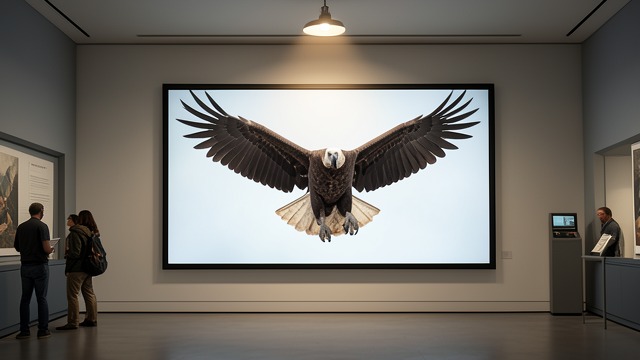
Helen sees an artwork showing a California condor from a hide. The species had approached extinction, and conservationists captured the remaining birds to breed them in captivity.
The Cost of the Icon
The condor on screen seems reduced to a symbol of extinction, unlike the complicated living birds Helen remembers from a breeding center. The rarer a creature becomes, the easier it is for its image to replace its reality.
The exhibit makes protection inseparable from questions of representation.
The Macaw in Glass
A Body in a Case
The Last of a Kind
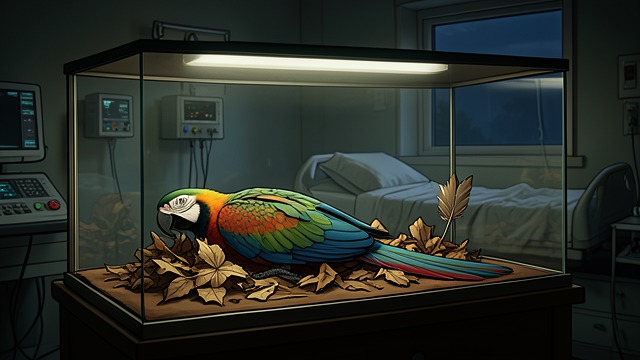
A stuffed Spix’s macaw lies on its back in a glass display. None remain in the wild, and the bird appears less like a living animal than a body preserved after its world has gone.
A Personal Association
The sight recalls Helen’s father lying in a hospital room after his death. The image links extinction to intimate bereavement without making the two experiences identical.
A dead animal can carry both ecological history and private sorrow.
The Living Animal Resists
Beyond the Symbol
A Particular Hawk
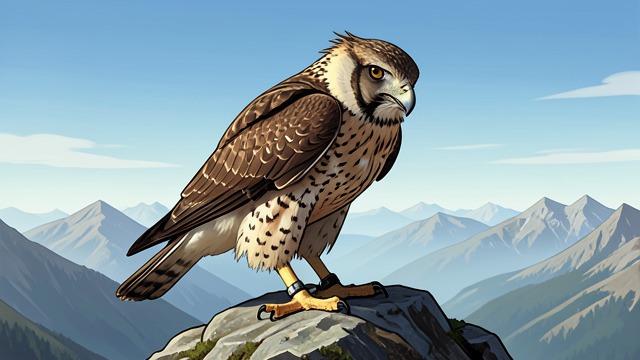
Helen sees Mabel preening and resting, plainly alive in a way that no photograph or historical description can capture. The goshawk resists the meanings people attach to it.
A More Humble Wonder
Helen vows not to reduce Mabel to a hieroglyph, villain, or emblem of wildness. A wild animal’s value includes its independence from human stories.
Wonder becomes more durable when it allows the animal to remain other.
Helen’s childhood in the 1970s
Britain after the goshawk’s nineteenth-century extinction
during Helen’s visit to an art exhibition
later in the same exhibition
near the ending, as Helen watches Mabel at home
