
Falconry, Gender, and Authority
H is for HawkDescriptions of the goshawk shift across generations, exposing how cultural assumptions shape both human authority and the imagined temperament of female birds.
increasing Bearing strength in each event
 decreasing
Bearing strength in each eventdecreasingThe Aristocratic Falcon
Rank in the Language
A Social Art
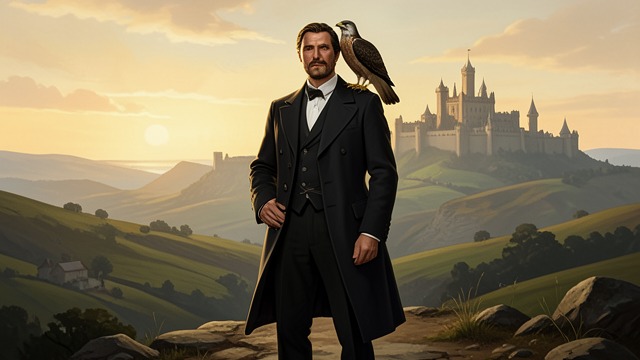
Falconry’s terminology and access to land mark distinctions of status. Falcons are praised as noble birds, while the solitary goshawk trainer is treated as socially inferior.
Authority by Association
The status of the bird follows the status of the person permitted to fly it. The inherited language makes class appear to be a natural property of species.
Helen later recognizes that these descriptions tell as much about people as about hawks.
The Victorian Goshawk
A Bird Made Difficult
A Rejected Temperament
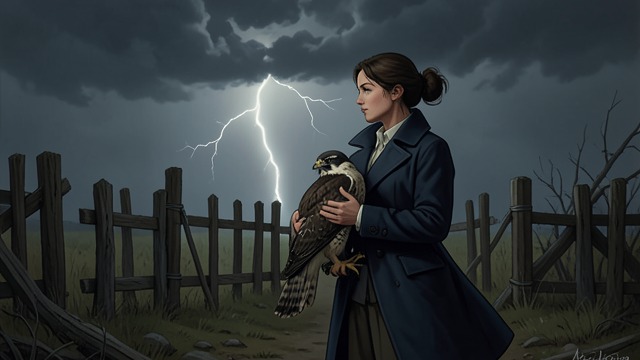
Later falconry writers describe goshawks as sulky, contrary, and difficult to please. Their accounts often treat a bird’s fear or resistance as a defect rather than a response to handling.
A Gendered Pattern
Because female goshawks are larger and more powerful, their independence is easily translated into stereotypes of irrational female behavior. The bird’s conduct becomes a problem located in the animal alone.
The literature makes unequal authority appear to be natural expertise.
An Older Alternative
Courteous Relations
Fear Acknowledged
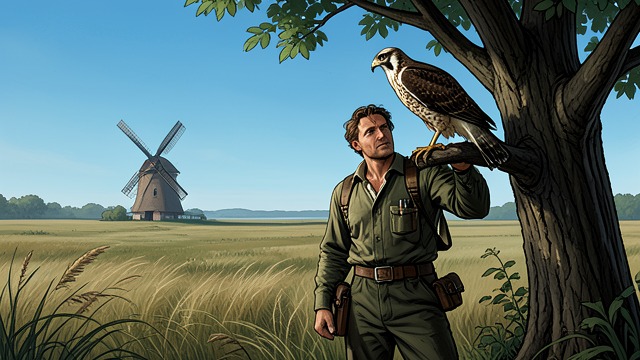
Earlier writers describe goshawks as shy and fearful but also capable of becoming familiar. Their accounts connect a bird’s response to the falconer’s roughness or kindness.
A Playfellow, Not a Subject
Edmund Bert describes himself as the hawk’s friend and playfellow. Helen does not mistake this past for an age of equality, but she recognizes a more reciprocal ideal of care.
The old text offers an alternative to the later language of pathology.
A Modern Insult
Gender Applied to Training
A Casual Dismissal
A man tells Helen that the female hawk is calm because she and Mabel share a gender. The suggestion dismisses Helen’s skill and treats the bird’s behavior as a simple biological affinity.
A Historical Pattern Exposed
Helen compares the comment with generations of falconry writing that labels female goshawks irrational. She sees how male handlers could blame the bird instead of questioning their own methods.
Anger leads her to investigate the history rather than accept the insult.
A Hawk Outside the Books
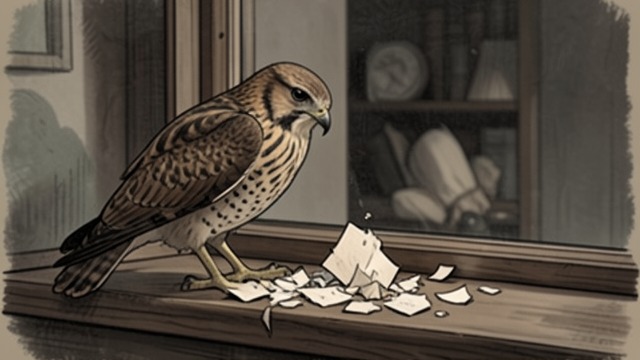
More Than a Temperament
An Unexpected Play
Mabel catches and crunches paper, watches Helen through a rolled magazine, and shows unmistakable pleasure. The behavior is absent from the authoritative accounts Helen has relied on.
Revising the Category
Helen realizes that her own picture of goshawks was too small to include play. The bird is not simply an example of a type described by human observers.
Attention to an individual begins to undo inherited stereotypes.
in medieval and early modern falconry writing
during the Victorian era
the early seventeenth century accounts Helen rereads
during Mabel’s first month of training
after Mabel begins playing with paper
