
White’s Queer Longing and Animal Kinship
H is for HawkWhite’s relationships with animals offer a constrained language for independence, desire, and kinship in a life where human intimacy feels dangerous.
increasing Bearing strength in each event
 decreasing
Bearing strength in each eventdecreasingA Life of Concealment

Hiding in Plain Sight
Social Performance
White tries to become a gentleman by adopting the pursuits and manners expected of his social world. His careful performance conceals a sense of difference and a fear of exposure.
Private Longing
His sexuality and desire remain difficult to express openly. Animals and landscapes offer subjects through which intense attachment can be approached without direct confession.
The divide between public identity and private feeling shapes his writing.
Animals as Independent Selves
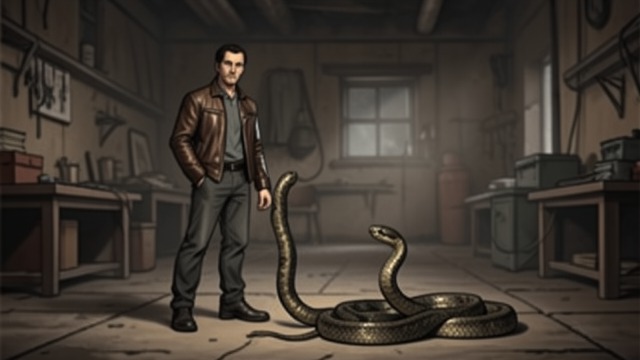
The Appeal of Otherness
Refusing Dependence
White values creatures he imagines as self-contained and resistant to human possession. Snakes, especially, seem safely themselves in a way he wishes he could be.
A Difficult Ideal
He dislikes the dependency of pets but remains drawn to animals as companions. The contradiction exposes his desire for intimacy without vulnerability or obligation.
His emotional ideals are powerful, but they cannot be made safe simply by directing them toward the nonhuman.
Gos as a Kindred Spirit
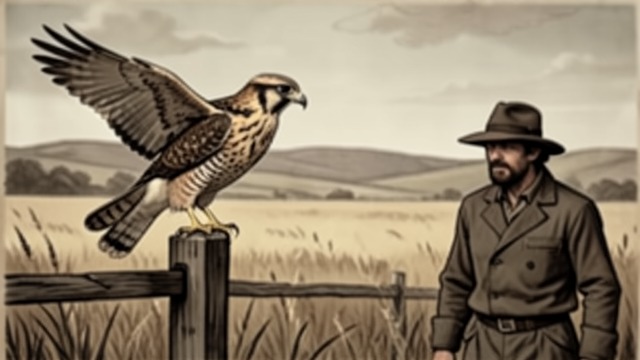
Love for the Untouchable
A Hawk Unlike Other Birds
White becomes attached to a goshawk whom many falconers distrust and dislike. Gos embodies a difficult otherness that makes White feel less alone.
Attachment Under Strain
White wants both to protect the hawk and to make it answer him. The intimacy he imagines is repeatedly compromised by his fear, poor technique, and need for control.
Love is present, but it does not guarantee that the beloved is understood.
A Fellowship Across Time
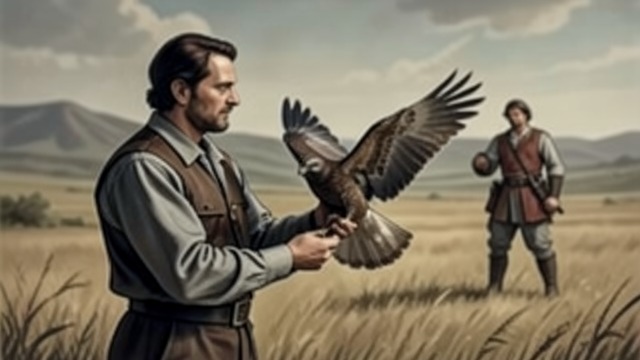
Finding Predecessors
The Dead Falconer
White feels a strong, private affection for Edmund Bert, a falconry writer separated from him by centuries. The older man’s descriptions of companionship offer White an imagined language of shared practice.
An Unspoken Community
Falconry seems to connect men who need not explain every question or answer. The bond gives White a sense of belonging that ordinary social life rarely provides.
The historical fellowship is both real practice and emotional projection.
The Book’s Confession
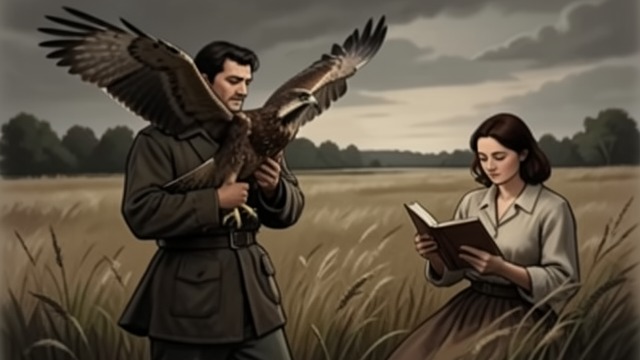
Desire Between the Lines
Private Notes
White’s notebooks record bodily and intimate observations of Gos that do not appear in the finished account. Their frankness suggests that the hawk carried feelings he could not comfortably discuss elsewhere.
Kinship Without Fulfillment
Helen reads the book as a search for blood, companionship, and a fellow being rather than a simple human-animal romance. The hawk cannot return human desire on human terms.
The relationship remains moving because its longing is real and its limits are unavoidable.
White’s adulthood before he leaves Stowe
during White’s life at the cottage
during White’s first months with Gos
while White reads early falconry texts
when White’s hawking notes and The Goshawk are later examined
