
Photography, Patience, and Memory
H is for HawkThe father’s photographic practice links patient observation with the preservation of fleeting life, while showing that images cannot reverse death.
increasing Bearing strength in each event
 decreasing
Bearing strength in each eventdecreasingA Lesson by the Fence
Staying Still
A Child’s Impatience
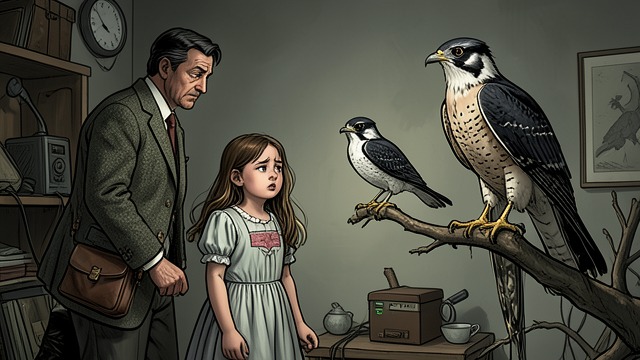
Helen fidgets while waiting with her father to see a sparrowhawk. He explains that a desired sight may require remaining in one place for hours.
A Lesson Unfinished
She hears his seriousness but does not understand why patience matters. Years later, after seeing wild goshawks, she realizes the advice was also a way of teaching attention.
The lesson survives beyond the moment in which it was offered.
The Decisive Moment
A Moment Preserved
The Street Cleaner
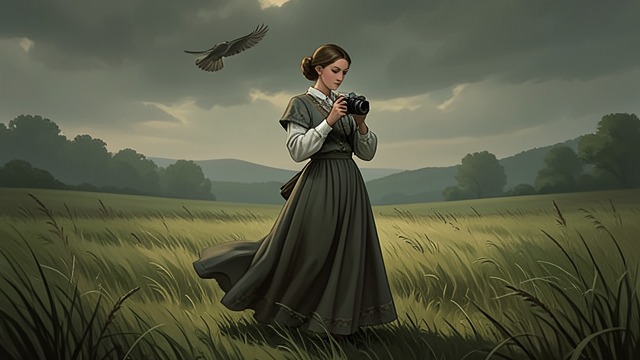
Helen remembers a photograph of an elderly street cleaner offering bread to a sparrow. Her father captures the instant when the bird takes the crumb and the man’s face shows joy.
Looking Without Possessing
The photograph preserves a fleeting relation without stopping it from passing. Its force depends on the photographer’s patience and willingness to notice what might otherwise disappear.
The image becomes a model of attention rather than control.
A Boy at Biggin Hill
Recording the Unknown
Plane-Spotting
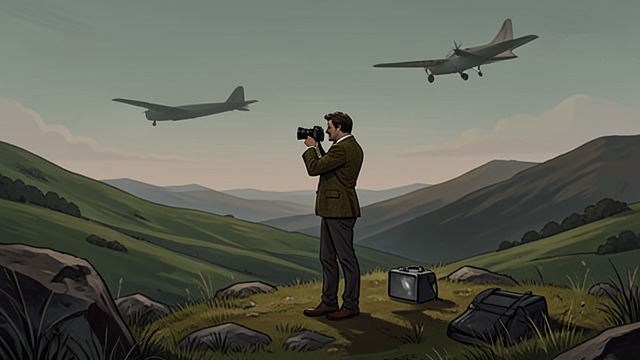
Helen’s father waits at Biggin Hill with a Box Brownie camera and notebook, recording aircraft and their registration numbers. When a secret plane appears, he is caught and his notes are confiscated.
A Resourceful Record
He shades graphite onto a page to recover the impression of the missing registration number. His attention defeats the attempt to erase what he saw.
The episode reveals his patience as curiosity, craft, and quiet resistance.
The Albums and the Dead
Images Against Forgetting
A Record of Life
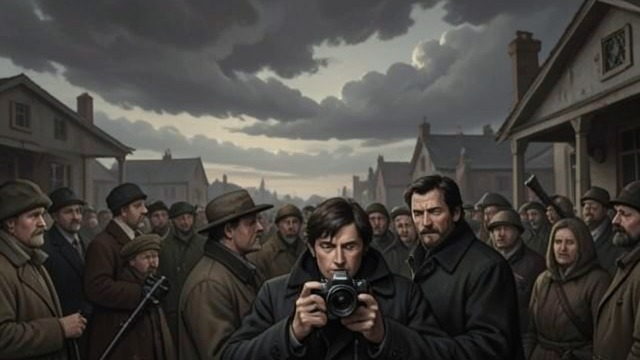
Helen thinks of the many photographs her father made: people, disasters, skies, and small events. Each image says that something happened and cannot now be made never to have happened.
The Limit of the Record
The photographs preserve evidence but cannot make their maker present again. Their value lies in memory, not in a power to undo mortality.
This distinction becomes essential to Helen’s mourning.
The Notebooks and Key
Reading Her Father Again
A Watcher’s Archive
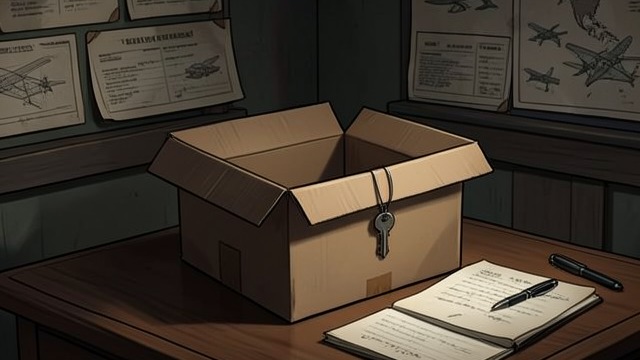
Helen finds six aircraft diaries filled with dates, types, and registration numbers. Their intense precision recalls her own childhood immersion in falconry books.
A Message That Remains
A key taped to cardboard bears her father’s brief handwriting. Helen sees that his habits of watching and recording were ways of enlarging a world and sharing it.
The archive brings him close without pretending that memory can reverse time.
Helen’s childhood, during a wait for sparrowhawks
during her father’s career as a photographer
the 1950s, when Helen’s father is a schoolboy
after Helen’s father’s death
late in the winter after Helen’s memorial speech
