
The Unseen Cost of Mastery
H is for HawkBoth White’s and Helen’s experiences reveal that technical control can conceal emotional needs and that expertise does not guarantee humane judgment.
increasing Bearing strength in each event
 decreasing
Bearing strength in each eventdecreasingBooks Before Practice

Knowledge from the Page
An Imagined Expertise
Helen memorizes falconry terminology and classic manuals long before she owns a hawk. Their precision gives her access to a world that feels secret and complete.
The Reality of the Bird
When she finally trains hawks, she discovers that remembered instruction cannot substitute for the living animal’s particular behavior. Expertise begins only when the bird exceeds the book.
The gap between theory and practice becomes a recurring source of humility.
White’s Confident Errors
A Manual Misapplied
Rules Without Judgment
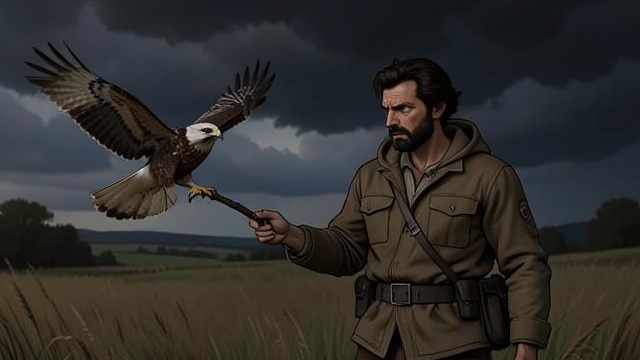
White follows instructions about walking, watching, and calling without understanding how they should fit Gos’s condition. A method becomes harmful when it is used as a rule rather than adjusted to the bird.
Emotional Confusion
White’s care is entangled with hunger for affection and fear of failure. The resulting inconsistency makes his technical errors harder to correct.
The episode shows that knowledge requires attention to the individual, not merely possession of a manual.
Helen’s False Diagnosis
Reading the Failure
A Personal Interpretation
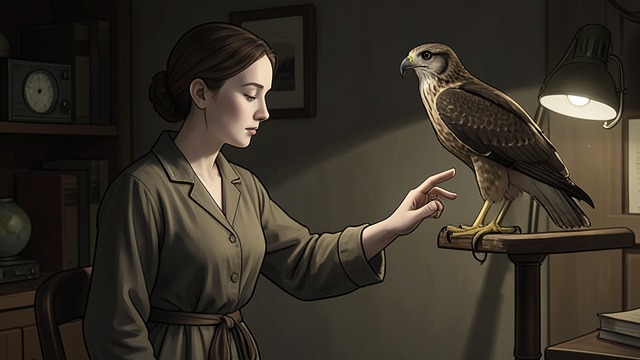
When Mabel overshoots the glove, Helen believes that the hawk has discovered something vile in her. A practical training problem becomes a judgment about Helen’s worth and lovability.
Correction from Experience
Stuart identifies feeding and flying weight as important factors. The explanation does not erase Helen’s emotional distress, but prevents it from becoming the only account of the hawk’s behavior.
Good judgment requires separating the bird’s needs from the trainer’s fears.
A Hawk Misread as a Mirror
Projection Exposed
The Hawk’s Changed Behavior
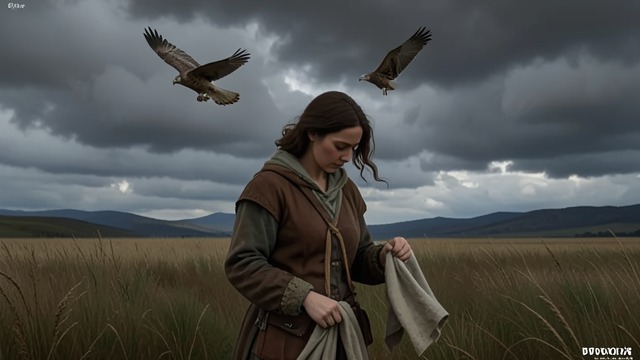
Mabel becomes aggressive as her weight falls, while Helen has been too absorbed in her own grief to recognize the cause. She had treated the hawk’s behavior as a reflection of their emotional bond.
A Necessary Revision
Helen sees that she has made Mabel into a mirror and recruited her to serve a human loss. The recognition turns self-blame toward a more specific responsibility: seeing the animal clearly.
Care depends on resisting the temptation to interpret every behavior as a message about oneself.
The Animal Beyond Meaning

Limits of Interpretation
A Hawk Made into Symbols
White’s writing turns Gos into a series of human figures, from historical rulers to literary villains. Helen recognizes that such comparisons reveal the writer as much as the bird.
Returning to the Particular
Mabel remains alive in ways no inherited description can contain. Helen accepts that the hawk’s actual life is not reducible to the meanings humans use to understand it.
Humility becomes the final form of expertise.
Helen’s childhood and early falconry years
during Gos’s early training
during Mabel’s uneven calling flights
after the memorial service
near the end, as Helen rereads White’s account
