
The Meaning of Solitude
H is for HawkThe novel distinguishes chosen solitude from destructive isolation by placing White’s retreat and Helen’s withdrawal beside forms of companionship that make life livable.
increasing Bearing strength in each event
 decreasing
Bearing strength in each eventdecreasingWhite’s Retreat

Solitude as Escape
Leaving the Institution
White resigns from teaching and moves to a cottage, hoping to live beyond social demands. The retreat offers quiet and a chance to pursue writing, animals, and solitary country life.
An Incomplete Freedom
The cottage remains on an old route connected to the school, and White cannot escape his own need for recognition. Physical distance alone cannot free him from internalized authority.
Solitude offers a setting, not a cure.
Helen Shuts the Door
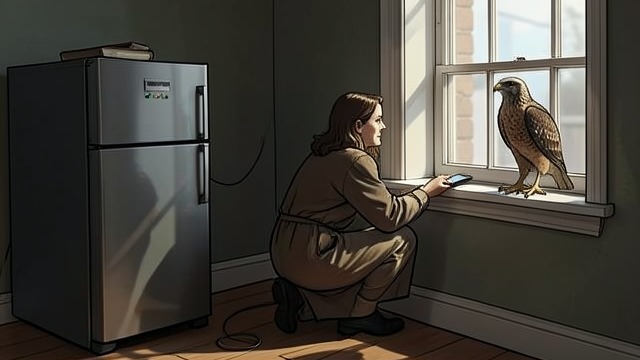
A Solitary Training Room
Closing the World
Helen asks friends to leave her alone, fills the freezer with hawk food, and unplugs the phone. She believes that complete attention to Mabel will give life a manageable purpose.
Isolation Deepens
The arrangement helps the hawk settle but also protects Helen from conversations she does not feel able to have. A useful period of concentration begins to resemble a permanent retreat.
Solitude works briefly because it is not the whole of life.
The Empty House
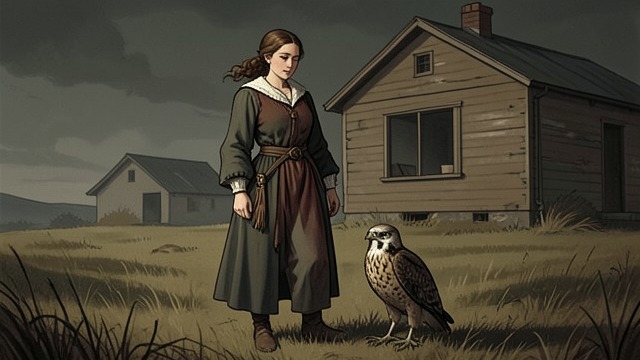
Living Without Home
Someone Else’s Rooms
Helen moves into a house filled with toys, drawings, and signs of a family away in China. The furnishings suggest a domestic life that is not hers.
A Solitary Landscape
She stays outside with Mabel because the fields seem to ask less of her than a house or a phone call. Her solitude is no longer simply chosen; it has become a way to avoid being reached.
The empty rooms make isolation visible.
A Shared Christmas
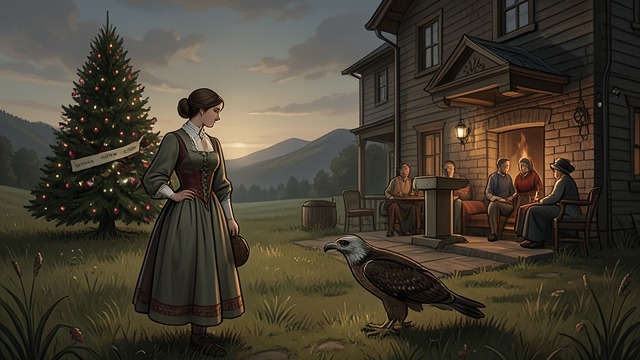
Solitude Interrupted
Ordinary Company
Helen stays with friends and family, sharing food, conversation, and the work of a household. The company does not demand that she explain or cure her grief.
A Place for Wildness
A hawk hunts near the house, and Helen sees that the presence of wild animals need not require an escape from human community. The wild can be part of a shared home.
The visit offers an alternative to isolation without diminishing solitude’s value.
Returning to Friendship
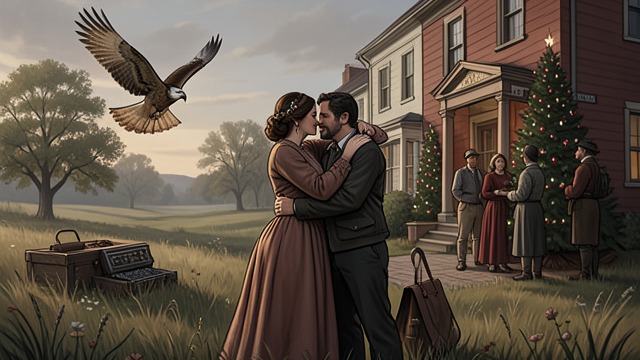
Gratitude Spoken
The Friends Who Stayed
Helen reunites with Stuart and Mandy, who have cared for Mabel while she was away. She notices their fatigue and the hours of help she has accepted as though it were guaranteed.
A Direct Acknowledgment
She tells them she loves them and embraces Stuart despite his joking protest. The small gesture marks a return to reciprocal human attachment.
Solitude becomes one part of life, not a substitute for it.
1936, when White leaves Stowe
the first days after Mabel arrives
after Helen moves to the suburban house
Christmas in Maine
after Helen comes back from Maine
