
The Book’s Return
H is for HawkThe Goshawk changes from a childhood object Helen rejects into a troubling literary companion that helps her understand her own motives.
increasing Bearing strength in each event
 decreasing
Bearing strength in each eventdecreasingA Child Finds Gos
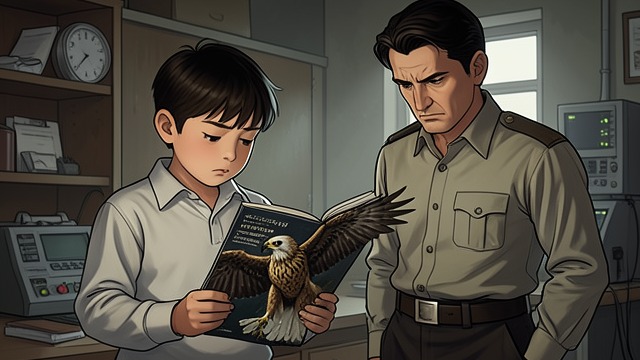
An Unfamiliar Falconry Book
The Cover Hawk
Helen finds a copy of The Goshawk in a bookshop because its cover shows a furious goshawk. The book’s strange account of failed training differs sharply from the confident manuals she already admires.
A Child’s Judgment
She trusts the falconry establishment’s contempt for White and takes comfort in believing that the adult author is simply incompetent. Yet Gos himself feels vivid and comprehensible to her.
The book leaves a memory that will return years later with a different meaning.
The Avoided Spine
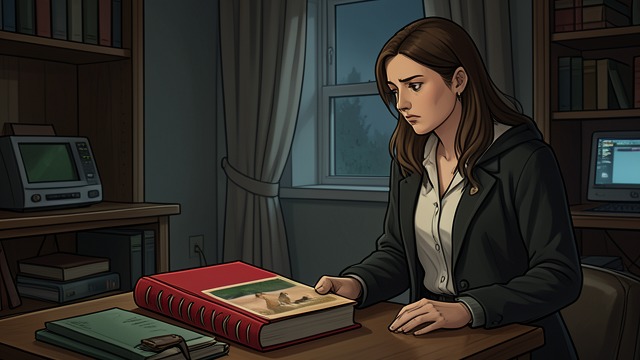
The Book on the Shelf
An Unexplained Aversion
Helen finds herself avoiding the red-spined volume of The Goshawk on her desk. When she finally opens it, the first sentence carries her back to the child who read it years before.
A Motive Revealed
She realizes that the urge to train a hawk may not be entirely her own. White’s troubled attempt has become entangled with her own grief and with the memory of her father.
Reading again begins a conversation across time rather than a simple reassessment of technique.
A Haunted Conversation
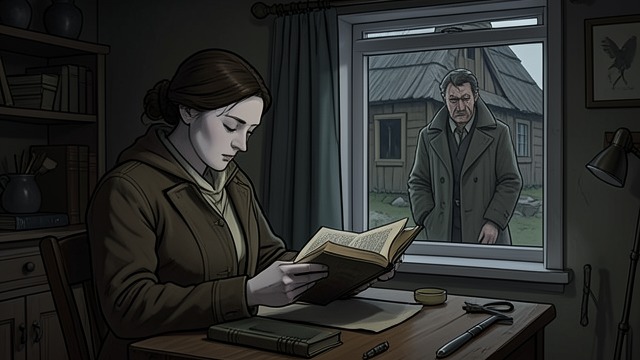
White in the Room
A Shared Difficulty
As Helen trains Mabel, she reads White’s account and imagines his cottage, fatigue, and uncertain care of Gos. His presence feels like a haunting grounded in the actions of a living falconer.
Sympathy and Anger
Helen sees White’s vulnerability more clearly but remains disturbed by the suffering his methods caused. The book is both an explanation of his inner life and a record of what he did to the hawk.
The double response complicates her childhood certainty.
The Lost Hawk’s Echo
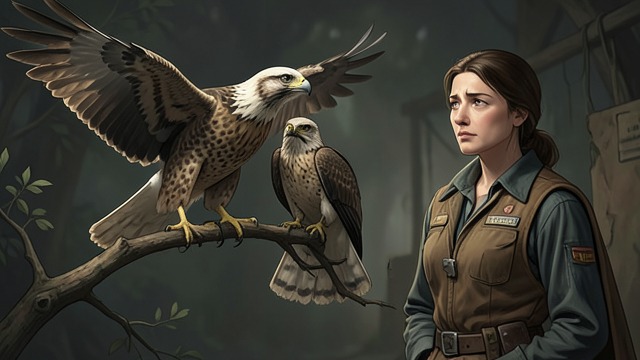
Two Hawks, Two Stories
A New Reading
Having experienced the fear of losing a hawk, Helen can now understand the force of White’s grief when Gos disappears. The old narrative no longer seems like a remote failure belonging only to its author.
An Unfinished Ending
Gos remains lost rather than confirmed dead, leaving the possibility of return alive in a child’s imagination. Helen recognizes that this open ending had held her attention for years.
The book’s unresolved absence becomes a language for her own bereavement.
Putting the Book Away
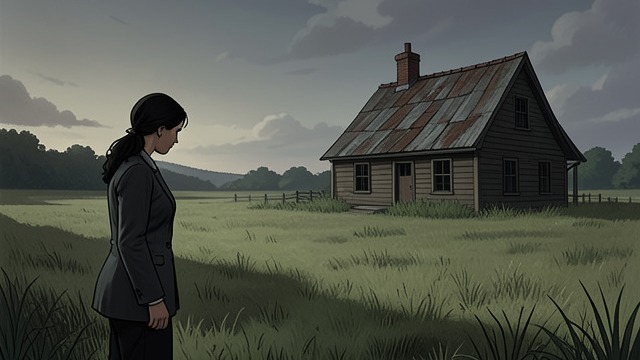
Respecting the Dead
A Visit to Stowe
Helen visits White’s former home and resists the temptation to treat its present occupants as a route to recovering him. The landscape survives, but the people and places she hoped to retrieve have changed or vanished.
A Deliberate Departure
She accepts that White and Gos are gone and leaves without trying to cross that boundary. The book remains important, but it no longer requires an attempt to bring its dead back to life.
Respect for the living becomes part of honoring the dead.
1979, when Helen is eight
four months after Helen’s father dies
during Mabel’s early training
after Mabel begins flying freely
after Mabel is settled in her moulting aviary
