Biggin Hill
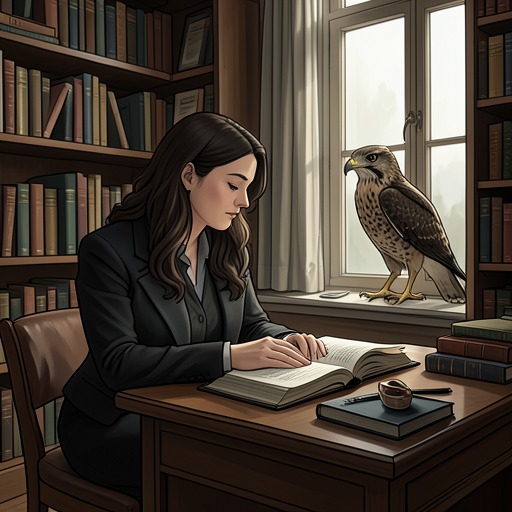
H is for HawkBiggin Hill is remembered as the aerodrome where Helen Macdonald’s father pursued his boyhood passion for plane-spotting and encountered an aircraft he could not identify. In his recollection, the airfield becomes both a place of patient observation and the setting for a sudden collision between a child’s wonder and military secrecy.
Setting and Plane-Spotting
As a boy of about nine or ten in the 1950s, Helen’s father went to Biggin Hill to watch Royal Air Force aircraft take off and land. A Box Brownie camera hung from a string around his neck; he photographed each aircraft and entered its number in a spiral-bound notebook. The routine gave the visit its methodical rhythm: look, photograph, record, and keep watching, even as the evening grew late and he ought to leave.
The Unidentified Aircraft
An unfamiliar engine note made him look up again. He saw landing lights, but could not identify the aircraft from the books he knew. He photographed it and copied its registration number into his notebook; the plane was a new United States Air Force aircraft, appearing to the young spotter as a visitation from the future. For a boy accustomed to identifying planes through observation and written records, the sight was a marvel precisely because it exceeded what he could already name.
The Airfield in Recollection
The memory was later told as a story Helen hoped an audience would understand while she was writing a speech. Still somewhat concussed, she reached for the phone to call her father and ask what kind of plane he had seen, then briefly experienced the world going black. Biggin Hill thus returns not only as the site of his childhood encounter but as the place around which a remembered question persists: the adult daughter’s impulse to ask her father for the identification links his careful notebook entry to her act of recollection.