Christina
H is for HawkChristina is Helen Macdonald’s friend and an important companion during the early training of Mabel. She moves from bringing company and ordinary domestic comforts into Macdonald’s grief-struck household to taking an active role in hawking: holding the bird while Macdonald calls her, helping establish flights between two people, and improvising when pheasants threaten to disrupt a lesson. Her presence makes the training a cooperative undertaking rather than a solitary exchange between falconer and hawk, though Macdonald’s distress sometimes strains their friendship.
Friend and First Witness
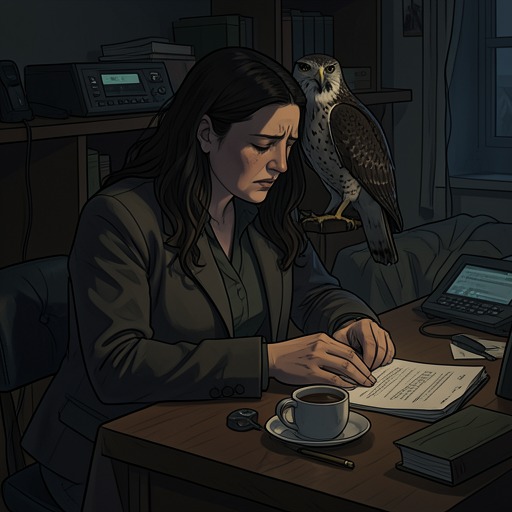
Christina visits Macdonald at home with takeaway coffees and the Sunday papers, sits by the fireplace, and asks how the hawk is doing. Macdonald is glad to see her, yet also resents the interruption and feels they ought to be alone. The contradiction captures how thoroughly her attention has narrowed around Mabel: even a friend’s ordinary company can feel like an intrusion into the private world of training. Christina nevertheless remains there while Macdonald tries to talk, and later becomes part of the hawk’s gradual introduction to human activity.
During one visit, Macdonald asks Christina to ignore Mabel and continue reading while the bird sits bareheaded nearby. The hawk watches the pages turn and, after an hour of calm, makes a sudden bate and begins eating meat from her perch. Christina flinches, but stays present; she asks whether Mabel has behaved this way before and learns that it is the bird’s first time eating in this manner. The moment is not the solitary, meditative encounter Macdonald had imagined. It unfolds in daylight, with Christina and a television in the room, making her an early witness to the bird’s changing comfort and behaviour.
Learning to Handle Mabel
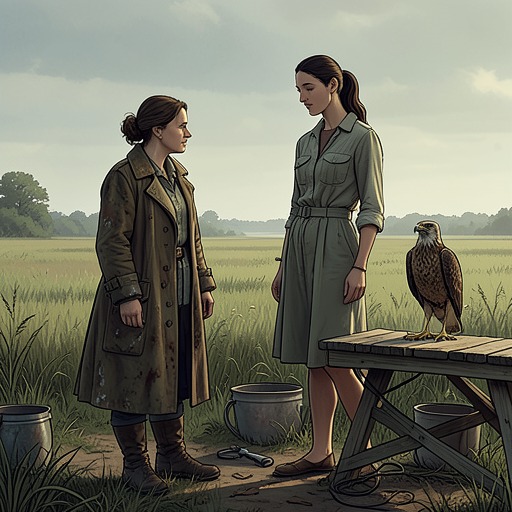
When Macdonald begins working toward flying Mabel farther from the glove, she asks Christina to become her under-falconer. The task is specific: Christina must hold the hawk on the field while Macdonald calls her from a distance. Christina pales and says she will need instruction. At the first attempt she holds Mabel with cautious concentration, standing still about fifteen yards away. Her composure matters practically: the lesson depends on her keeping the bird steady while Macdonald moves away and calls.
Mabel flies low across the turf toward Macdonald’s glove, the creance trailing behind her, and strikes the glove feet-first. Christina calls to ask whether the flight went well; Macdonald gives her a thumbs-up, and Christina returns the signal. Their brief exchange turns the training into a coordinated operation, likened in the account to two people directing aircraft from a flight deck. Christina is not simply watching Macdonald’s relationship with the hawk; she is learning how to take part in it.
They repeat the exercise, and Christina’s help allows the practice to develop. When heavy rain prevents them from flying outdoors, they call Mabel back and forth between their fists in Macdonald’s front room, over the rug and past a mirror and a light. The draught from the wings sets a lampshade swinging. By the fourth day, Mabel will fly twenty-five yards to Macdonald from Christina’s fist, as well as coming from the ground, branches, and the pavilion roof. Macdonald thanks Christina as they leave the field and explains that they are approaching the point at which Mabel can be flown loose. Christina’s contribution has helped make that next step possible.
Improvisation on the Field
Christina’s assistance becomes especially consequential when pheasants appear during a training session. Mabel strains toward the birds, and Macdonald tries to keep the hawk from pursuing them while turning to block her view. She asks Christina to shepherd the pheasants back behind the garden railings and then drive the moorhens toward the woods. Christina grins and does both: first moving the pheasants away, then sprinting across the field with her arms windmilling as the moorhens run back toward cover.
The episode is comic in its contrast between a carefully managed flying lesson and the improvised work required to clear the field of tempting prey. Christina’s actions give Macdonald a chance to resume calling Mabel once the distractions have gone. The bird makes a successful flight of thirty yards, although later attempts falter; Macdonald blames herself for what goes wrong. Christina’s role is therefore practical rather than ornamental: she helps manage the surroundings on which the lesson depends, even when the situation becomes unruly.
Friendship Under Strain
Christina’s support does not mean Macdonald is always able to receive it graciously. On the evening she hopes to fly Mabel free, Christina arrives to watch, but Macdonald snaps at her for no good reason. Macdonald has already argued with her mother and failed to register Christina’s warning about gridlock on the A14; the account then follows the serious crash that delays Stuart. It offers no account of Christina’s response to being snapped at, but the incident reveals how anticipation, grief, and distraction can spill into the friendship even when Christina has come to share an important moment.
Across these episodes, Christina is neither a specialist falconer nor merely an audience. She asks to be shown how to handle the hawk, learns through repeated practice, and provides the additional hands and attention that allow Mabel’s training to progress. Her presence also brings ordinary human company into a relationship Macdonald increasingly experiences as absorbing and isolating. The record of their work together is consequently double-edged: Christina makes the hawking possible as a shared activity, while Macdonald’s intensity sometimes makes companionship difficult to sustain.