Extinction of goshawks in Britain
H is for HawkThe extinction of goshawks in Britain was the culmination of social and ecological changes that turned a native hunting bird into persecuted vermin. Helen Macdonald traces the loss to enclosure, the rise of firearms over falconry, habitat loss, and gamekeeper persecution; the vanished bird also exposes how class and changing ideas of hunting shaped the country’s relationship with wildlife.
Causes and Changing Land Use
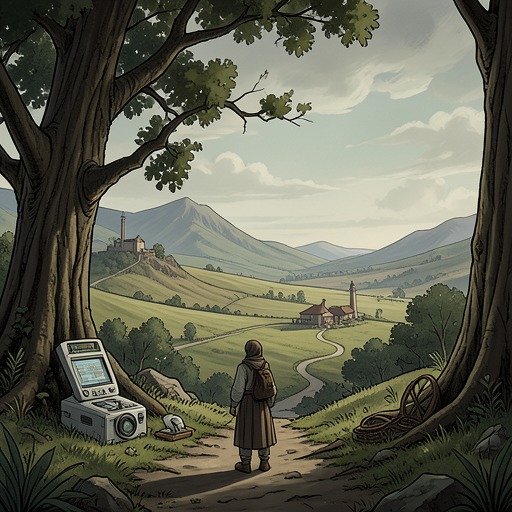
Goshawks once bred across the British Isles, but their place in the countryside changed as land was enclosed. Enclosure restricted ordinary people’s ability to fly hawks, narrowing access to a practice that had depended on hunting rights and open ground. At the same time, accurate firearms made shooting fashionable in place of falconry. The goshawk, once a hunting companion, was recast as vermin.
Habitat loss further weakened the population. Macdonald describes gamekeeper persecution as the final pressure on birds already struggling as their habitat diminished. The extinction thus followed no single cause: land ownership, sporting fashion, and direct persecution worked together, changing both the landscape available to goshawks and the human purposes for which they were valued.
Class, Hunting, and the Bird’s Reputation
The contrast between falconry with goshawks and the pursuit of falcons reveals how access to land helped organize hunting by class. A goshawk could hunt by making a short dash from the fist at close range, so it could be flown in more places. Flying falcons properly, by contrast, required extensive open country such as grouse moors, partridge estates, or large farmland—resources less available to people without wealth or influential connections. Gilbert Blaine described possession of the supposedly noble falcons as an aristocratic privilege.
The solitary austringer, who trained goshawks or sparrowhawks, consequently received a markedly different treatment in falconry writing from the aristocratic falconer. Goshawks, too, were described as difficult and disreputable birds. Macdonald’s account sets these later attitudes against seventeenth-century falconry writers who portrayed goshawks as shy but sociable and familiar, capable of affection when treated with patience and kindness. The contrast does not undo the historical causes of extinction, but it shows that the bird’s status as vermin was neither timeless nor simply a reflection of its nature.
Extinction and Its Record
By the late nineteenth century, British goshawks were extinct. The loss is made tangible through Macdonald’s account of a photograph of one of the last birds to be shot, preserved as a stuffed specimen from a Scottish estate. The image records a living population reduced to a remnant and then to an object: a stark counterpoint to the earlier history of goshawks as birds bred across the islands.
The disappearance also belongs to a broader account of a countryside shaped by human activity. Macdonald describes the goshawk’s history as human in the same way that the surrounding landscape bears the marks of work, industry, and altered land use. In this framing, extinction is not an isolated natural event but a consequence of decisions about land, hunting, and which animals people permitted to remain.
Historical Significance
The extinction helps explain why the later presence of goshawks in Britain could not be treated as an untouched survival from the past. Macdonald’s account emphasizes that their absence followed changes in human land use and attitudes, rather than a lack of historical belonging. It also complicates the idea that wildness exists only beyond human influence: the birds’ story is bound to the people who hunted, excluded, and persecuted them, as well as to the landscapes those people altered.