Myxomatosis
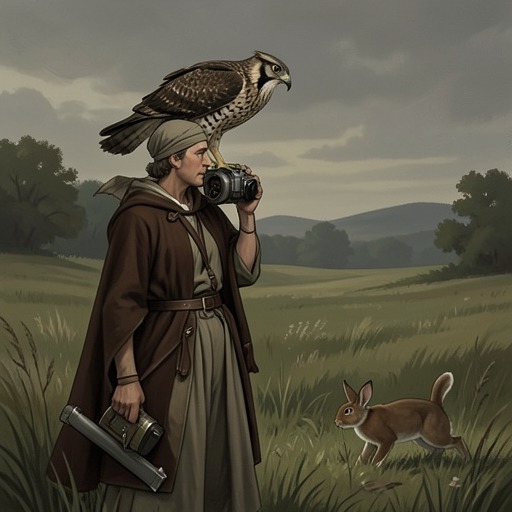
H is for HawkMyxomatosis is presented as both a disease of rabbits and a turning point in the history of the British countryside. After its arrival in Britain in 1952, it killed almost the entire rabbit population within two years. For Helen Macdonald, a single sick rabbit encountered decades later makes that mass loss newly immediate: the animal is at once an individual in need of help and a reminder of an ecological crisis whose consequences are still visible in the landscape.
The outbreak and its effects
The virus originated in South America and had already been introduced by humans to Australia and Europe before reaching Britain. In the two years after its arrival, it killed 95 percent of British rabbits. The scale of the outbreak was registered in tens of millions of corpses across roads and fields, a mass death that changed the countryside beyond the species it directly affected.
Rabbits had grazed the grasslands. As their numbers collapsed, those grasslands grew thick with scrub, while predator populations also crashed. Rabbits later recovered, but not to the numbers people had once taken for normal. The virus became less virulent, yet outbreaks continued. The history is therefore not a simple passage from catastrophe to restoration: recovery did not recreate the earlier abundance, and the effects of the collapse extended through habitats and predator populations.
A sick rabbit in the present
One afternoon, Macdonald passed a group of walkers gathered beside a rabbit on a grassy verge. They were distressed and understood that the animal was sick, but no one knew what to do or felt able to approach it. They remained there for several minutes, unable to intervene and unwilling to leave, then walked on. Macdonald stopped farther up the road and returned to the rabbit.
The animal was small and gravely ill, with wasted muscles, extensive tumours and swollen eyes; it could not see. Macdonald recognised the need to end its suffering and did so. The encounter places an individual act of care against a history in which rabbits had died on a vast scale. It also makes the responsibility of intervention concrete: the walkers’ concern did not relieve the rabbit’s suffering, while Macdonald’s decision required her to act rather than remain a witness.
The return of childhood fears
The rabbit stayed in Macdonald’s mind as something like a revenant, carrying her back to the environmental crises of her childhood. The disease recalled a time when, as she remembered it, everything seemed to be sick: hawk populations were falling amid agricultural pesticide use, elm trees were dying, otters had disappeared, rivers were polluted and guillemots were drowning in oiled seas. The sick rabbit did not stand alone in memory; it brought back a wider sense of ecological collapse.
That childhood fear had also extended to nuclear destruction. Macdonald had asked her parents whether they would build a fallout shelter beneath the garden, thinking of the limited space beneath the stairs and of her brother James. Her parents told her that the family’s proximity to important military targets meant that, in a war, they would be vaporised before fallout could matter. The reassurance did not comfort her. She scratched her name on pieces of slate and buried them in the garden, hoping they might survive an apocalypse. In adulthood, the rabbit’s illness reconnects the visible crisis of wildlife loss with those earlier fears that everything might disappear.
Ecological memory and the imagined countryside
The encounter also sharpens the book’s distinction between remembered or imagined country and living ecological history. In a later comparison, fields where Macdonald flies Mabel in Cambridge are organically farmed and full of life; other fields may look similar, with trees and large animals still present, while chemical treatment leaves few other plants, bees or butterflies. The apparently familiar landscape can conceal profound loss.
Macdonald sets out that loss across different spans of time: turtle doves had been there ten years earlier, corn buntings and large flocks of lapwings thirty years earlier, red-backed shrikes, wrynecks and snipe seventy years earlier, and ravens and black grouse two hundred years earlier. Those absences expose how readily a recent, diminished landscape can be mistaken for a natural baseline. The remembered devastation of rabbits belongs to the same problem: people may treat the numbers they happen to know as normal, even when earlier abundance has already vanished.
Narrative significance
The sick rabbit becomes a meeting point between present action, childhood memory and environmental history. Its suffering prompts Macdonald to remember not only myxomatosis but the wider losses that shaped her sense of the countryside, then to recognise how easily ecological change is obscured by familiar scenery and incomplete memory. The disease is thus significant in two connected ways: it altered British ecosystems through a sudden, immense decline in rabbits, and it gives the memoir a particular animal through which that past can return. The rabbit’s smallness does not diminish the scale of the history it carries; it makes that history difficult to leave at a distance.