Stowe
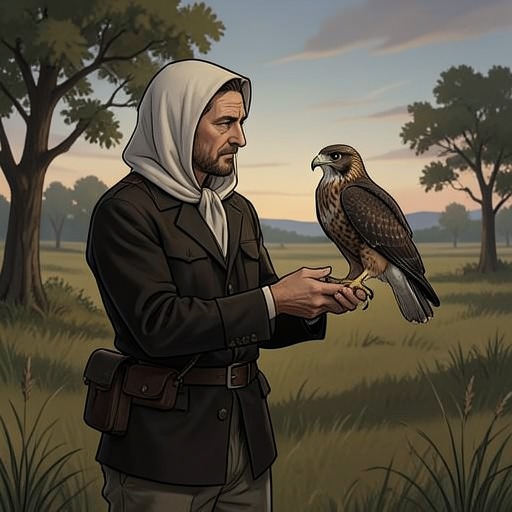
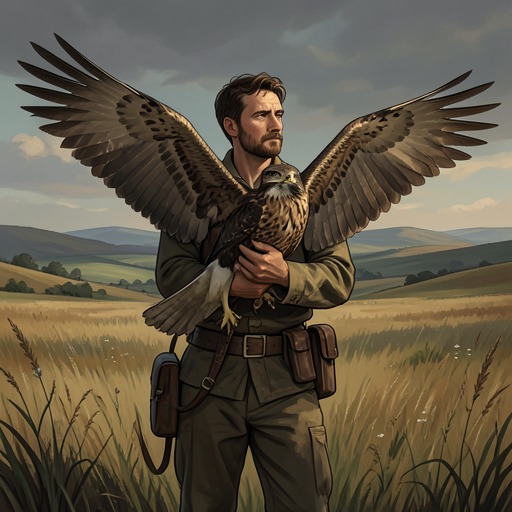
H is for HawkStowe is the school and estate at the centre of T. H. White’s attempted escape from institutional life and his years with the goshawk Gos. Its Palladian palace and formally composed grounds stand beside the old carriage roads, fields, and cottage where White walked and trained his hawk. The location is decisive because it makes his retreat both real and incomplete: he left the school, but his cottage remained on its estate, close to the place and system he meant to leave.
School, estate, and landscape
On 16 March 1936, White was Head of English at Stowe School, living and working within the great Palladian estate. The scene of his writing begins on the palace’s east side, among sweet chestnut trees and the former stable rooms where water dripped from the roof. White was twenty-nine and had been a schoolmaster there for five years. The school was not merely a workplace in the account of his life: its routines and authority supplied the very conditions from which he wanted to withdraw.
Stowe’s architecture and grounds give that authority a visible form. When Helen Macdonald later walked through the estate, she encountered temples in Greek and Roman styles, Saxon figures on runic plinths, a Gothic Temple, Palladian bridges, grottoes, arches, cupolas, obelisks, and follies. The buildings seemed to have been gathered from different historical periods and placed across the landscape. Macdonald reads this arrangement as a lesson in aristocratic moral certainty: the grounds presented ancient virtue as an answer to modern vice. Their beauty did not make them feel welcoming to her. The designed landscape instead made power and its claims to moral instruction tangible.
That social dimension also bears on the book’s account of hawking. The open land required to fly falcons properly was associated with extensive farmland and privileged access; by contrast, goshawks could be flown in more confined settings. Stowe’s estate therefore belongs to a landscape where land, status, and the practice of falconry intersect. White’s interest in the goshawk, and in the solitary trainer known as an austringer, sits uneasily beside the aristocratic order represented by the estate’s grand house and grounds.
White’s cottage and the old roads
White resigned from Stowe after a spring vacation spent fishing alone in Belmullet on Ireland’s west coast. The decision seemed to promise separation from school life, but his cottage did not lie in a remote wilderness. It stood on the Stowe estate beside one of the old carriage routes known as The Ridings. That grass-lined route ran past the cottage, over a hill, and down towards the school. The house had an earth closet and a well, and its barn door still carried a Victorian gamekeeper’s pencil notes about game. Rural in character, the cottage remained physically connected to the institution White had left.
This proximity complicates the idea of escape that governs White’s retreat. The cottage was not deep in a wood, as a reader might imagine from the account of his hawking; it stood beside an old, open road leading to Stowe. The school remained near enough to structure the geography of his supposed solitude. Macdonald interprets the arrangement as a retreat that never entirely breaks its attachment to the place being resisted: White had changed his life, yet continued to live within the estate and its reach.
The same roads and fields also gave White a daily practice beyond the classroom. He walked for whole days with Gos along small roads, grassy rides, and fields where hay stood damp. On evening walks through the high-hedged lanes of Buckinghamshire, he watched the moon change across the sky. The Ridings became, by night, a setting for mist, stars, and solitude. His walks joined the immediate landscape to an imagined past, making the estate’s paths routes not only through the countryside but also through history.
Gos, Chapel Green, and the imagined past
One of White’s walks with Gos led across five fields to the ruined chapel of St Thomas the Martyr at Chapel Green. The chapel had once been a house and had become a ruin, with its roof collapsed and nettles growing around the remains. White associated the site with death and with the people buried beneath the ground. In his account, the goshawk above the fields made those buried lives feel connected to the present: the bird belonged to a landscape in which the past could be imagined as still near.
For White, the walk and the hawk opened a route into an England that modern life seemed to have obscured. He imagined vanished communities, including monks, nuns, and farm labourers, as people who would have understood the sight of a goshawk. Macdonald remembers this passage as a source of kinship with White, while also noticing how his historical imagining depended on details from the working countryside around him. The ruined chapel thus gathers several strands of the Stowe story: the actual land White crossed with Gos, his desire for solitude, and his effort to find belonging in a past he could only reconstruct through imagination.
The estate’s woods and views also enter the account of Gos’s escape. When the goshawk climbed an oak, the view opened across the fields towards Stowe, with the palace, lakes, obelisks, temples, and classical avenues laid out below. The prospect was shaped by human design, but the bird looked down on it from a position beyond White’s immediate control. Later, Gos escaped after White left him tethered outside the barn; the frayed, repeatedly broken twine snapped, and the perch was empty when White returned. The landscape that had offered White a sense of freedom could not make that freedom secure for the hawk.
Return and transformation
Stowe’s connection to White continued through the books he wrote about the hawk and through the fictional woods of The Sword in the Stone. Macdonald describes how reading that book after The Goshawk could make the forest around Stowe seem to merge with the wildwood of Arthur’s Britain. Both become refuges for hawks and outcasts in White’s imagination. Following a lost hawk through the woods draws the Wart towards his destiny in the story, just as looking for Gos had drawn White into a different life. The doubled landscape makes Stowe more than a realistic setting: it is also a place where lived experience and fictional geography overlap.
Years later, after spending a week among White’s papers and journals at the Harry Ransom Center, Macdonald returned to Stowe. She entered the grounds and walked past their temples and ornamental structures, but found the estate’s historical messages oppressive rather than reassuring. Leaving the school grounds, she went to White’s cottage on The Ridings. The cottage remained, with the forest behind it and a horse grazing outside, yet the surrounding landscape had changed. The wood where hobbies had flown had given way to Silverstone racing circuit, and the chapel where White had walked with Gos had been demolished; its former site persisted as Chapel Corner, a bend in the track above the buried dead.
That later visit gives Stowe a layered ending. The grand estate remains legible as a designed landscape of power, while the cottage appears ordinary and quiet; the chapel and part of the old wood survive only through memory and altered place-names. Macdonald’s return does not restore White’s lost world. Instead, it shows how the geography that shaped his retreat has itself been transformed, while the relationship among Stowe, White, Gos, and the imagined past remains available through his writing.