The Sword in the Stone
H is for HawkT. H. White’s The Sword in the Stone brings the boyhood of King Arthur into a children’s story, but its significance in Helen Macdonald’s account extends beyond its plot. The book became a cultural touchstone, supplied a lasting image of Merlin, and gave Macdonald a way to understand the imaginative force of becoming a falconer: not literal metamorphosis, but a changed way of seeing and being.
Publication and Cultural Reach
Published in 1938, The Sword in the Stone made White famous and brought him a fortune. Disney acquired the rights and made an animated adaptation. White later continued the Arthurian story in The Once and Future King, which covers what follows King Arthur’s boyhood and went on to inspire the stage musical and film Camelot.
White’s influence also travelled into political memory. Macdonald connects the description of Kennedy’s White House as Camelot to White’s retelling, noting that Jackie Kennedy quoted lines from the musical after her husband’s assassination. The association shows how the book’s Arthurian world could be taken up beyond children’s literature and used to frame a modern public story. Macdonald also credits White with the familiar image of Merlin in a tall, peaked hat embroidered with stars.
A Falconry Scene Remembered
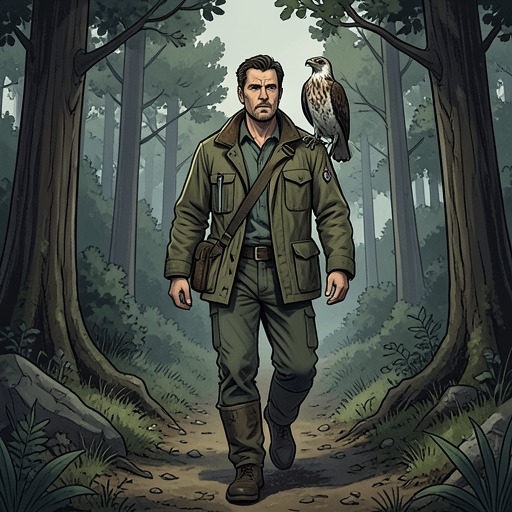
The book’s significance for Macdonald is personal as well as cultural. On the night she brought her goshawk home, she remembered a scene in which a falconer takes a goshawk back onto his fist. The comparison in the passage is to resuming the use of an accustomed wooden leg after it has been lost. For Macdonald, holding the hawk for the first time felt like that return: an unfamiliar, weighty experience rendered legible through a childhood book she had carried into adult life.
The remembered scene does not make the real hawk an Arthurian creature or turn falconry into fantasy. Instead, the allusion gives a precise imaginative shape to the bodily fact of holding the bird. The book’s language is present at the threshold between anticipation and practice, as the journey ends and the hawk enters Macdonald’s home.
Transformation and Its Limits
As a child, Macdonald repeatedly read the episode in which Merlyn transforms Wart into a merlin as part of his magical education. She remembers its physical particulars: toes becoming talons and primary feathers emerging from the ends of his fingers. Those details later provide a contrast for her own experience with the goshawk. She insists that she did not physically shrink, grow feathers, or acquire talons, yet understood herself as changing through grief, close watching, and estrangement from her previous sense of self.
The distinction matters: transformation is not presented as magic, nor as a claim that the bird and human become literally identical. The novel offers Macdonald a childhood model for imagining change, while the actual change comes through the sustained attention and emotional dislocation of living with a wild hawk. The allusion helps express an experience for which literal metamorphosis would be false but ordinary description would feel insufficient.
Literary and Personal Afterlife
Macdonald’s return to The Sword in the Stone links the book’s public reach to its private afterlife. Its Arthurian material helped shape familiar cultural images, while its falconry episode remained available as a precise comparison for a moment in her own life. Later, the childhood story of Wart’s transformation gave form to her sense that training and watching a hawk were changing her, even though no magical conversion had taken place.
The book therefore operates in the narrative not simply as a remembered childhood favourite, but as an interpretive resource. Its images connect cultural inheritance, the handling of a real goshawk, and Macdonald’s attempt to describe an inward transformation without confusing it with literal change.