
The Scheme Behind the Disputed Codicil
Hallowe'en PartyThis thread traces how a disputed inheritance, a deliberately convincing frame, and Michael Garfield’s ambition turn a concealed murder into a chain of killings.
increasing Bearing strength in each event
 decreasing
Bearing strength in each eventdecreasingA Sudden Inheritance
A Sudden Inheritance
The Benefactor’s Change
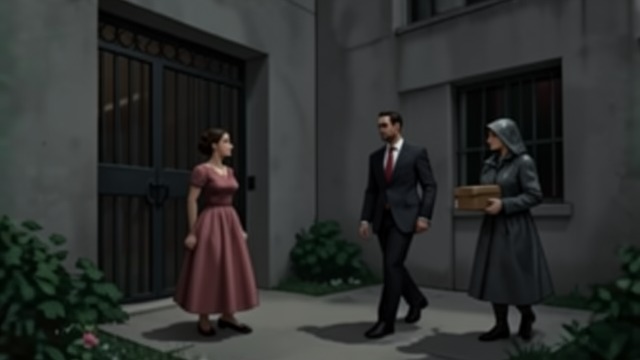
Mrs Llewellyn-Smythe, a wealthy widow with a serious heart condition, has long left the bulk of her estate to her relations. Shortly before her death, however, a codicil appears to transfer the residue to Olga Seminoff, the foreign attendant who has cared for her.
The apparent change provokes suspicion because it departs sharply from the widow’s established testamentary arrangements. The document offers Olga an immense inheritance but also exposes her to accusations of manipulation and fraud.
An Artist’s Ambition
Michael Garfield has designed the Quarry Garden for Mrs Llewellyn-Smythe and dreams of creating beauty on a much larger scale. The possibility of a wealthy patron’s money—or of a fortune he can redirect—makes the estate more than a family matter.
After Mrs Llewellyn-Smythe dies, the codicil’s unexpected beneficiary gives the people around her powerful reasons to conceal what actually happened. The inheritance dispute becomes the foundation for the crimes that follow.
The Deliberate Forgery
The Deliberate Forgery
A Document Made to Fail
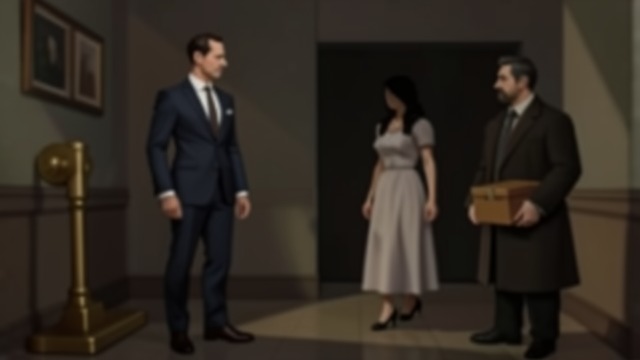
The codicil submitted for probate is not the same as the genuine document that Harriet Leaman says she witnessed. Its handwriting is judged a forgery, and the legal firm concludes that expert examination would defeat it in court.
The false document directs the fortune to Olga, making her appear to be the obvious beneficiary and suspect. Its conspicuous weakness is not a flaw in the scheme’s design: the document is meant to attract suspicion and provide a ready explanation for Olga’s sudden disappearance.
A Convenient Scapegoat
Poirot learns that Lesley Ferrier had previously been implicated in forgery and worked at the law firm handling the estate. His skill could explain how a false codicil was produced, while his criminal past would make his involvement seem plausible.
The forgery therefore serves two purposes. It undermines Olga’s claim to the fortune and helps conceal the real motive and authorship behind the document, allowing the conspirators to steer attention toward a missing foreign attendant.
Olga’s Disappearance
Olga’s Disappearance
A Convenient Exit
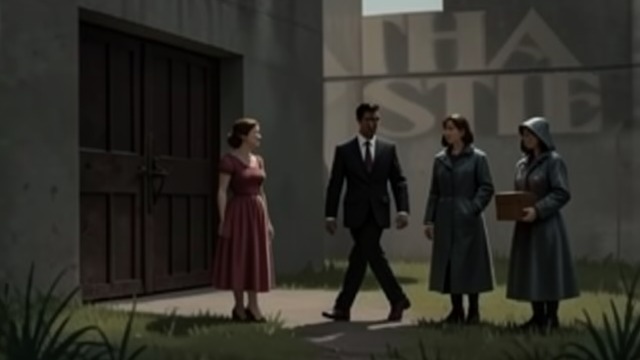
When lawyers challenge the codicil and legal proceedings loom, Olga Seminoff disappears from the neighbourhood. Local opinion treats her departure as evidence of guilt: she must have forged the document and fled before she could be prosecuted.
The disappearance protects the larger scheme by turning suspicion toward the person who seems most likely to benefit. Olga’s absence also leaves few people able to contradict the account of what happened in the household.
A Body Beneath the Rumour
Years later, Poirot recognizes that flight is only one explanation for Olga’s disappearance. Mrs Goodbody’s nursery rhyme about a cat in a well, together with Michael’s reluctance to show Miranda the old well, leads him to suspect that Olga never left the area.
The discovery of a body in the sealed well confirms that the missing attendant was murdered. The supposed fugitive was not merely a convenient suspect; she was a victim whose death helped the real beneficiaries hide both the killing and the true purpose of the forged codicil.
Ferrier’s Fatal Role
Ferrier’s Fatal Role
A Second Unsolved Murder
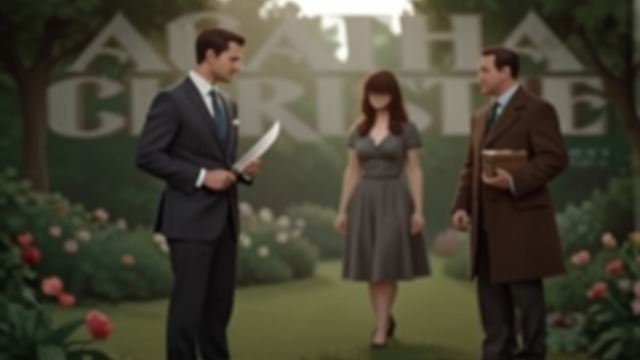
Lesley Ferrier, the solicitor’s clerk with a history of forgery, is stabbed near The Green Swan. The killing is attributed to jealousy or a criminal associate, and no prosecution establishes who attacked him.
His death fits too neatly with the codicil affair to remain a disconnected local tragedy. If Ferrier made the false document, his knowledge could threaten anyone who arranged or benefited from the deception.
Silence and Misdirection
Poirot learns that Michael had described a supposed relationship between Ferrier and Olga, but there is no independent confirmation of that account. The story supplies a plausible explanation for the forged document while also obscuring who commissioned it and why.
After Olga is found, the knife associated with Ferrier’s stabbing strengthens Poirot’s reconstruction. Ferrier was not simply a dead clerk with a suspicious past; his death appears to have removed another person who could expose the scheme.
A Garden Paid in Blood
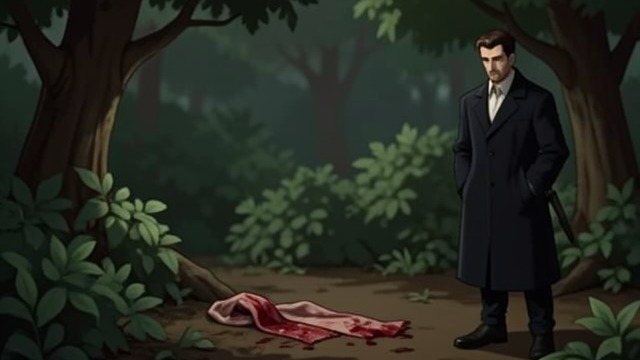
A Garden Paid in Blood
The Real Beneficiary
Poirot’s reconstruction reveals that Rowena Drake stood to inherit the estate once the fraudulent codicil was rejected and the earlier will restored. Michael Garfield, who wanted money to pursue his artistic ambitions, helped turn the inheritance dispute into a murderous conspiracy.
Olga’s genuine codicil complicated their plan, so the forged version was designed to make her look like a greedy impostor. The strategy depended on suspicion falling on Olga while the actual beneficiaries remained protected.
Beauty as an Excuse
Michael’s ambition was not merely to possess wealth. He imagined creating a garden on a Greek island, treating money as the means to realize a private vision of beauty on an immense scale.
That vision makes the crimes more disturbing, not less. Olga, Ferrier, Joyce, Leopold, and finally Miranda become obstacles or risks within a scheme that Michael and Rowena treat as expendable in service of inheritance and creation.
About two years before the Halloween party
After Mrs Llewellyn-Smythe’s death and before Olga disappears
Soon after the forged codicil is challenged
After Olga’s disappearance and before the Halloween party
At the investigation’s final reconstruction
