
The Village Network of Knowledge
Hallowe'en PartyThis thread follows the informal knowledge network in Woodleigh Common, where retired police experience, household observation, gossip, and children’s habits each contribute a different fragment to Poirot’s inquiry.
increasing Bearing strength in each event
 decreasing
Bearing strength in each eventdecreasingSpence’s Local Connections

Spence’s Local Connections
A retired officer’s reach
Poirot seeks out Superintendent Spence, now living with his sister Elspeth McKay. Although Spence has retired, his police reputation and continuing connections allow him to ask questions and obtain local information that Poirot could not easily gather alone.
Gossip as a starting map
Spence explains that the community is small but unsettled, with families moving in and out. His knowledge is not complete, yet it gives Poirot a practical map of residents, past cases, and social relationships from which to begin testing possibilities.
Elspeth’s Sharp Appraisals
Elspeth’s Sharp Appraisals
Character judgments
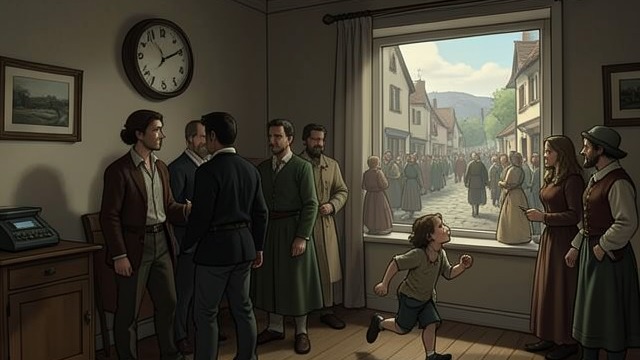
Elspeth McKay supplies brisk impressions of people and old events, including Joyce Reynolds’s reputation for elaborate lies. Her judgments are not formal evidence, but they help Poirot understand why the village dismissed Joyce’s claim so quickly.
Names with histories
She also recalls possible victims and the disappearance of Olga Seminoff, connecting present inquiries to stories that residents have treated as settled. Poirot uses her recollections cautiously, distinguishing a useful lead from a conclusion supported by proof.
The Children’s Loose Theories

The Children’s Loose Theories
Speculation among adolescents
Nicholas Ransom and Desmond Holland offer Poirot a scatter of theories, blaming possible sexual disturbance, psychological instability, or religious imagery. Their ideas reveal the period’s readiness to explain violence through sensational diagnoses, even when the speakers have little evidence.
Useful limits
The boys do not solve the murder, but their recollections help establish who was present and what duties they performed during the preparations. Their imperfect account is still valuable because it separates what they actually observed from the rumors and guesses circulating around them.
Goodbody’s Local Lore

Goodbody’s Local Lore
A keeper of stories
Mrs Goodbody speaks in folklore, proverbs, and sharp assessments of the Reynolds children. She dismisses Joyce’s boast as unreliable but also shares a local rhyme about a cat in a well, blending everyday observation with the village’s imaginative lore.
A clue inside a saying
Poirot does not accept the rhyme literally at first, yet it later helps him consider where the missing foreign girl’s body might be hidden. Goodbody’s contribution shows how an apparently casual phrase can carry practical significance when it meets the right question.
Information Becomes Protection
Information Becomes Protection
A network reacts
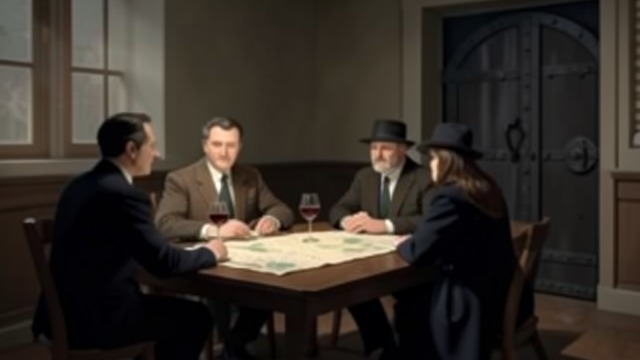
As evidence accumulates, the inquiry moves beyond collecting village impressions. Spence, local police, and Poirot compare information about the old crimes, the codicil, and the people present at the party, while the discovery in the well raises the danger to those who may know too much.
The warning reaches London
Poirot asks Ariadne Oliver to take Judith Butler and Miranda to London, using an innocent explanation to conceal the urgency. The move demonstrates that information gathered through the village network has become a means of protection, not merely a way to reconstruct what happened.
When Poirot first visits Pine Crest
During Poirot’s evening discussion at Pine Crest
After Poirot interviews Nicholas Ransom and Desmond Holland
During Poirot’s conversation with Mrs Goodbody
After the discovery in the well and Poirot’s warning to Ariadne Oliver
