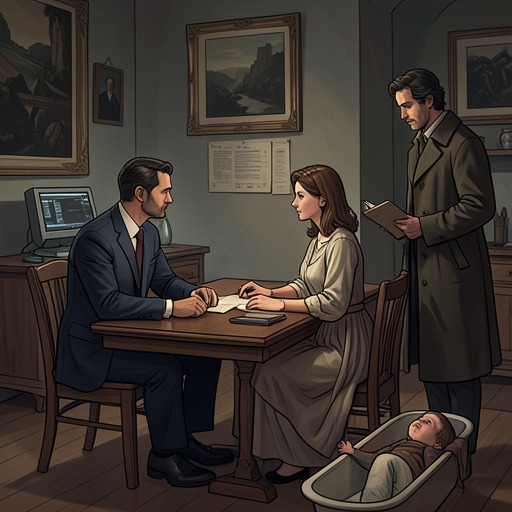
Janet White
Hallowe'en PartyJanet White is a schoolteacher found strangled on a path between her school and home. Her unsolved murder becomes central to Hercule Poirot’s attempt to identify the killing that Joyce Reynolds claimed to have witnessed: the circumstances could fit a child’s partial, initially misunderstood observation, but the evidence presented does not establish that Joyce saw Janet die.
Identity and Background
Janet was about twenty-four when she was killed and taught at the school associated with Miss Emlyn. She shared a flat with another teacher, Nora Ambrose. Miss Emlyn remembered her as emotional and said Janet may have arranged to meet a young man on the night she went out. These details characterize Janet through other people’s recollections; they do not settle where she was going or whom she met.
Nora reported that Janet had sometimes been nervous about a man with whom she had ended a relationship roughly a year earlier. He had sent threatening letters, but Nora did not know his name or where he lived. The threats give the case a possible personal context, yet the man was never identified as Janet’s killer. The distinction matters: an alarming history supplied investigators with a lead, not a proven answer.
The Murder and Its Investigation
Janet was found strangled on a footpath that served as a shortcut from the schoolhouse to her home. Miss Emlyn understood that Janet had been walking alone, though she allowed that Janet might have made an arrangement to meet someone. The route connects Janet’s ordinary journey home with the unknown encounter that ended in her death; the available account leaves the meeting, if there was one, unexplained.
The killer was not discovered. Police questioned various young men and sought their assistance with inquiries, but could not gather sufficient evidence to bring a case against anyone. Miss Emlyn regarded the outcome as unsatisfactory, not only from the police’s perspective but from her own. Her response underscores that Janet’s death remained an open wound within the school community, rather than a crime whose apparent solution had brought closure.
Poirot’s Hypothesis About Joyce
When Hercule Poirot reviews possible earlier murders, he marks Janet’s case as a stronger candidate than Joyce’s own murder. His reasoning is about the conditions of witnessing: Joyce might have recognized Janet, a teacher she knew and perhaps had been taught by, without knowing the man who attacked her. Poirot imagines that a child could have seen a struggle or heard a quarrel and, at the time, taken it for something less serious.
The interval is important to his theory. Poirot places Janet’s murder two and a half years earlier and considers that compatible with Joyce having failed to understand the scene when she was younger, then later arriving at a more mature interpretation. This is a proposed explanation of how a witness might misread violence, not evidence that Joyce actually witnessed Janet’s strangling. When Miss Emlyn is asked whether Joyce’s claim could refer to Janet, she confirms the manner of death—Janet was strangled while walking home from school—but the question of whether she was alone remains open in the exchange.
Narrative Significance and Limits
Janet’s case gives Joyce’s boast a plausible, concrete possibility: a familiar victim, an unknown attacker, and an encounter that a child might not have recognized as murder. At the same time, the narrative keeps possibility separate from proof. Nora’s account points toward a threatening former partner, Miss Emlyn recalls a possible meeting, and Poirot proposes a childhood misinterpretation; none identifies the killer or confirms Joyce as a witness.
That uncertainty is also what makes Janet’s murder consequential in the investigation. Her death is not merely a past crime recounted for background: Poirot tests it against the particulars of Joyce’s claim, while the unresolved evidence prevents a neat identification. Janet therefore stands at the intersection of two unanswered questions—who killed her, and whether Joyce saw that killing at all.