Joyce Reynolds Drowned in the Apple-Bobbing Tub
Hallowe'en PartyJoyce Reynolds Drowned in the Apple-Bobbing Tub is the murder at the center of the Hallowe’en party mystery: Rowena Drake deliberately held Joyce beneath the water in a heavy galvanized iron bucket, then created a separate wet-clothes incident to explain her own dampness. The killing was driven by a mistaken belief about what Joyce knew. Its solution turns water, first the instrument of death and then the apparent evidence of an accident, into the clue that exposes the murderer.
Background and mistaken threat
The immediate context was the party’s Snapdragon, a concluding game in which raisins were burned in a dish. Afterward, as the guests were going home, Joyce could not be found. Her mother supposed she might have been tired or unwell and gone off by herself, and was annoyed that Joyce had not left word. The assumption briefly made the disappearance seem like a familiar domestic inconvenience; the search instead led to the library, where the party game of bobbing for apples had become the setting of a killing.
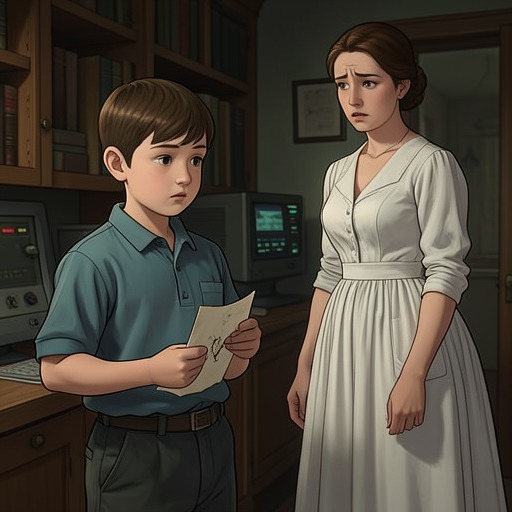
The danger Joyce posed was not what Rowena Drake believed it to be. Earlier, Joyce had claimed to have seen a murder, and Hercule Poirot reasoned that the killer must have been among the party guests and must also have heard what she said that day. The later explanation links the boast to Miranda Butler: Joyce and Miranda were close friends, and Miranda had told her that she had once seen a murder. Joyce repeated the story, probably to impress Ariadne Oliver, the well-known crime writer. Joyce had not witnessed the murder herself, but Rowena suspected that someone had been present in Quarry Wood when she and Michael Garfield killed Olga Seminoff. The threat was therefore real in Rowena’s mind even though her assumption about Joyce was wrong.
The killing in the library
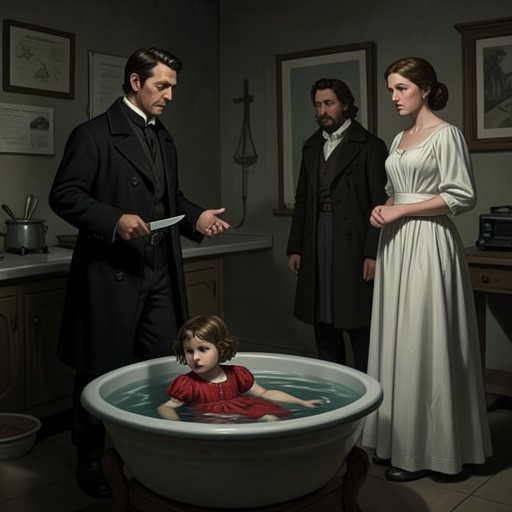
When the other guests crowded into the dining room for the Snapdragon, Rowena took Joyce with her to the library. Joyce had no reason to suspect her: the only murder story she had heard from Miranda was that Miranda had once seen one. In the library, Joyce knelt by the apple-bobbing bucket, and Rowena shoved her head beneath the water and held it there until she drowned.
The bucket’s material and weight matter to the reconstruction. It was a large galvanized iron bucket, nearly full of water; Ariadne Oliver recalled that the party organizers had not used a plastic one and wondered whether a lighter container might have tipped over. That detail is not merely a grim feature of the scene. Hercule Poirot later identifies the full bucket as the means by which the murderer would necessarily have become wet. A vigorous child struggling under water would splash, making the killer’s dampness a consequence of the method rather than an incidental detail.
Hercule Poirot describes the murder as deliberate and urgent. Joyce was not accidentally overcome while playing: someone held her head down until death, with enough strength to keep her submerged. His reconstruction makes the speed of the response part of the event’s meaning. Someone had been threatened by Joyce’s statement and acted as soon as it was humanly possible, rather than waiting to see whether the boast would have consequences.
The staged explanation for the water
Rowena needed an innocent explanation for being wet. She arranged one on the landing with an enormous vase filled with water. When Elizabeth Whittaker came out of the hot Snapdragon room, Rowena pretended to start nervously and let the vase fall, taking care that the water flooded her as it crashed down to the hall below. Rowena and Elizabeth then picked up the broken pieces and flowers while Rowena complained about losing her beautiful vase.
The apparent accident also planted a misleading impression. Rowena managed to make Elizabeth believe that she had seen someone, or something, come out of the room where a murder had been committed. Elizabeth accepted the incident at face value. When she later mentioned it to Miss Emlyn, however, Miss Emlyn recognized the significance of the detail and urged Elizabeth to tell Ariadne Oliver. Thus the broken vase did two jobs in Rowena’s plan: it supplied a public reason for her wet clothes and directed attention toward a supposed sighting rather than toward the water that the actual killing required.
Recognition and consequences
Hercule Poirot’s decisive clue was water. His reasoning linked the unavoidable splashing in the library to Rowena’s conspicuous wetness and then tested the explanation offered for it. The vase had been filled with water and broken in a way that ensured it soaked Rowena; Elizabeth’s presence gave the episode a witness. What had seemed like an unfortunate accident consequently became an alibi constructed to account for a physical consequence of murder.
The solution also separates what Joyce said from what she knew. Joyce’s claim led Rowena to act as though she might be exposed, but Joyce had never seen a murder at all. Miranda Butler was the one who had told her about having witnessed one, and Miranda was not at the party. Once Hercule Poirot accepted the guests’ general judgment that Joyce was a liar, Miranda’s role as the source of the story clarified how Joyce could repeat it without being an eyewitness. The murder therefore depends on a double misreading: Rowena mistakes a borrowed story for proof that Joyce can identify her, while Joyce’s boast makes a story told by Miranda sound like her own experience.
Rowena’s constructed accident does not undo the murder’s central contradiction. She tries to conceal the water forced into the killing by producing more water in a visible, apparently harmless mishap. The contrast is the clue: the bucket’s splashing could not be avoided, but the vase’s fall was arranged. In exposing that difference, Hercule Poirot connects Joyce’s disappearance after the party game to the earlier crime in Quarry Wood and shows how fear of a witness, even a mistaken fear, converted a child’s false claim into a fatal event.