Judith Butler
Hallowe'en PartyJudith Butler is Ariadne Oliver’s friend and host at Woodleigh Common, and the person whose household brings Oliver into contact with the children’s Hallowe’en party. A widow and mother, Judith is presented through her ties to Oliver and her daughter Miranda, as well as through a friendship that began with a rescue at sea. Her role is modest in scale but important in structure: she links the party’s preparations to the later investigation and gives the story a settled domestic setting in which relationships can be recalled and examined.
Identity and Household
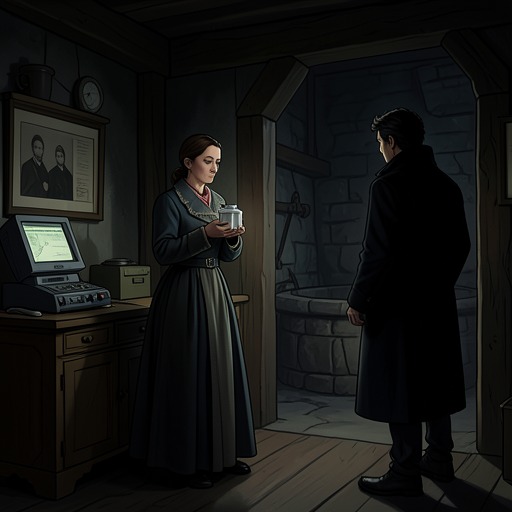
Judith lives at Woodleigh Common, not far from the church, and is known locally as a widow whose late husband was an airline pilot. She has a daughter, Miranda, who is described as about twelve or thirteen. These details place Judith within an ordinary residential community: Woodleigh Common has a few older houses and newer building, with residents able to commute to Medchester or London. Judith’s household is therefore part of the contemporary suburban setting rather than an isolated or explicitly mysterious one.
When Oliver recalls how she came to be staying there, Judith is described as the friend she met on a Hellenic cruise earlier that year. Judith invited Oliver to visit and mentioned that friends were preparing a Hallowe’en party for children, asking whether the writer might have ideas. This invitation supplies the practical route by which Oliver enters the party’s world. Judith is not identified as the party’s chief organizer; instead, she is the connection between her guest and the people arranging it.
Friendship with Ariadne Oliver
The friendship began in Greece, during the return from one of the islands. The sea had become rough, and Oliver fell overboard after hesitating at the moment the sailors called for her to jump. She described how the vessel’s movement made the apparent right moment seem wrong: by the time she acted, the boat had moved away. Judith helped fish her out, and Oliver understood the rescue as the event that formed a bond between them. Their closeness thus rests on a concrete act of assistance rather than simply on shared company during the cruise.
Judith also says that Oliver’s Christian name seemed appropriate to her. The comment adds a personal, affectionate note to the account of the rescue: Judith remembers not only what happened but a quality of Oliver’s identity that appealed to her. Their friendship is shown as mutual and familiar. Oliver speaks freely about her own confusion in the water, while Judith confirms that the experience brought them together.
The Hallowe’en Party and Miranda
At the beginning of the story, Oliver has gone with Judith to help prepare for the children’s party. The preparations are busy, with chairs, small tables, vases and yellow pumpkins being moved around, and the invited children are between ten and seventeen. The party is being organized by Judith’s friends, with Rowena Drake praised as an effective organizer. Judith’s role is established by her presence alongside Oliver, not by a claim that she directs the event herself.
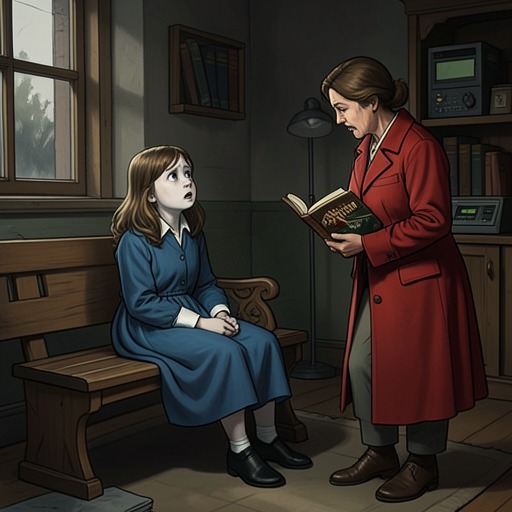
Miranda is disappointed to miss the party because she has a temperature. Judith recognizes that disappointment and encourages Oliver, who is reluctant to attend, to rest before going. Her reassurance is practical and affectionate: she expects the party to go well and believes Oliver will enjoy it once she arrives. The event does run smoothly, confirming Judith’s confidence in its preparations, though the narration credits the party’s organization rather than assigning its success specifically to her. Miranda’s absence also means that Judith’s daughter is connected to the occasion without being among the children attending it.
Appearance and Domestic Welcome
When Poirot later sees Judith at closer quarters, he has already encountered her briefly in a head-scarf and mackintosh. He now describes her as about thirty-five, delicately made, with a rather long face, faintly hollow cheeks, long blonde hair, and large sea-green eyes with long eyelashes. The description compares Miranda to a dryad or wood-nymph and Judith to a water spirit, even suggesting a Rhine maiden. Those images distinguish mother and daughter while echoing the earlier sea episode that underlies Judith’s friendship with Oliver.
During the visit, Judith thanks Poirot for coming because Oliver asked him to. The exchange makes clear that she knows of the loyalty between the two friends and welcomes his presence on Oliver’s behalf. The domestic scene is carefully composed: Judith sets down a Georgian silver teapot, boils water in an electric kettle and serves tea, while Miranda hands around hot scones and cucumber sandwiches with serious elegance. These small actions present the household as orderly and hospitable without turning Judith into a formal hostess detached from her family.
Narrative Role
Judith’s importance comes chiefly through connection. She brings Oliver to Woodleigh Common, gives the party an entry point in the story, and supplies the history that explains why Oliver trusts and visits her. Her rescue of Oliver in Greece gives their friendship a memorable origin, while the later tea scene lets Poirot meet the friend who had previously been known to him only at a glance. Judith is not shown pursuing the investigation; instead, her home and relationships make the social world around the mystery legible.
The characterization remains selective. The narrative establishes Judith’s widowhood, her daughter, her appearance, her hospitality, and her bond with Oliver, but does not give her an independent investigative objective or an extended personal history. That restraint suits her function: she is both a distinct presence, rendered through the water-spirit comparison and composed domestic gestures, and a bridge between Oliver’s private circle and the wider events at Woodleigh Common.