
Mercy Against Disclosure
Hallowe'en PartyThis flow follows the changing conflict between Poirot’s demand for truthful disclosure and the community’s impulse to protect, excuse, or misread people implicated by the crimes.
increasing Bearing strength in each event
 decreasing
Bearing strength in each eventdecreasingThe Community’s Easy Answer
The Community’s Easy Answer
An Intruder or a Disturbed Mind
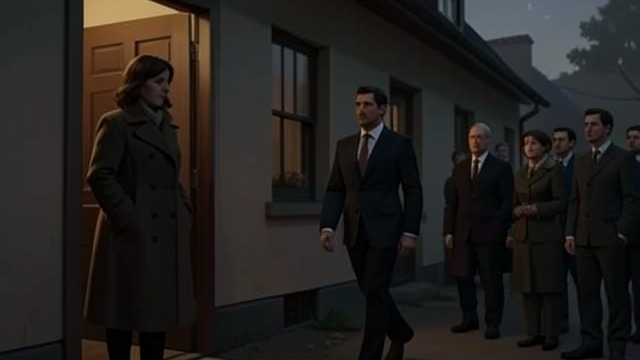
In the immediate aftermath, Mrs Reynolds imagines a male stranger entering the house, while Rowena Drake suggests an outsider of disturbed mentality. Dr Ferguson and other residents likewise reach for explanations that make the killing an aberration rather than the result of local relationships.
Suspicion Without Knowledge
These accounts express genuine fear but do not explain how Joyce was selected or why the killer acted during a crowded party. Poirot refuses to accept an easy category in place of motive. The conflict begins between communal reassurance and the possibility that the danger belongs to someone already trusted.
Character as Contested Evidence

Character as Contested Evidence
A Reputation That Discredits
Joyce’s mother, siblings, teachers, and neighbors agree that she often lied and sought attention. Their testimony makes her claim of witnessing murder seem unlikely, but it also reveals how thoroughly her reputation has trained others to dismiss her before examining what she might have seen.
Poirot’s Reversal
Poirot treats the victim’s character as relevant without accepting that it settles the facts. A habitual liar might still repeat a true story learned from someone else; her claim could also provoke a killer even if it was false as a personal boast. The investigation must distinguish Joyce’s credibility from the danger her words created.
Whittaker Risks Speaking
Whittaker Risks Speaking
A Small Observation
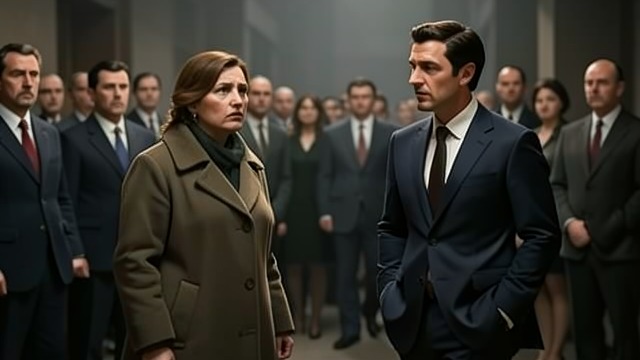
Elizabeth Whittaker volunteers that Rowena Drake seemed startled before the vase fell, although the memory is ambiguous and Whittaker did not see anyone leave the library. Her testimony challenges the host’s polished account without yet naming a suspect.
The Cost of Interpretation
Whittaker knows that describing a moment as suspicious may unfairly implicate someone. Poirot’s questions make clear why even an uncertain observation matters: a person may have been hiding near the room where Joyce was killed. The conflict shifts from whether anyone noticed anything to whether a witness will trust her own recollection enough to report it.
Rowena’s Protective Silence
Rowena’s Protective Silence
The Denial
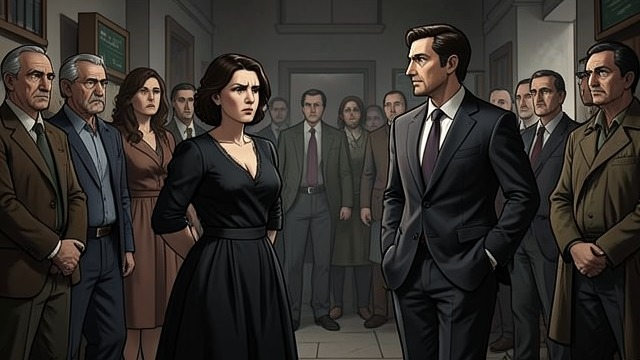
When Poirot asks whether she saw someone at the library, Rowena firmly denies it. Poirot senses that her certainty is defensive, but cannot yet establish whether she is protecting a child, concealing her own part, or simply resisting a painful inference.
A Moral Choice Recast
Rowena’s broader beliefs favor remedial treatment and allowances for young offenders over punishment. That outlook offers her a language for withholding evidence if she thinks an adolescent is responsible but not fully culpable. Her silence becomes an active moral choice, and the later death of Leopold makes its consequences impossible for her to ignore.
Confession After the Second Death
Confession After the Second Death
A Witness Reconsiders
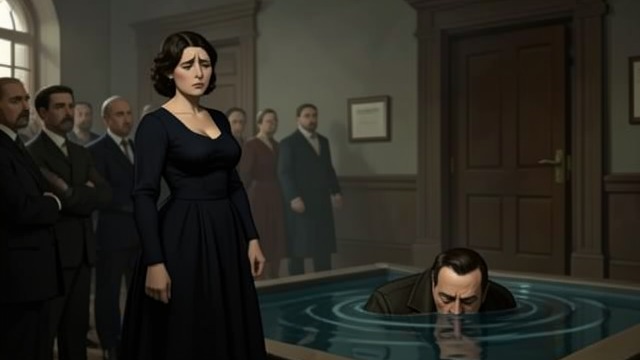
Leopold’s death breaks Rowena’s resolve. She admits that she saw him emerge briefly from the library and explains that she had wrongly concluded he killed Joyce, then concealed what she had seen because she thought he could be treated rather than punished.
Compassion and Consequence
Poirot recognizes that Rowena intended to protect a child, but her silence left the murderer free to act again. The confession redirects suspicion: Leopold may have discovered Joyce’s body and become a witness rather than a killer. What Rowena called mercy has helped create the conditions in which another child dies.
The day after Joyce’s murder
During Poirot’s first interviews with Joyce’s family and neighbors
Several days after the party, during Poirot’s school inquiries
After Poirot confronts Rowena Drake about the vase
After Leopold’s body is discovered
