
Beauty and Creation
Hallowe'en PartyMichael Garfield’s devotion to artistic creation grows from genuine skill into a destructive creed that makes people seem expendable beside the beauty he wants to build.
increasing Bearing strength in each event
 decreasing
Bearing strength in each eventdecreasingThe Quarry Transformed
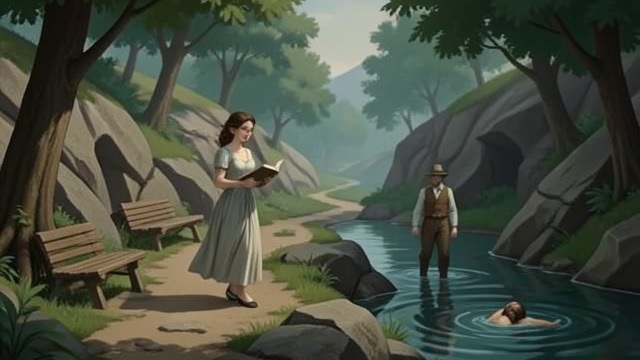
A Garden from Stone
Artistic Achievement
Michael Garfield turns an abandoned quarry into the Quarry Garden for Mrs Llewellyn-Smythe. Paths, plantings, seasons, and carefully placed seats make the former industrial hollow feel cultivated yet wild.
A Complicated Authorship
Hercule Poirot recognizes that the design bears more than a client’s instructions. Garfield has translated her wishes while also imposing his own vision, persuading her that the finished garden expresses what she had imagined.
The garden establishes the attraction and danger of creation in the novel: artistry can transform rough material, but the boundary between service and control is already uncertain.
The Artist’s Restlessness

Beauty Without Satisfaction
The Designer’s Standard
Poirot meets Michael Garfield among the work he created and learns that Garfield is not fully satisfied with ordinary commissions. Clients want useful, conventional gardens, while he wants room for large-scale imagination and experiments that can reshape a landscape.
A New Ambition
Garfield speaks of leaving Woodleigh Common and imagines a garden on a Greek hillside. His ambition is not merely to earn a living; he wants a setting in which he can act almost like a creator, turning barren land into a personal vision of paradise.
The conversation makes beauty a motive with force. Garfield’s artistic ideal begins to compete with ordinary restraints, foreshadowing the moment when creation will be treated as worth any cost.
The Patron’s Money

Art and Inheritance
A Financial Obstacle
The fortune of Mrs Llewellyn-Smythe offers the means for Garfield’s imagined island garden, but her established estate plans favor her relatives. A genuine codicil in favor of Olga Seminoff threatens to redirect that wealth away from the people who want to control it.
Vision Becomes Excuse
Garfield’s later crimes show how his artistic ambition has hardened into a rationale. Money and other people’s lives become materials to be arranged around the creation he wants, while the language of beauty obscures the greed beneath it.
The novel does not deny the beauty of his work. Instead, it asks what happens when aesthetic achievement is treated as a moral exemption, and when a creator values a future landscape more than living people.
The Sacrificial Design
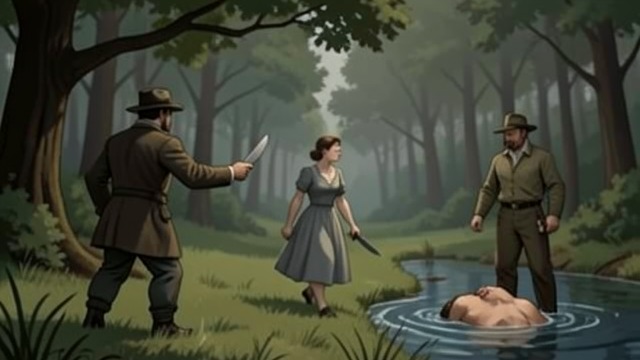
Beauty’s Cruel Ritual
A Staged Meaning
Michael Garfield takes Miranda Butler to Kilterbury Ring and frames death as ritual sacrifice: a life, he suggests, might be surrendered so that beauty can come into being. His language turns a planned killing into something that sounds elevated and necessary.
The Victim Chosen
Miranda, burdened by guilt over telling Joyce the story that led to danger, is vulnerable to the idea that she ought to be sacrificed. Garfield exploits that guilt while preparing a ritualized scene with a golden cup and the sunlit stones.
The scene exposes the moral distortion at the heart of Garfield’s creed. He aestheticizes murder until the victim’s life appears to be an artistic offering rather than a person’s right to live.
The Drawing Named Iphigenia
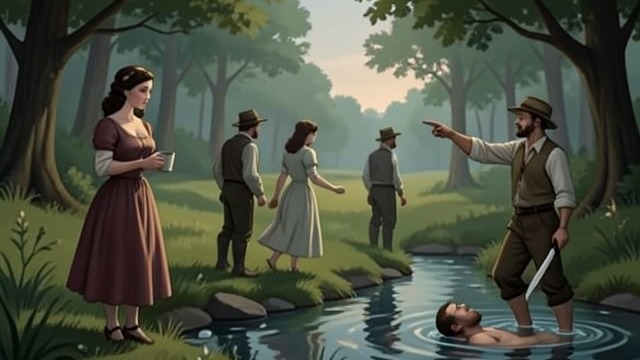
The Artist’s Final Image
A Portrait’s Inscription
After the rescue, Hercule Poirot shows Judith Butler a delicate drawing Michael Garfield made of Miranda beside the stream. Across it is the name Iphigenia, recalling the mythic daughter sacrificed to secure a journey toward a larger ambition.
Creation Judged
The drawing reveals that Garfield could see Miranda’s beauty and preserve it in art, yet still planned to kill her. His ability to create an image did not produce compassion for the living subject; artistic attention coexisted with a willingness to destroy her.
Garfield’s death prevents the island garden from being built, but the ending rejects the idea that a beautiful work could justify its human price. Miranda’s survival becomes the counterclaim to his imagined paradise.
Several years before the Halloween party
During Poirot’s first visit to the Quarry Garden
After the codicil dispute becomes public
On Kilterbury Ring near the climax
After Miranda is rescued
