Apple Trees
Hallowe'en PartyApple Trees is the house at the centre of the Hallowe'en party and the murder of Joyce Reynolds. Its dining-room and library become parts of the crime’s sequence, while its landing and hall provide the stage for Rowena Drake’s attempt to disguise the evidence. The house is both a party venue and a carefully used setting for murder and deception.
Setting and preparations
The party is held at a red-brick Georgian-style house enclosed by a neat beech hedge. A wrought-iron gate bears a painted board labelled Apple Trees; beyond it, a path leads to the front door. The tidy approach and pleasant garden establish a domestic, ordered setting for an evening that will become associated with a child’s death. The name itself joins the novel’s recurring apple imagery to the house where the crime occurs.
Preparations begin amid energetic activity. Women carry chairs, small tables, flower vases, and large yellow pumpkins, arranging them around the house for invited guests aged between ten and seventeen. The party is intended as a Hallowe'en gathering, with games and decorations that bring together pumpkins, witches, broomsticks, and older folklore. The contrast between these festivities and the murder gives the house’s ordinary rooms a second, darker significance.
Rooms and the party
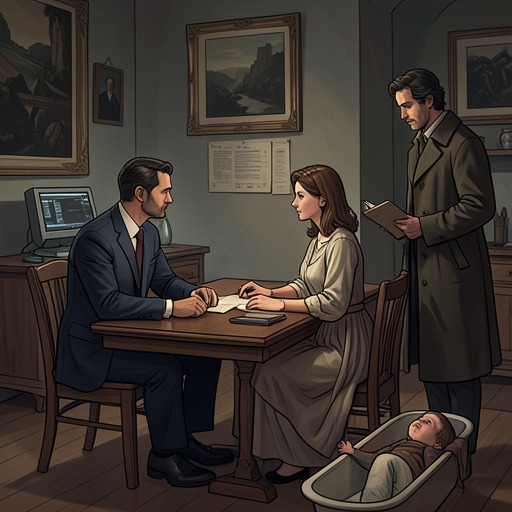
The dining-room is the gathering place for Snapdragon. During the game, it is dark apart from the blazing dish, and the guests’ attention is concentrated there. The library is a separate, smaller room furnished with armchairs, sporting prints, and bookshelves. A bucket stands there on a plastic sheet. Though the rooms are close enough for the party to provide cover for movement between them, their different uses divide the guests’ attention from the crime.
Rowena Drake tells Hercule Poirot that the police believe the murder took place while Snapdragon was underway in the dining-room. She leads him through the hall, first indicating the dining-room and then opening the library door. Ariadne Oliver remains outside the library, unable to enter because the room makes her think too strongly of what happened. Her reaction marks the difference between the library as a room in the house and as the place made unbearable by the murder.
The murder and its concealment
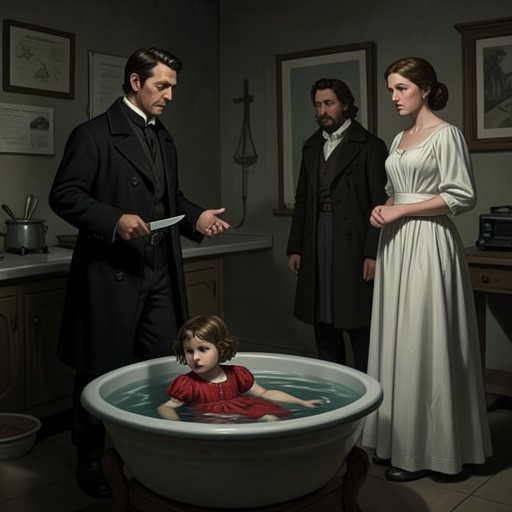
During the party, Rowena takes Joyce Reynolds from the dining-room to the library. Since the hostess has invited her, Joyce has no reason to suspect danger. Rowena holds the vigorous child’s head in a full bucket of water; the struggle and splashing necessarily leave the murderer wet. The bucket and its position in the library are thus not incidental furnishings but the physical means and immediate trace of the killing.
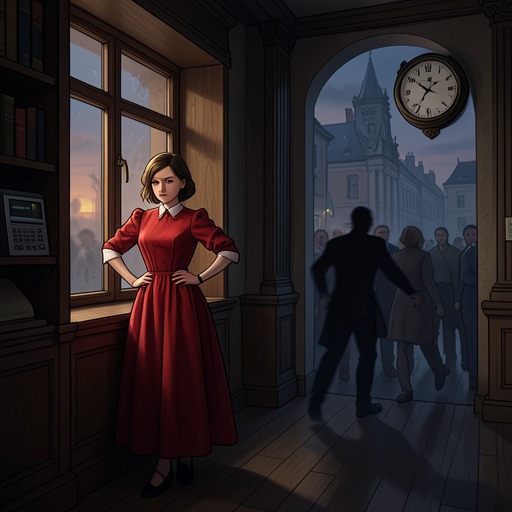
Rowena then creates an innocent explanation for her wet clothes. She waits on the landing with an enormous vase filled with water. When Elizabeth Whittaker comes out of the hot Snapdragon room, Rowena pretends to start nervously and lets the vase fall, taking care that its water soaks her as it crashes down into the hall. She and Whittaker gather the broken pieces and flowers, while Rowena complains about the loss of her beautiful vase. By staging the accident in the house’s shared circulation space, Rowena turns the evidence of the murder into an apparently ordinary mishap witnessed by another guest.
Whittaker initially accepts Rowena’s account of having seen someone come out of the murder room. When she later repeats it to Miss Emlyn, however, Miss Emlyn recognizes the important detail: the accident provides a witness to Rowena being wet. She urges Whittaker to tell Poirot. The house’s sequence of rooms and thresholds therefore helps expose the deception: the dining-room explains where attention was occupied, the library contains the bucket, and the landing and hall supply Rowena’s invented alibi.
Later visits and significance
Apple Trees remains a place of inquiry after the party. Hercule Poirot is admitted and shown into the drawing-room while Rowena is away briefly. From its window, he surveys a neat garden kept under close control: autumn michaelmas daisies are tied to sticks, chrysanthemums still survive, and a few roses persist as winter approaches. The garden’s disciplined appearance complements the house’s ordered exterior, but neither order prevents violence within.
When Rowena returns, she says that she wishes she had never held the party there, although no other house seemed suitable. Her regret reflects the transformation of Apple Trees from a convenient venue into the setting of a murder investigation. Poirot’s later reconstruction makes that transformation concrete: the house’s domestic arrangement, the objects brought out for the party, and the movement between its rooms all become part of the explanation of how Joyce was killed and how her murderer tried to conceal it.