Michael Garfield
Hallowe'en PartyMichael Garfield is a professionally qualified young landscape gardener whose creation at Quarry House turns a disused quarry into a place of striking beauty. His brief appearance before Hercule Poirot joins the cultivated garden to the crime-haunted ground beneath it; his work, his patron’s bequest, and his unusual beauty are all established, while his thoughts and motives remain largely outside the account.
Identity and Commission
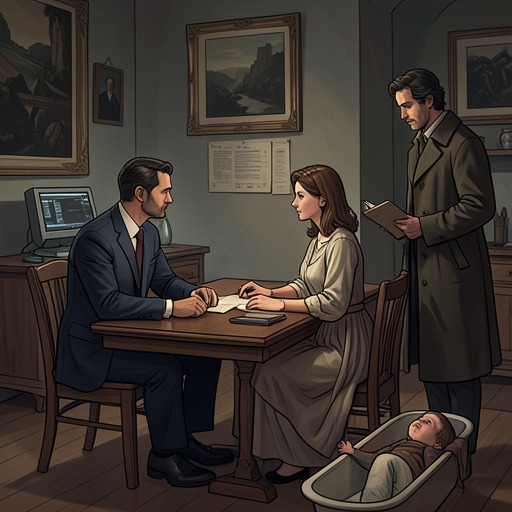
Garfield is introduced as the young professional landscape gardener engaged by Mrs Llewellyn-Smythe. After her health failed, she returned from living abroad to be near her nephew and niece, Mr and Mrs Drake, and bought Quarry House. Its disused quarry attracted her because she saw possibilities in it. She spent thousands of pounds having the hollow made into a sunk garden, and employed a qualified young man for the work. Poirot later identifies that man as Garfield.
The commission places Garfield in a relationship defined, at least in the evidence available, by professional skill and patronage. Poirot imagines Mrs Llewellyn-Smythe looking for a well-paid worker to carry out her wishes; he sees the finished garden as proof that Garfield did not fail her. The scale of the investment and the resulting landscape distinguish the project from routine groundskeeping: an abandoned quarry becomes the focus of a carefully designed garden.
The Garden and Its Maker
Poirot’s view of the garden supplies the fullest account of Garfield’s achievement. From above, the sunken space appears almost magical: flowers and bushes surround artificial water in a fountain, while a path curves around the hollow. Its beauty is also unexpected. The hollow might once have been a quarry, but its symmetry makes that origin difficult for Poirot to imagine at first. The designed landscape has altered the appearance of the ground without erasing its history.
The garden is arranged to offer interest in more than one season. Sitting on a deliberately placed bench, Poirot imagines its spring appearance among young beech trees and birches, thorn bushes, white roses, and junipers. In autumn, the acers provide gold and red, with a path leading onward through the planting. He notices flowering gorse or Spanish broom, though he admits that he is not good at recognizing shrubs and flowers beyond roses and tulips. These particulars make the garden legible as a designed sequence of views and seasonal effects, rather than simply a collection of plants.
Its beauty has a darker setting. Poirot recalls that a murder had taken place in the original quarry years earlier; blood stained the rock before the place was covered over and its history forgotten. Garfield planned and created the garden over that concealed past. The contrast does not establish that he knew about, or was involved in, the earlier crime. Instead, the garden’s finished surface gives the investigation a vivid spatial paradox: an attractive, composed place occupies ground associated with violence.
Meeting Poirot
Poirot encounters Garfield across the hollow, with golden-red leaves behind him. He is struck not merely by the young man’s attractiveness but by what he regards as unusual beauty, a quality he considers uncommon in contemporary descriptions of men. The scene places the maker beside his creation and gives both an aesthetic charge, but it supplies no account of Garfield’s private response to being observed in this way.
Garfield introduces himself by name. Poirot gestures toward the garden and asks whether he made it; he then congratulates him and suggests that he must be satisfied with what he has done. Garfield’s answer—that satisfaction is perhaps never complete—offers a brief counterpoint to Poirot’s admiration. It leaves the extent of Garfield’s own contentment open rather than turning professional accomplishment into a simple declaration of pride.
Garfield also says that lovers do not come to the garden because it is supposed to be unlucky. The explanation is presented as a local belief, not as a fact about the garden’s effects or as Garfield’s own reason for avoiding it. In the context of Poirot’s investigation, the remark adds an uneasy note to a place whose beauty already stands over a concealed history of death.
House, Bequest, and Narrative Role
The connection between Garfield and Mrs Llewellyn-Smythe extended beyond the garden. When Poirot asks about the house, Garfield explains that Mrs Llewellyn-Smythe left it to him in her will. He also says that he sold it. The new owners obtained the large, awkward-to-run house cheaply, according to Garfield’s account. The garden commission thus belongs to a larger pattern of patronage, although the evidence does not explain why the bequest was made or what Garfield did with its proceeds.
Poirot comes to the garden because apples at a Hallowe'en party have brought him to the case. Garfield confirms that he was not at that party. This exchange establishes a boundary as well as a connection: the garden’s maker is relevant to the setting and its history, but the supplied scene does not place him among the partygoers. His narrative significance rests on the work that links a beautiful designed landscape to a buried crime, and on the contrast between the striking visual impression he makes and the limited knowledge of his inner life that the encounter provides.