Miss Emlyn
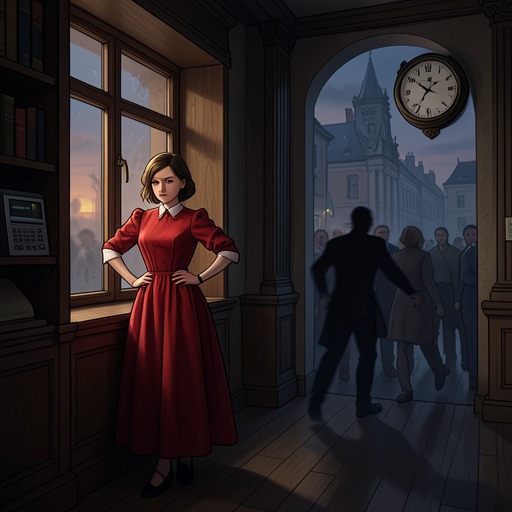
Hallowe'en PartyMiss Emlyn is the headmistress whose professional knowledge of children makes her, in Hercule Poirot’s eyes, a potentially important but guarded source in the inquiry into Joyce Reynolds’s murder. Her significance lies not in evidence she produces, but in the distinction the novel draws between what can be proved and what an experienced observer may privately understand.
A Teacher’s Psychological Insight
When Ariadne Oliver considers who might be able to identify the killer, she points to Miss Emlyn’s work with children. As a teacher, Miss Emlyn knows their potentialities better than Oliver does, and Oliver believes she may have formed ideas about who killed Joyce Reynolds. She describes the headmistress as a natural psychologist: someone who knows things through an understanding of people, rather than necessarily through evidence.
Oliver is careful about the limits of this insight. She does not say that Miss Emlyn has proof, and she doubts that the headmistress will disclose what she thinks. This distinction establishes Miss Emlyn as perceptive but not as a witness with a demonstrable case.
Suspected Knowledge and Silence
Hercule Poirot later tells Miss Emlyn that he knows who killed Joyce Reynolds and believes that she knows as well. She does not affirm his belief; she points out only that she has not said so. Poirot treats that refusal to confirm his conclusion as significant, while recognizing that her silence might indicate opinion rather than certainty.
The exchange leaves Miss Emlyn’s knowledge deliberately bounded. Poirot’s confidence does not become independent evidence against the killer, and Miss Emlyn does not turn her private understanding into a formal accusation. Her role therefore sharpens the inquiry’s tension between intuition and proof: she may recognize the truth without being willing, or able, to establish it.
Judgment and Trust
Before leaving to meet people in London and persuade them of his conclusions, Hercule Poirot asks Miss Emlyn for an opinion rather than evidence. He wants her assessment of Nicholas Ransom and Desmond Holland, and she considers both men thoroughly trustworthy. She allows that they can be foolish in the ephemeral matters of life, but judges them fundamentally sound.
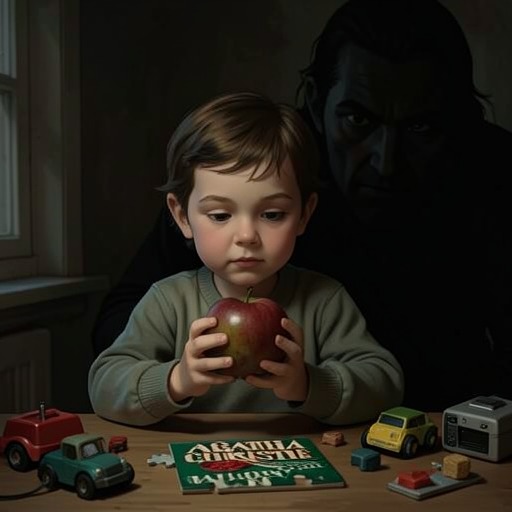
Her image for that soundness returns the conversation to the book’s recurring apple motif: she compares the two men to an apple without maggots. Hercule Poirot answers that one always comes back to apples. The moment links Miss Emlyn’s practical judgment of character with an image that continues to gather significance in the investigation, while keeping her contribution clearly distinct from proof of Joyce Reynolds’s murder.