Murder Case of Olga Seminoff
Hallowe'en PartyMurder Case of Olga Seminoff is the concealed killing at the heart of the later crimes in the novel: Rowena Drake and Michael Garfield kill Olga, an au pair who knows about a hidden codicil, and hide her body in a wishing well in Quarry Wood. The murder is not only an attempt to remove a witness. A forged document is arranged to make Olga appear responsible for forgery, so that her disappearance can be read as evidence of guilt rather than as a crime. That deception sets in motion a chain of suspicion, concealment, and further killing.
Background and Motive
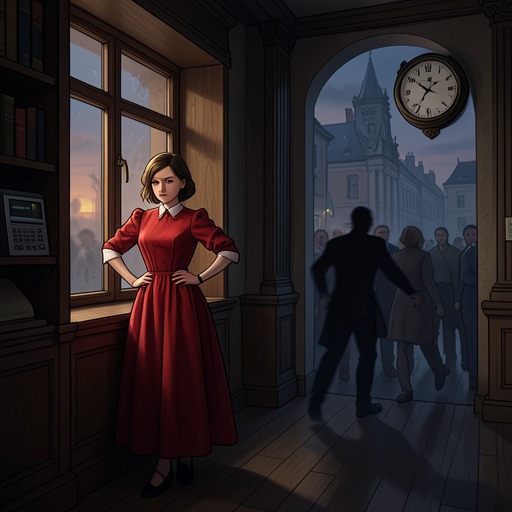
Olga works as an au pair for Mrs Llewellyn-Smythe and knows about the codicil. Mrs Llewellyn-Smythe has hidden the original document, leaving the conspirators to build their plan around a forgery and the likelihood that Olga will be blamed for it. The plan depends on suspicion, not a formal prosecution: the forged document appears to benefit Olga, and evidence that she copied her employer’s handwriting could make the accusation seem credible. If Olga disappears, people may conclude that she was a forger and may even suspect that she helped bring about her employer’s sudden death.
Lesley Ferrier is drawn into the document scheme. Poirot concludes that Lesley had no arrangement or love affair with Olga, despite Michael Garfield’s suggestion to that effect, and believes Michael paid him to produce a similar forged document. The forgery was intended to be so obviously false that it would immediately arouse suspicion. In that design, Lesley’s role helps create the appearance of a plot around Olga, while the hidden original and Olga’s knowledge make her a danger to the people arranging it.
Michael’s approach to Olga combines an appeal to her affections with calculated pressure. He is courting her, urging her to keep quiet and not tell her employer, while speaking of possible marriage in the future. Poirot’s reconstruction reveals the gulf between that promise and the conspirators’ actual purpose: Michael and Rowena have already marked Olga as the victim whose removal would allow them to obtain the money they wanted. The marriage prospect is therefore part of the means by which they seek her silence, not evidence of a genuine future they intend to share with her.
Killing and Concealment
The precise circumstances and method of Olga’s killing are not specified in Poirot’s account. He states that she died on a suitable occasion and identifies Rowena and Michael as the people who killed her. The distinction matters: the later discovery establishes that the death was murder, but the evidence does not describe how the killing itself was carried out. Nor does the knife found in the well establish the method of Olga’s murder; Poirot connects that weapon to the wounds suffered by Lesley Ferrier.
After the murder, Olga’s body is hidden in a wishing well in Quarry Wood, on an incline not far from Michael Garfield’s cottage. Her disappearance leaves the forged-codicil story available to explain her absence and places the real crime out of sight. The well consequently serves both as a physical hiding place and as the buried point at which the forgery plot and the later investigation meet.
Rowena and Michael fear that someone may have been in the wood and witnessed either the killing or the disposal of the body. They do not know who that person might be. When nothing immediately follows, the absence of consequences reassures them; they are lulled into security and proceed with their plans without haste. In retrospect, their uncertainty is crucial: the murder has left them exposed to a witness, even though they do not yet know the witness’s identity.
Discovery and Reconstruction
The body’s discovery first reaches the people around the investigation as news of a positive result. Elspeth asks whether the body found in the well is the missing au pair, and the answer is that it seems to be. She wonders whether the girl threw herself in; the response rules out suicide and confirms that she was knifed and murdered. This exchange turns the well from a possible clue into the location of a murder victim, though the full connection to the forged codicil and the later killings still has to be explained.
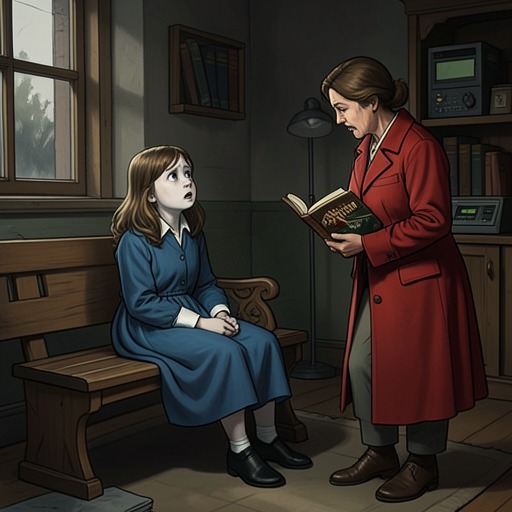
Poirot’s reconstruction of the hiding place grows from a sequence of clues rather than from knowledge of the original killing. He already knows that Olga has disappeared and that her body must be somewhere in the neighbourhood, but he does not initially know where. Miranda Butler’s interest in a wishing well, and Michael’s refusal to take her there, directs his attention to that location. Mrs Goodbody’s recitation of the nursery rhyme Ding dong dell, pussy’s in the well then supplies the decisive association; Poirot becomes sure that the missing girl’s body is in the well. He identifies the site in Quarry Wood, close to Michael’s cottage.
The discovery retrospectively clarifies why the conspirators’ fear of a witness mattered. Poirot reasons that Miranda may have seen either the murder itself or the later disposal of the body. He does not claim certainty about which of the two she witnessed, but the possibility explains the danger Rowena and Michael had tried to anticipate. Their plans had continued because they did not know who, if anyone, had seen them.
Consequences and Significance
Olga’s murder supplies the concealed history behind the sudden crisis at the Hallowe'en party. After years in which Rowena and Michael believe the danger has passed, Joyce Reynolds claims that she has witnessed a murder. Rowena takes the claim to identify the unknown person from Quarry Wood and acts quickly. Joyce’s statement is false: she has not witnessed a murder at all. But Rowena does not know that, and her response to the old crime creates another murder and a new trail for Poirot to follow.
The forged-codicil scheme also connects Olga’s fate to Lesley Ferrier’s. The intended accusation against Olga depends on the forged paper, while Poirot concludes that Lesley was paid by Michael to make the document. Lesley is later killed, and the knife found in the well corresponds closely to his wounds. These are distinct crimes and the knife evidence pertains to Lesley, but together they reveal how the original plan’s fabricated story and its surviving evidence continue to expose the people behind it.
Olga’s murder thus functions as both a motive and an unresolved act of concealment. The conspirators intend her disappearance to reinforce a false account of forgery; instead, the body in the well, the rhyme, Miranda’s interest, and the fear of an unknown witness allow Poirot to reconstruct what happened. The crime’s importance lies not in a fully described method of killing, which the account withholds, but in the chain of consequences created by the attempt to bury the victim and the truth with her.