The au pair girl’s disappearance
Hallowe'en PartyThe au pair girl’s disappearance is the unexplained departure of Olga Seminoff from Mrs Llewellyn-Smythe’s household a week or two after her employer’s death. It matters because Olga had both an apparent opportunity to imitate Mrs Llewellyn-Smythe’s handwriting and a striking financial interest in a codicil that lawyers identified as forged. Yet the account of her disappearance does not establish that she poisoned her employer or even explain where she went. As the investigation proceeds, a further complication emerges: evidence suggests that a real codicil existed as well as the forged document filed for probate.
Identity and Circumstances
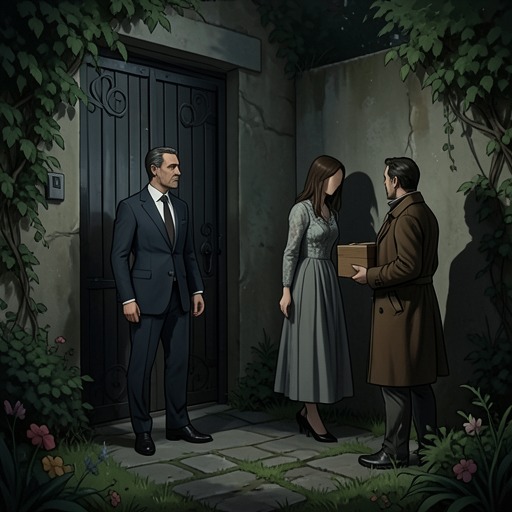
The disappearance first surfaces in local recollection as the story of an “opera girl,” an imprecise label that briefly puzzles Hercule Poirot. He recognizes that the speaker means an au pair girl: Olga had lived with Mrs Llewellyn-Smythe, then vanished shortly after the older woman died. The abruptness of her departure is central to the way people remember her. She was not simply a former employee who moved on; she left without being heard from again.
The local account offers no confirmed destination or explanation. Superintendent Spence speculates that Olga might have gone off with a man, but Elspeth McKay observes that no such man was known locally, where romantic attachments generally became common knowledge. This absence of reliable information leaves the disappearance open to rumor. The suggestion that Olga may have returned to her own country, changed her name, or gone to friends is likewise speculation, not a reported discovery.
The Inheritance and the Suspicion
Olga’s disappearance becomes suspicious in the context of a dramatic change to Mrs Llewellyn-Smythe’s estate. For years, the fortune had principally gone to her nephew, Hugo Drake, and his wife, with charitable gifts and legacies to old servants. The alleged final codicil, made about three weeks before Mrs Llewellyn-Smythe died and not prepared by her usual legal firm, instead left the residue of her considerable fortune to Olga, in gratitude for her service and affection. The altered provision seemed markedly unlike the established pattern of the older woman’s wills.
The document was written by hand and, according to Mr Fullerton, bore only a faint resemblance to Mrs Llewellyn-Smythe’s writing. Handwriting experts concluded that the codicil produced for probate was a complete forgery. Olga had had repeated practice writing personal letters for her employer: Mrs Llewellyn-Smythe disliked typed personal correspondence and sometimes asked Olga to imitate her handwriting and sign her name. That familiarity offered a plausible means of producing a forged document, but the experts’ examination exposed the weakness of the attempt.
The forgery gave the missing au pair girl an apparent financial motive, but the legal history also explains why she might have left before any court proceedings. The lawyers at Fullerton, Harrison and Leadbetter, a respected firm in Medchester that had long handled Mrs Llewellyn-Smythe’s legal affairs, recognized the forgery and questioned Olga. Proceedings to contest the document were being prepared, though a legal delay remained before the case could come to court. According to the account, Olga lost her nerve and disappeared before that process began. Elspeth McKay describes the possibility of leaving the country in time, perhaps with arrangements made across the Channel, but does not know that Olga did so.
The Poisoning Rumour
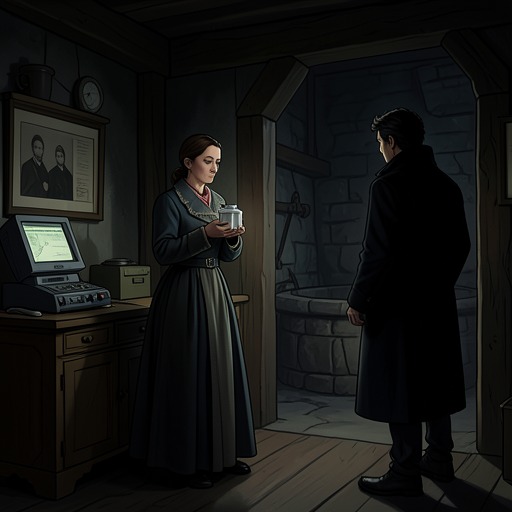
The disappearance also feeds a more serious suspicion: that Olga could have put something in Mrs Llewellyn-Smythe’s medicine. Elspeth McKay raises this as a possibility because an au pair who administered medicine could have had the opportunity, and because the girl was thought to stand to benefit from the inheritance. The discussion remains conjectural. The account specifically preserves the understanding that Mrs Llewellyn-Smythe’s death had been treated as natural; the possibility of poisoning is introduced as something that might have escaped a doctor’s suspicion, not as a demonstrated cause of death.
Joyce Reynolds enters this line of speculation as a possible witness. Elspeth wonders whether Joyce might have heard Olga giving medicine and heard the old woman say something that mattered. The evidence presented here does not complete that thought or establish what Joyce heard. Thus Olga’s disappearance joins two unresolved questions—the forged inheritance document and a possible opportunity to poison—without answering either by itself. Suspicion grows through the overlap of means, apparent motive, and absence, not through a confirmed account of a crime.
The Witnesses and the Second Codicil
Harriet Leaman’s recollection complicates the apparent simplicity of the forgery story. She remembers being summoned with young Jim, who helped in the garden and brought in fuel, when Mrs Llewellyn-Smythe was unwell and had papers on her desk. Mrs Llewellyn-Smythe sent Olga from the room, saying that she should not be involved in that part of the matter. She then showed Harriet and Jim a document whose upper portion was covered with blotting paper, wrote two or three lines with her customary scratchy pen, and signed it. She asked each of them to write a name and address as witnesses to what they had seen.
Harriet says she did not understand the significance at the time. As she was leaving, she turned her head while pulling the door shut, because it did not always latch properly. Her account establishes a remembered act of writing and witnessing, but the obscured upper portion means that the evidence available to the listeners does not disclose the document’s full contents. Nor does the account by itself establish the legal status of the paper.
After telephoning Mr Fullerton, Poirot distinguishes this remembered document from the forged codicil submitted for probate. That forged document was witnessed by Mary Doherty, a deceased former servant, and James Jenkins, who had gone to Australia—not by Harriet Leaman. Mrs Oliver recognizes the consequence: there appears to have been a forged codicil and a real one. The distinction keeps Olga’s disappearance from serving as a complete explanation of the testamentary puzzle. Her practice in copying her employer’s writing helps explain how a forgery could be attempted, but Harriet’s testimony raises the separate possibility that Mrs Llewellyn-Smythe herself wrote and signed another document while Olga was excluded from the room.
Narrative Significance
Olga’s absence functions as both a practical gap and a source of competing interpretations. It can be read as flight from an impending legal challenge, as evidence that she may have feared exposure, or as the circumstance that makes an already unproved poisoning theory seem plausible. None of those readings is confirmed simply by the fact that she vanished. The increasingly precise distinctions among a will’s customary provisions, a forged codicil’s handwriting, the people who witnessed the probate document, and Harriet’s memory of another signing instead show why disappearance cannot substitute for proof.
The story first presents the missing woman through community shorthand—the foreign opera girl who left and was never heard of again—then reconstructs the legal and testimonial details that shorthand conceals. Olga’s disappearance remains unresolved in the evidence here, while its meaning changes: what seemed to be a straightforward escape with a forged inheritance becomes part of a more complicated question about two documents, different witnesses, and what Mrs Llewellyn-Smythe actually signed.