
The Legend and the Girl
HamnetThis thread traces how rumor turns Agnes into a forest witch, while her own memories reveal a childhood shaped by bereavement, abuse, and survival.
increasing Bearing strength in each event
 decreasing
Bearing strength in each eventdecreasingA Forest-Born Mother
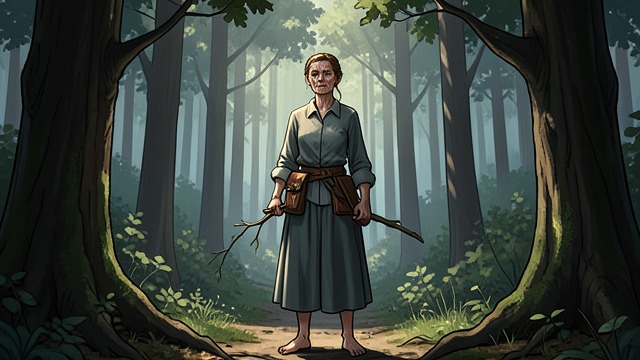
A Story at the Forest Edge
Local storytellers claim that Agnes’s mother emerged from the forest and married a farmer who found her among the trees. They turn her solitary habits into signs of supernatural origin.
A Child’s Sensory Memory
Agnes remembers her mother’s bare feet, strong hands, and knowledge of animals and plants. Those intimate images are more specific than the village legend and belong to the child’s own experience.
Two Versions of a Life
The tale explains how outsiders make Agnes’s family strange, while her memories preserve an ordinary human bond. The distance between rumor and recollection becomes part of Agnes’s isolation.
The Mother Who Vanished
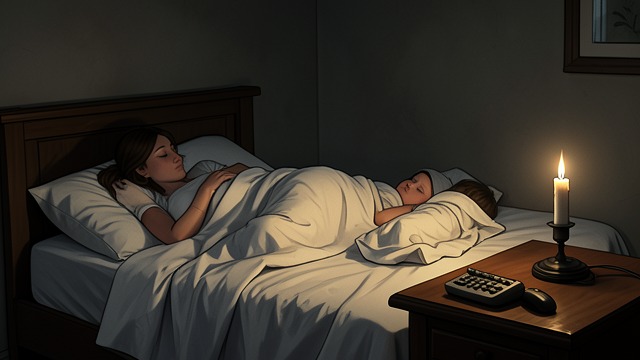
A Household Changed
Agnes’s mother Rowan dies after giving birth to a child who also dies. Agnes is young enough to be surrounded by adults but old enough to remember the loss as a rupture in the world.
Joan Takes Her Place
Joan enters the household, cuts Agnes’s hair, burns the children’s reed dolls, and punishes her. Agnes is repeatedly told that her memories of her first mother are impossible.
Memory Resisted
Agnes keeps those memories alive, though she cannot understand why Rowan is gone. Her later independence begins in a childhood struggle to trust what she knows against what others insist is true.
Learning to Disappear
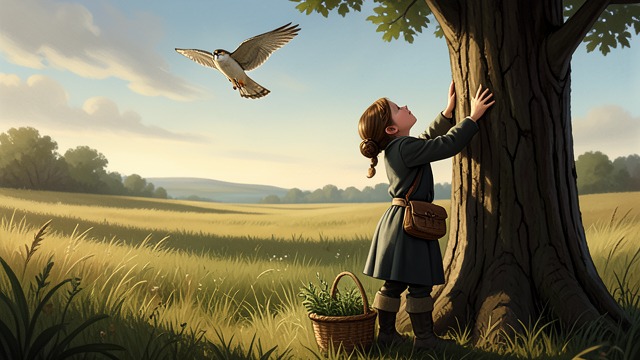
A Child’s Defenses
Agnes learns to avoid drawing attention in a household where Joan’s anger can turn ordinary mistakes into punishments. She protects Bartholomew and looks for ways to preserve the plants and memories Joan rejects.
A Private Knowledge
She discovers that touch can reveal something about a person’s inner state. Her skill emerges alongside a practical familiarity with herbs, animals, and the rhythms of farm life.
A Future Escape
Feeling unloved and out of place, Agnes holds onto the memory of being accepted by her first mother. She believes that if she finds that kind of recognition again, she must seize it.
The Girl Called a Witch
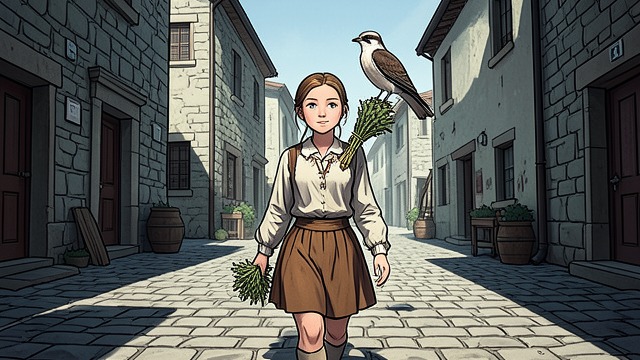
Stories Gather Around Agnes
Neighbors say Agnes can curse people, cause illness, and see the truth in a hand. Her solitary walks and kestrel make the stories more vivid to those already inclined to fear her.
A Practical Gift
People secretly seek her advice, and Agnes uses touch, observation, and herbal knowledge to help them. She does not need the village’s supernatural explanation to understand the needs that bring visitors to her.
Reputation and Freedom
The witch stories stigmatize her, but they also reflect how unwillingly she conforms to other people’s expectations. Agnes continues to act on her own judgment rather than reshape herself to make the rumors disappear.
The Lost Mother’s Phrase
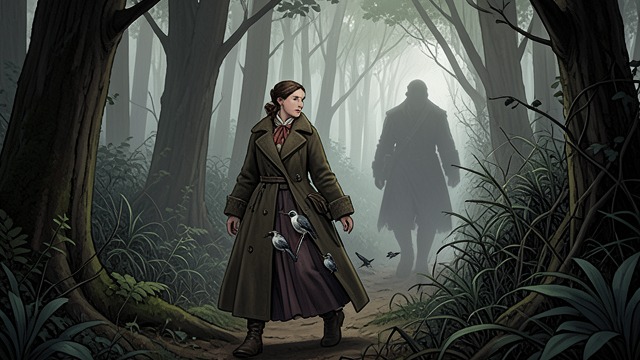
A Dream of Rowan
While pregnant with Susanna, Agnes dreams of Rowan walking toward the forest. Birds weigh down Agnes’s skirts while her mother passes beyond reach.
A Message Carried Forward
Rowan says that the forest branches are thick enough to hide the rain. Agnes wakes with the phrase still present and writes it as best she can, leaving a message William struggles to read.
Memory as Guidance
The phrase connects Agnes’s childhood loss to her adult search for shelter and independence. It remains both a remembered voice and an image of protection that can conceal pain without making it vanish.
Agnes’s earliest remembered childhood
After Rowan dies in childbirth
Agnes’s childhood under Joan’s rule
As Agnes grows into a young woman
During Agnes’s first pregnancy
