
The Ethics of Care and Consent
Handling the UndeadThis flow follows the conflict between medical opportunity, legal status, and the need to treat the reliving as persons rather than specimens.
increasing Bearing strength in each event
 decreasing
Bearing strength in each eventdecreasingA Legal Grey Area

A Legal Grey Area
The law lags behind events
The returned dead fall outside ordinary rules for living patients, while their status as corpses is no longer convincing. Officials can invoke emergency powers without a settled ethical framework.
Opportunity and danger
Some commentators argue that research should proceed before new laws restrict it. Others see the reliving’s vulnerability as a reason for stronger protections.
Family Access Denied
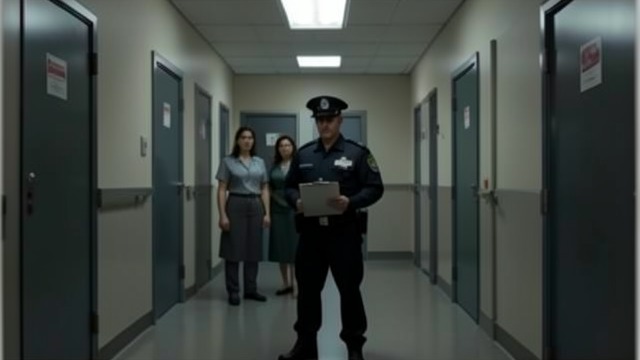
Family Access Denied
Separation justified as safety
Hospitals isolate the reliving and refuse immediate visits. Authorities cite uncertainty about contagion and the need to manage the new arrivals.
Care without consent
Families cannot tell whether the restriction protects their loved ones or removes them from personal responsibility. The absence of reliable information turns precaution into a moral conflict.
A Patient Without Conventional Needs

A Patient Without Conventional Needs
Treatment loses its assumptions
Tests indicate that the reliving may not need nourishment or ordinary temperature control. Their bodies do not respond according to familiar medical expectations.
Care remains necessary
The absence of standard needs does not show that the reliving cannot suffer. Researchers can describe bodily stability while remaining unsure how to care responsibly for a person.
The State Takes Custody

The State Takes Custody
Relocation as a solution
The government moves the reliving to The Heath, citing staff exhaustion and the need to separate them. Officials promise rehabilitation and later visits.
A person becomes a problem
The relocation offers practical order but places the returned dead behind fences. The language of care sits uneasily beside containment and the absence of meaningful consent.
The Question of Desire

The Question of Desire
Families disagree about survival
Mahler sees Elias’s small responses as reasons to keep working toward recovery. Anna believes the child she remembers is gone, yet continues to care for his returned body.
No single answer governs care
Their choices expose the difference between preserving a body and respecting a person’s wishes. Elias’s fear and eventual release make the question of consent urgent but impossible to simplify.
14 August 2002, early morning
14 August 2002, morning
15 August 2002, daytime
16 August 2002, early morning
17 August 2002, afternoon
