
The Press and Public Language
Handling the UndeadThis flow tracks how newspapers, broadcasts, and public messaging turn private awakenings into a contested national story.
increasing Bearing strength in each event
 decreasing
Bearing strength in each eventdecreasingThe First Headlines

The First Headlines
Spectacle in print
Morning newspapers announce that the dead have awakened and publish dramatic cemetery and morgue images. Sensational language gives the public an immediate, frightening frame.
A story without understanding
The headlines spread faster than reliable explanations. Families encounter their private grief in a public narrative already shaped by fear and entertainment.
Officials Choose a Term
Officials Choose a Term
Neutral wording
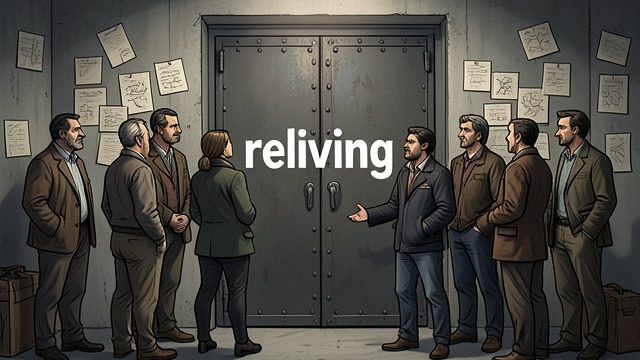
The Dead Room adopts “reliving” to refer to the returned dead. The term is intended to avoid premature claims about zombies, miracles, or medical certainty.
Public perception remains unsettled
A bureaucratic label cannot settle whether the returned dead are persons or patients. It does, however, demonstrate how language becomes an instrument of crisis management.
The Article’s Moral Question

The Article’s Moral Question
A reporter’s appeal
Gustav Mahler writes that families should have a voice in decisions about their returned loved ones. His article challenges the state’s claim to sole authority.
A bridge between strangers
The appeal reaches David Zetterberg, who is struggling to protect his wife. A public article unexpectedly becomes a private point of connection.
Television and Explanation
Television and Explanation
Science on display
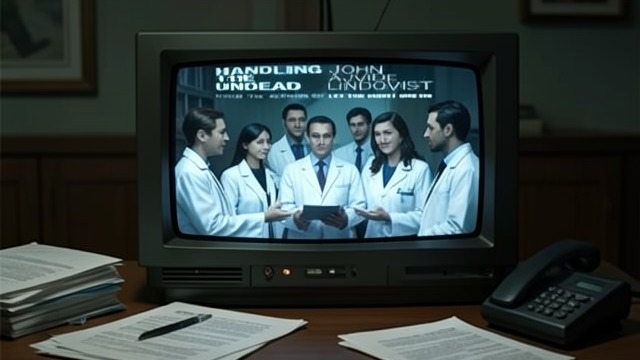
Experts discuss weak brain activity, unusual biology, and the possibility of a thought field. Reporters repeatedly ask questions for which no dependable answer exists.
Certainty gives way
The broadcasts document disagreement rather than resolution. Viewers hear that the event is impossible by existing definitions, even as the returned dead remain undeniable.
The Debate over Rights
The Debate over Rights
Ethical arguments surface
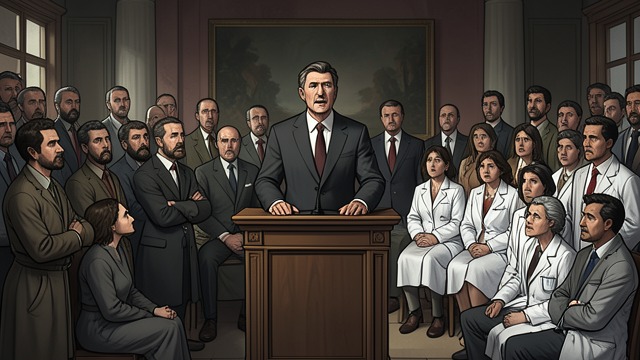
Commentators debate whether the returned dead should receive the protections given to living patients. Others argue that research could benefit humanity, even if the subjects cannot consent.
Public trust erodes
Family members demand access while officials withhold information. Media coverage makes the legal grey area visible, but offers no shared standard for what care should mean.
14 August 2002, around 8 a.m.
14 August 2002, before 1 a.m.
14 August 2002, before dawn
14 August 2002, morning
15 August 2002, evening
