
The Government’s Containment Response
Handling the UndeadThis flow traces how emergency policy moves from improvised rescue to isolation, relocation, and a dangerous reopening.
increasing Bearing strength in each event
 decreasing
Bearing strength in each eventdecreasingA Temporary Command

A Temporary Command
Emergency coordination
The Minister of Health and Social Affairs assembles officials, police representatives, and medical experts in a provisional command centre called the Dead Room.
Improvisation under pressure
The institutions involved have little precedent to guide them. Their first decisions prioritize immediate control while the scale and nature of the event remain uncertain.
A New Official Name
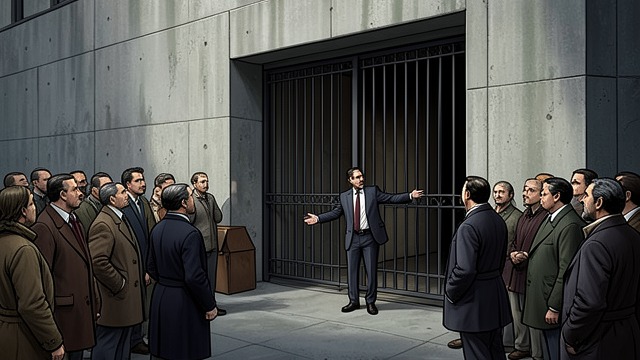
A New Official Name
Language as policy
The command centre adopts “reliving” as its preferred term for the returned dead. The wording offers a neutral alternative to supernatural or sensational labels.
What the label conceals
A name can organize public discussion, but it cannot resolve whether these people are alive, dead, or capable of suffering. The terminology becomes part of the struggle over their status.
Isolation and Experiment
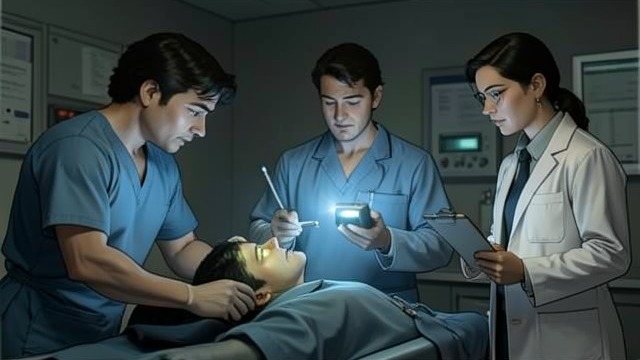
Isolation and Experiment
Medical uncertainty
Authorities isolate the returned dead while researchers test their physiology. Conflicting accounts of their needs and capacities make routine care difficult to define.
A moral grey zone
Because the law still treats them as dead, officials and researchers can act without clear ethical protections. The emergency creates opportunities for knowledge and risks turning people into experimental material.
Relocation to The Heath
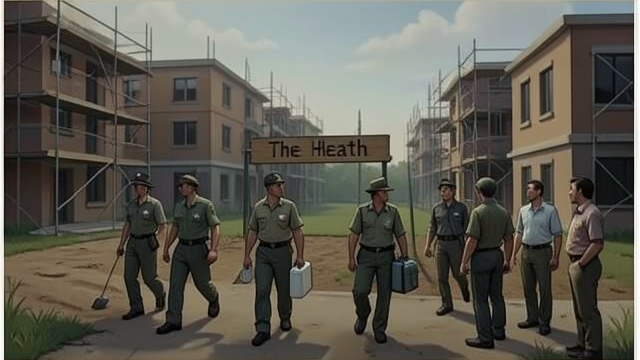
Relocation to The Heath
A managed settlement
After staff become unable to cope with the concentrated thought field, the government moves the returned dead to The Heath, a partially built housing estate.
Containment disguised as care
Officials describe the move as necessary for proper treatment and rehabilitation. Families are promised access later, while the new arrangement separates the reliving from ordinary public life.
The Failed Opening
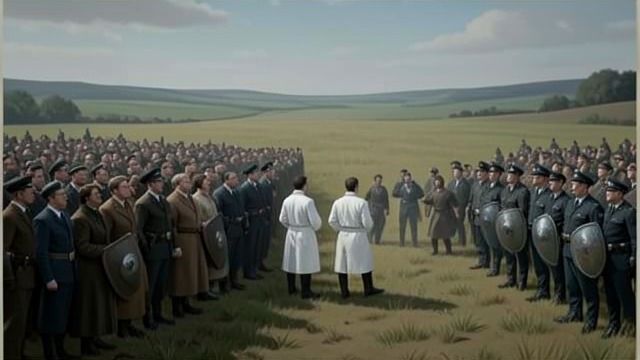
The Failed Opening
Families enter
The authorities open The Heath to visitors, allowing families to seek their returned loved ones. Crowds bring hope, grief, fear, and expectations into an already unstable environment.
The field overwhelms control
The emotions of the living intensify the reliving field. Violence erupts, people are injured, and police evacuate the site; the promised public access ends in catastrophe.
14 August 2002, shortly after midnight
14 August 2002, around 12:45 a.m.
14–15 August 2002
16 August 2002, early morning
17 August 2002, afternoon
