Aftonbladet
Handling the UndeadAftonbladet is the newspaper for which Gustav Mahler eventually became a crime reporter and the publication represented in the novel’s account of the military opening graves at Stockholm Woodland Cemetery. Its significance lies in the contrast between a journalist’s personal proximity to loss and a newspaper’s record of a crisis that makes familiar definitions of death untenable.
Career and Personal Connection
Gustav Mahler became a crime reporter for Aftonbladet after moving repeatedly during his daughter Anna’s childhood in pursuit of better positions at larger papers. The job belongs to a history he later judges critically: his career had helped shape the unsettled life he passed on to Anna, including the instability of the family’s moves and the absence that preceded her mother’s departure. Aftonbladet is thus attached not only to professional identity but also to the family consequences of Mahler’s choices.
Reporting the Grave Opening
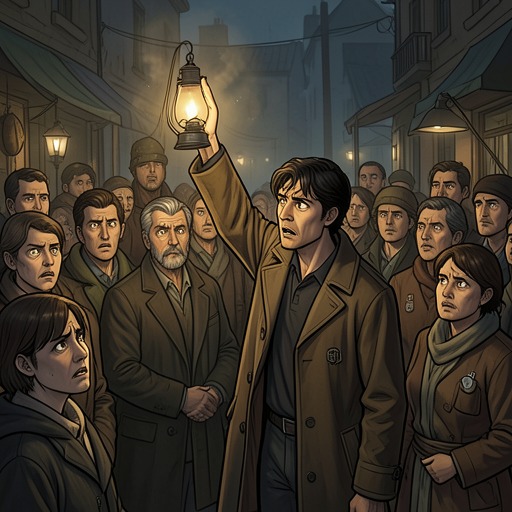
In an article dated 14 August 2002, Aftonbladet reports from the military operation at Stockholm Woodland Cemetery. The paper describes the exhumation of at least 200 graves and identifies the first body uncovered as an 87-year-old man who had been buried six weeks earlier. Despite advanced decomposition, he was alive and tried to escape; soldiers restrained him, using the burial shroud to force him to the ground as flesh peeled away at their touch. A young national serviceman’s description of the scene as abominable conveys the human shock registered by those carrying out the operation.
The report gives the extraordinary event the concrete form of eyewitness journalism: a time, a location, a number of graves, the condition of one body, and the actions needed to restrain him. Its account does not resolve what the return of the dead means. Instead, its evidence makes the crisis harder to dismiss: the burial interval and physical decay that would ordinarily confirm death coexist with movement and attempted escape.
Narrative Role
Presented among newspaper material, Aftonbladet’s report gives the upheaval a public and documentary dimension alongside the novel’s intimate scenes of bereavement. Its reporting records an operation undertaken by the Swedish Military, but the details it preserves undermine the ordinary certainty on which burial and declarations of death depend. The newspaper therefore serves as a point where private catastrophe becomes a matter of collective knowledge, without making that knowledge equivalent to understanding.